What This Document Is
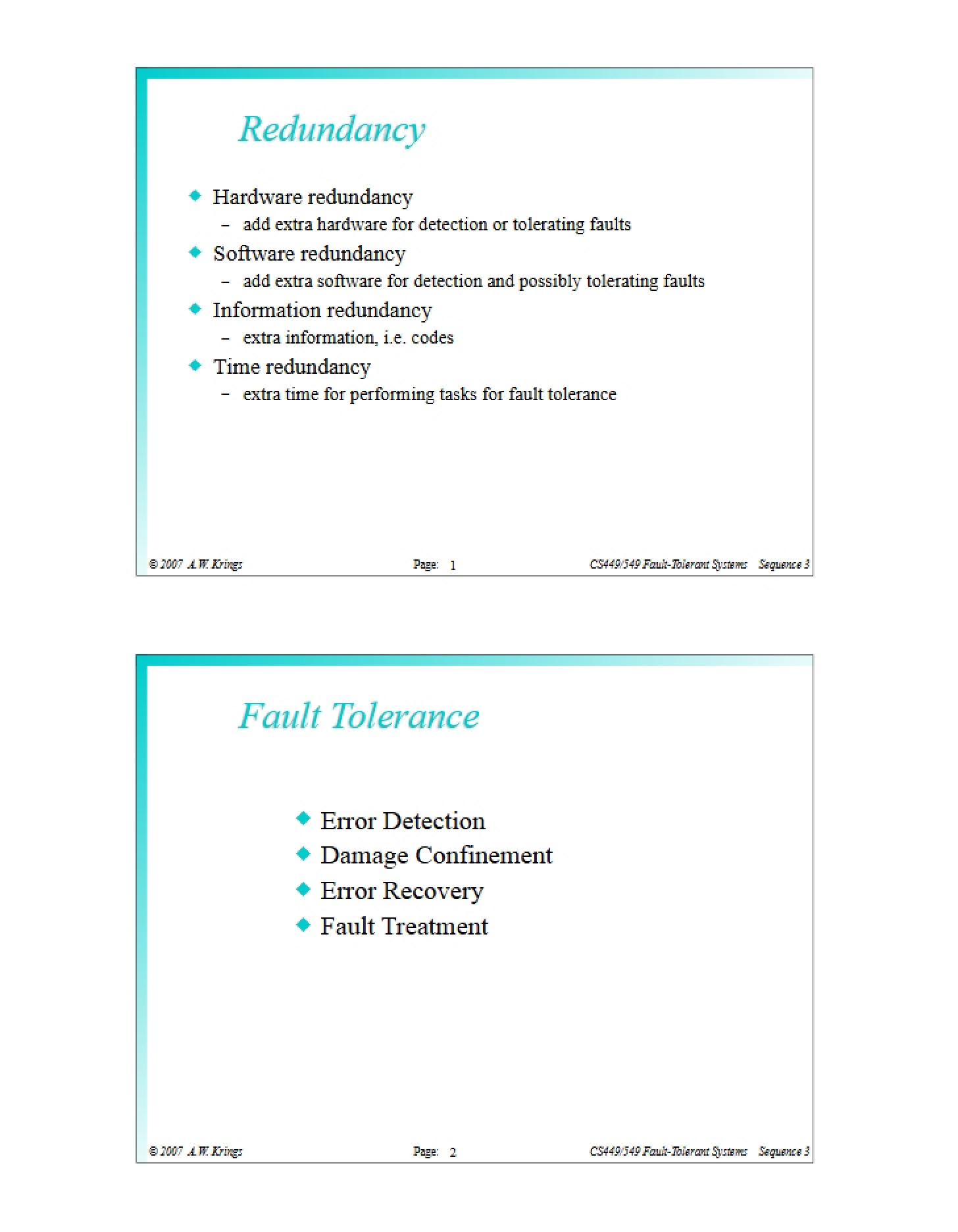
This document is a focused exploration of data redundancy techniques within the context of fault-tolerant systems. It delves into the core principles behind protecting data integrity against errors and failures, a critical aspect of reliable system design. It’s part of the course materials for CS 449 at the University of Idaho, offering a detailed look at methods used to ensure data accuracy in challenging operational environments. The material builds a foundation for understanding more complex fault tolerance strategies.
Why This Document Matters
This resource is invaluable for students studying computer science, particularly those specializing in systems engineering, distributed computing, or cybersecurity. It’s especially helpful when you need a deeper understanding of how to mitigate data corruption and ensure system uptime. Professionals working on data storage, network communication, or critical infrastructure will also find the concepts presented here directly applicable to their work. It’s best utilized when you’re tackling assignments or projects that require robust data handling and error management.
Topics Covered
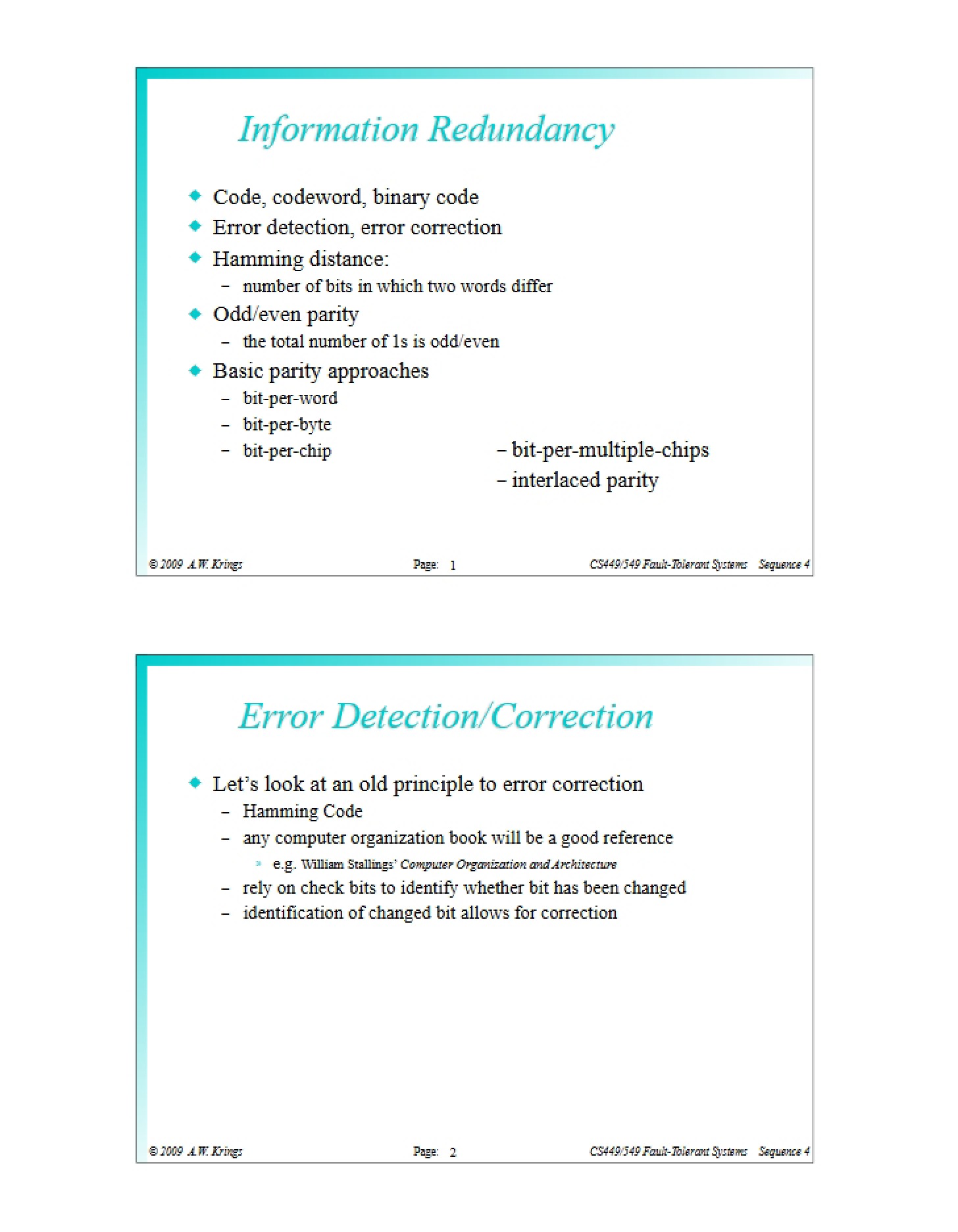
* Fundamental concepts of information redundancy and its role in fault tolerance.
* Methods for error detection, including parity checks and their variations.
* Techniques for error correction, focusing on approaches that identify and rectify data corruption.
* Detailed examination of Hamming Codes and their application.
* Exploration of overlapped parity schemes and syndrome calculation.
* Introduction to m-of-n codes and their characteristics.
* Overview of checksum methods, including single and double-precision approaches.
* Discussion of Cyclic Redundancy Checks (CRCs) and their advantages.
What This Document Provides
* A comprehensive overview of various data redundancy strategies.
* Explanations of how different techniques work to detect and correct errors.
* Illustrative examples to demonstrate the application of these concepts (without revealing specific solutions).
* A structured presentation of key terminology related to fault-tolerant systems.
* A solid foundation for further study in the field of reliable computing.