What This Document Is
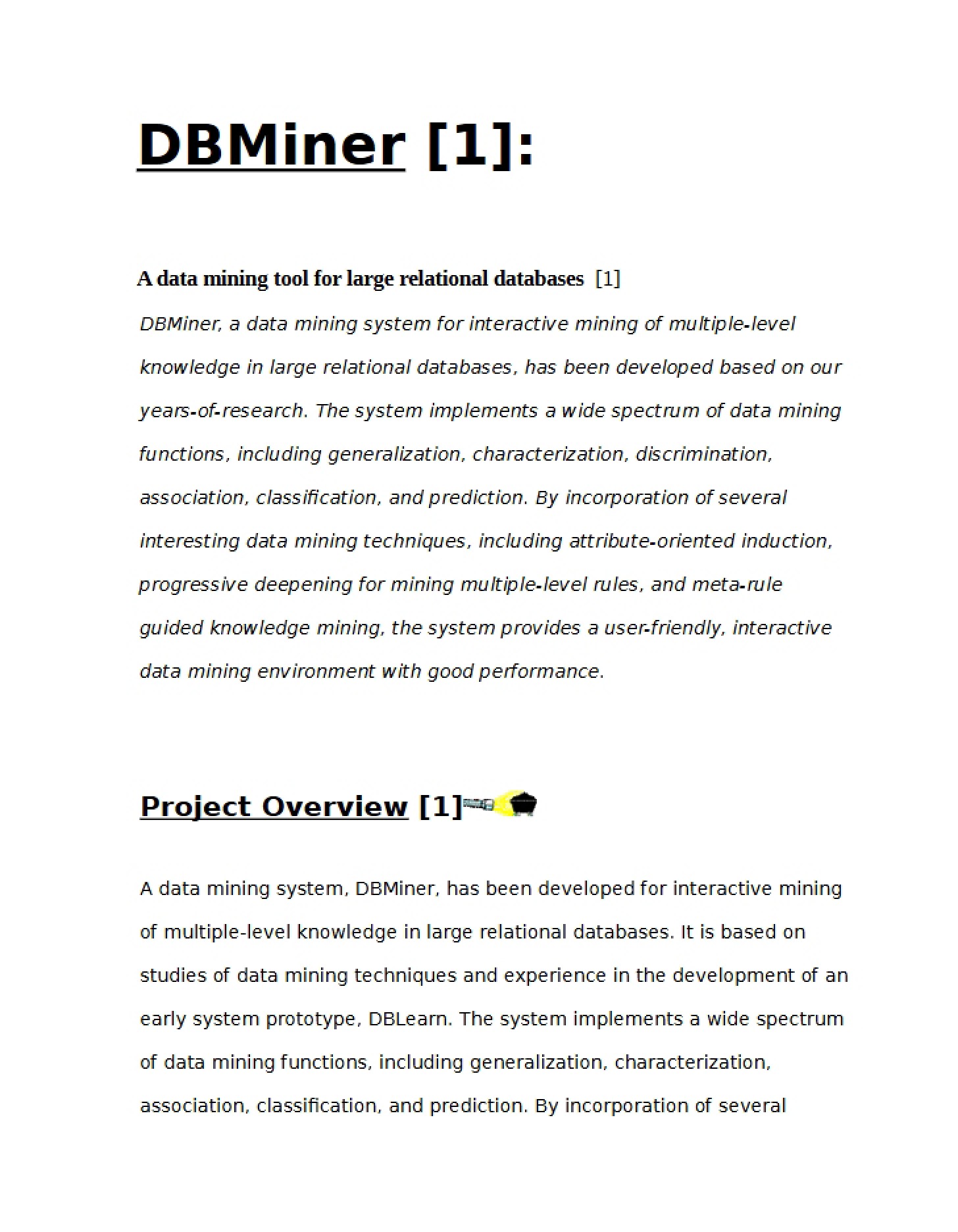
This document is a detailed overview of DBMiner Version 2.0, a software package focused on advanced data mining techniques. It serves as a comprehensive resource for understanding the functionalities and architecture of this particular system, placing emphasis on its capabilities within the broader field of Computer and Information Science. The material explores the system’s origins, its development history, and its intended applications in extracting valuable insights from complex datasets.
Why This Document Matters
This resource is particularly valuable for advanced students and researchers in computer science, data science, and related fields. It’s ideal for those seeking a deep understanding of a specific data mining tool and its practical implementation. Individuals involved in projects requiring data analysis, pattern recognition, or predictive modeling will find this overview helpful in assessing the potential of DBMiner 2.0 for their needs. It’s also useful for anyone looking to understand the evolution of data mining software and the integration of various analytical techniques.
Common Limitations or Challenges
This document provides a high-level exploration of DBMiner 2.0’s features and structure. It does *not* offer step-by-step tutorials on how to use the software, nor does it include pre-built solutions or datasets for practice. It focuses on the conceptual framework and the system’s capabilities, rather than providing hands-on training. Furthermore, it doesn’t cover alternative data mining tools or a comparative analysis with other software packages. Access to the software itself is also not included.
What This Document Provides
* An overview of the historical development and origins of DBMiner technology.
* A description of the system’s core architectural components and how they interact.
* An outline of the various data mining functions supported by DBMiner 2.0, including areas like OLAP, statistical analysis, and association rule mining.
* Details regarding the user interfaces available for interacting with the system (UNIX, Windows, and web-based).
* Visual representations of the system’s interface, including the OLAP browser and 3-D cube visualization tools.
* An exploration of the data mining techniques incorporated within the software, such as attribute-oriented induction and progressive deepening.