What This Document Is
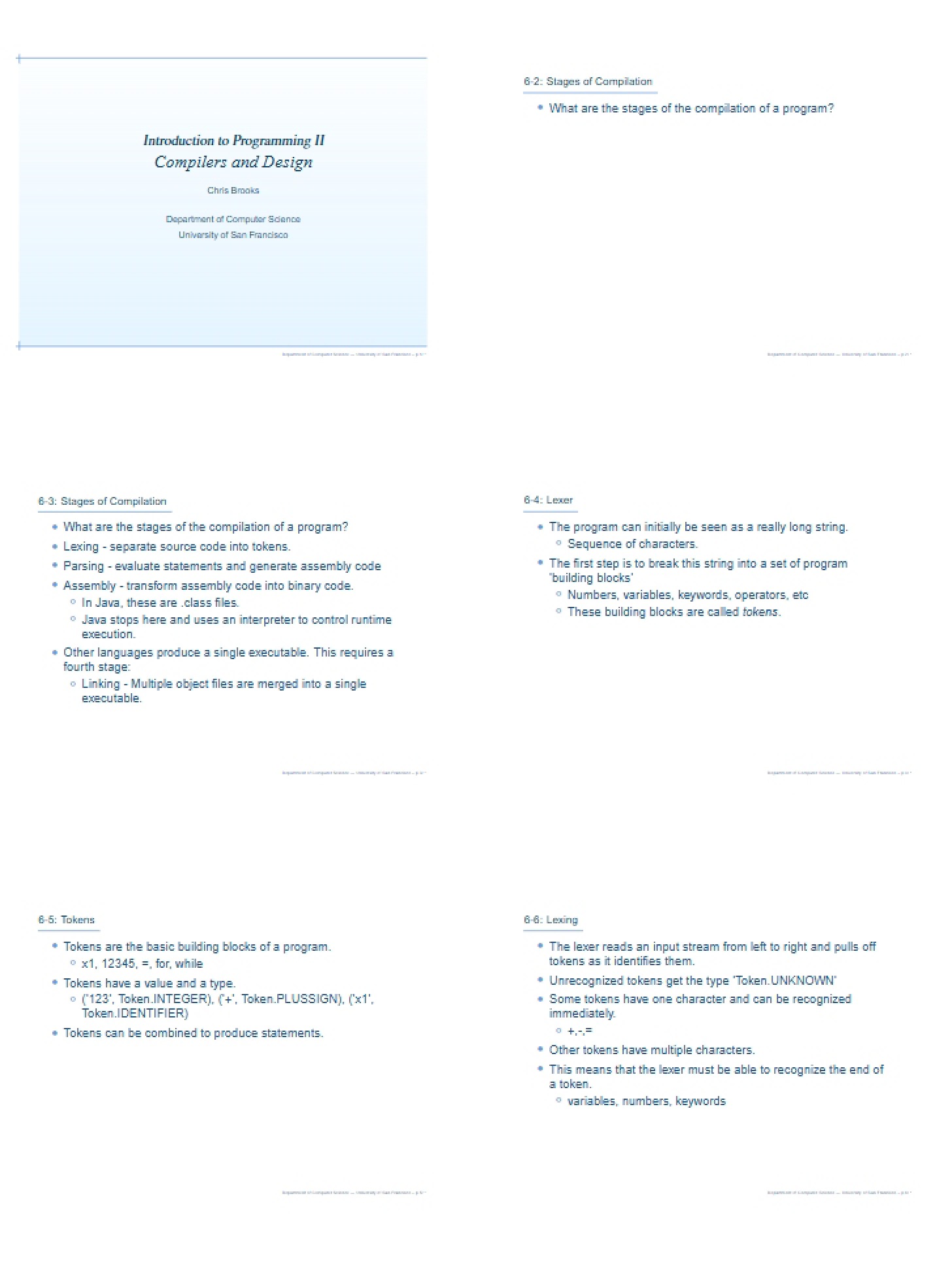
This document provides a focused exploration of the fundamental processes behind how code is translated into instructions a computer can execute. Specifically, it delves into the concepts of compilers and program design, essential topics within an Object-Oriented Programming and Data Structures course. It’s designed to build a strong theoretical foundation for understanding the inner workings of programming languages and the steps involved in turning human-readable code into functional software. The material is presented with a clear progression, starting with the overall compilation process and then breaking it down into its core components.
Why This Document Matters
This resource is invaluable for students seeking a deeper understanding of the software development lifecycle. It’s particularly helpful for those preparing to tackle projects involving language implementation or code analysis. If you’re finding yourself wondering what happens *after* you write code, or how a program understands your instructions, this material will provide crucial insights. It’s also beneficial for anyone aiming to improve their problem-solving skills and grasp the underlying principles of computer science. Understanding these concepts will empower you to write more efficient and effective code.
Common Limitations or Challenges
This document focuses on the *theory* of compilation and program design. It does not offer a complete, ready-to-use implementation of a compiler or interpreter. While it lays the groundwork for building such tools, it doesn’t provide step-by-step coding instructions or a fully functional code base. It also assumes a foundational understanding of programming concepts and object-oriented principles. It’s designed to *supplement* hands-on coding experience, not replace it.
What This Document Provides
* An overview of the distinct stages involved in compiling a program.
* Detailed explanations of key concepts like lexing and parsing.
* An introduction to the role of assemblers and interpreters.
* Discussion of how programs are broken down into fundamental building blocks (tokens).
* Exploration of the principles of program design and the software development process.
* Insights into how grammars are used to define the structure of programming languages.