What This Document Is
This document presents lecture material from UGBA 105, Introduction to Organizational Behavior at UC Berkeley. It delves into the critical area of organizational design – how companies structure themselves to achieve their goals. The material explores different approaches to building effective organizations, moving beyond simple hierarchical models to consider more dynamic and responsive structures. It frames organizational design as a core managerial function, requiring careful consideration of various internal and external factors.
Why This Document Matters
This resource is invaluable for students seeking a foundational understanding of how organizations function and how their structure impacts performance. It’s particularly helpful when you’re grappling with concepts related to management, strategy, and organizational theory. Use this material to prepare for class discussions, deepen your understanding of assigned readings, and build a strong base for more advanced coursework in organizational behavior and related fields. It’s designed to provide a comprehensive overview of the key considerations in designing an organization for success.
Topics Covered
* The evolution of organizational design theories – from classical to contemporary approaches.
* Contrasting perspectives on the role of a manager: engineer versus leader.
* The importance of alignment between organizational structure, strategy, and the external environment.
* Different methods of grouping and coordinating activities within an organization.
* The strengths and weaknesses of vertical (mechanistic) versus horizontal (organic) organizational structures.
* Key dimensions for strategically grouping resources and activities.
* The potential pitfalls of poorly designed organizational structures.
What This Document Provides
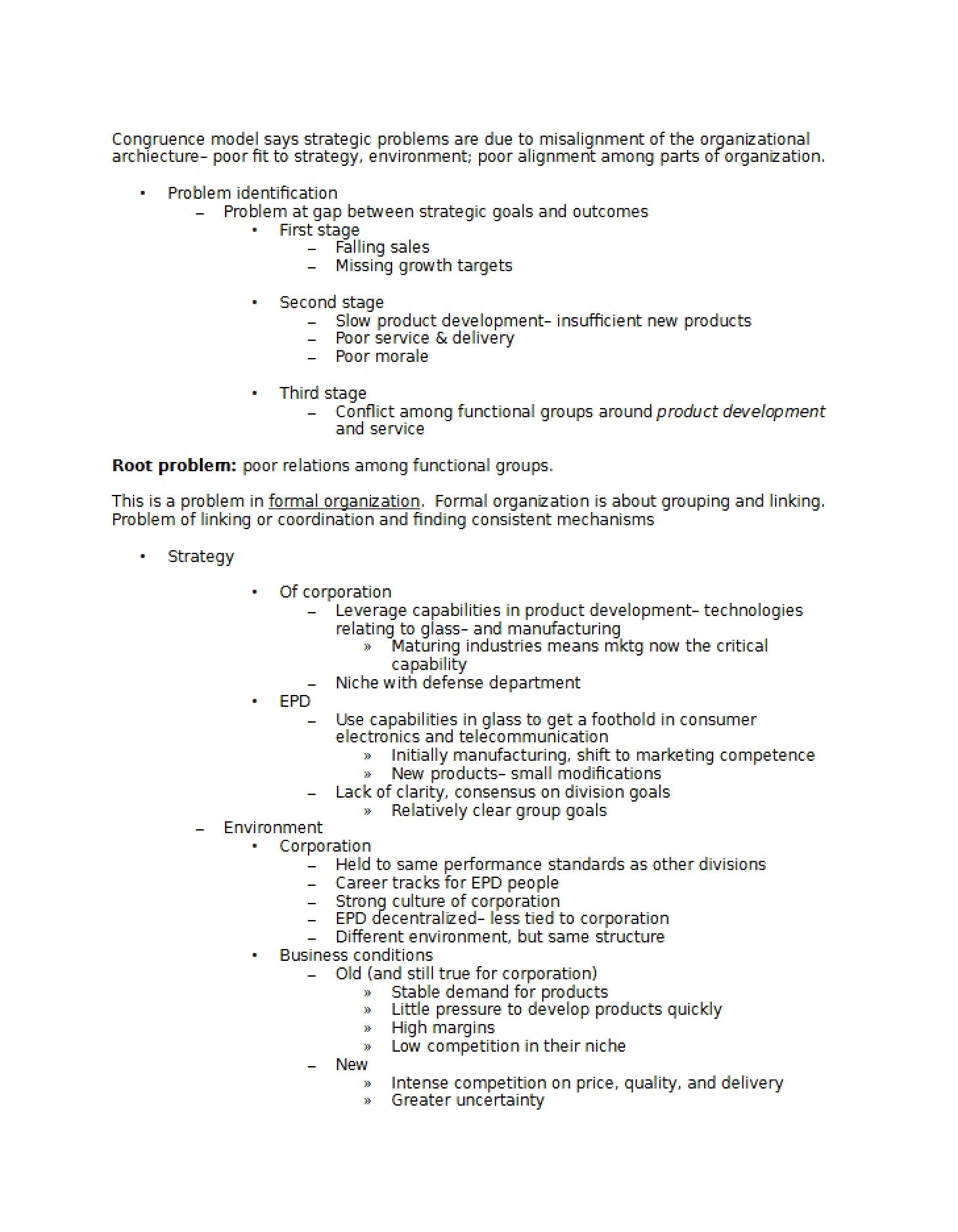
* A framework for analyzing organizational structures using the “congruence model.”
* An exploration of various grouping strategies, including functional, product, and regional approaches.
* Discussion of the principles underlying scientific management and classical administrative theory.
* Insights into how to evaluate the effectiveness of different organizational designs.
* A comparative look at traditional hierarchical structures and alternative coordination modes.
* Visual representations to illustrate key concepts and models.