What This Document Is
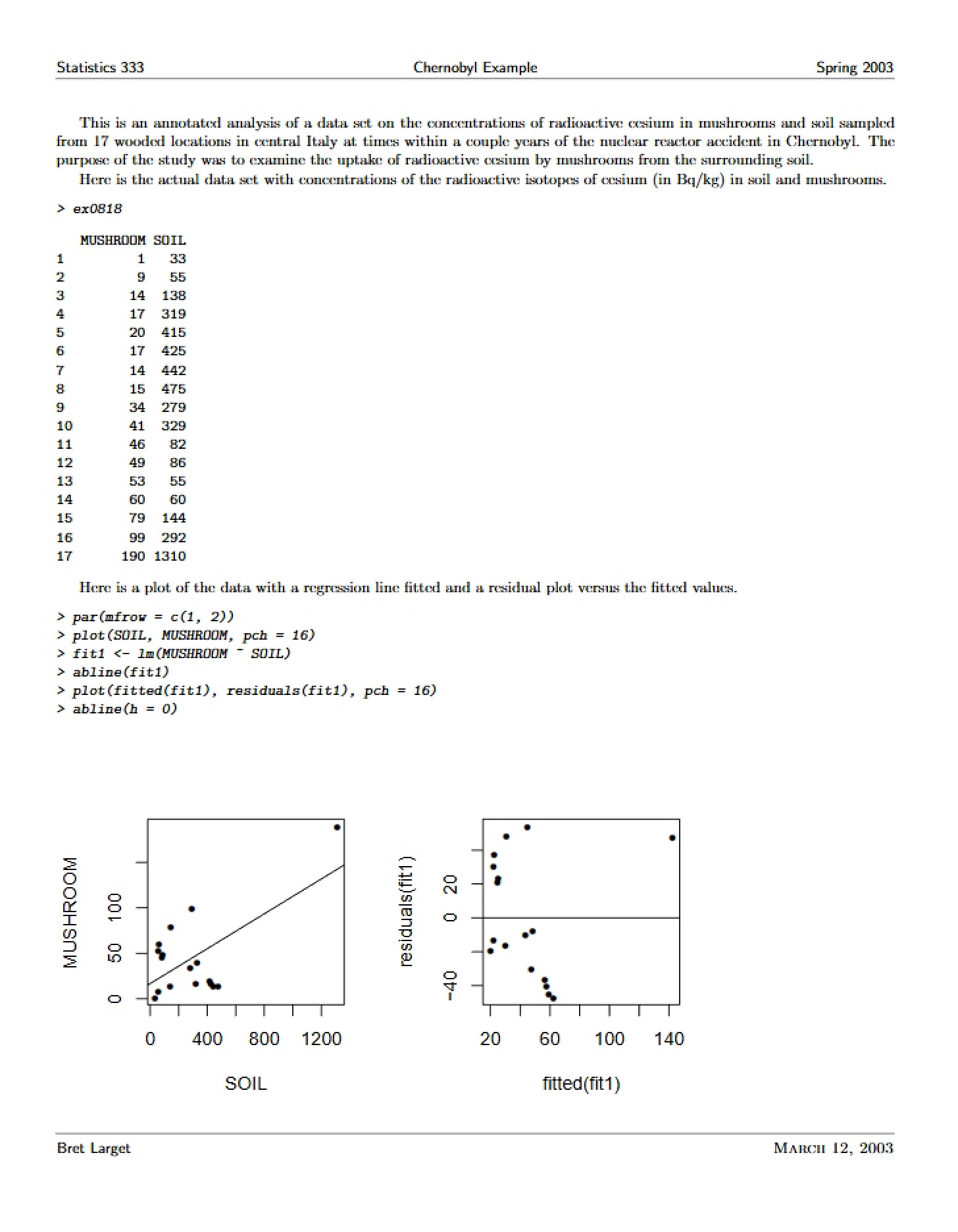
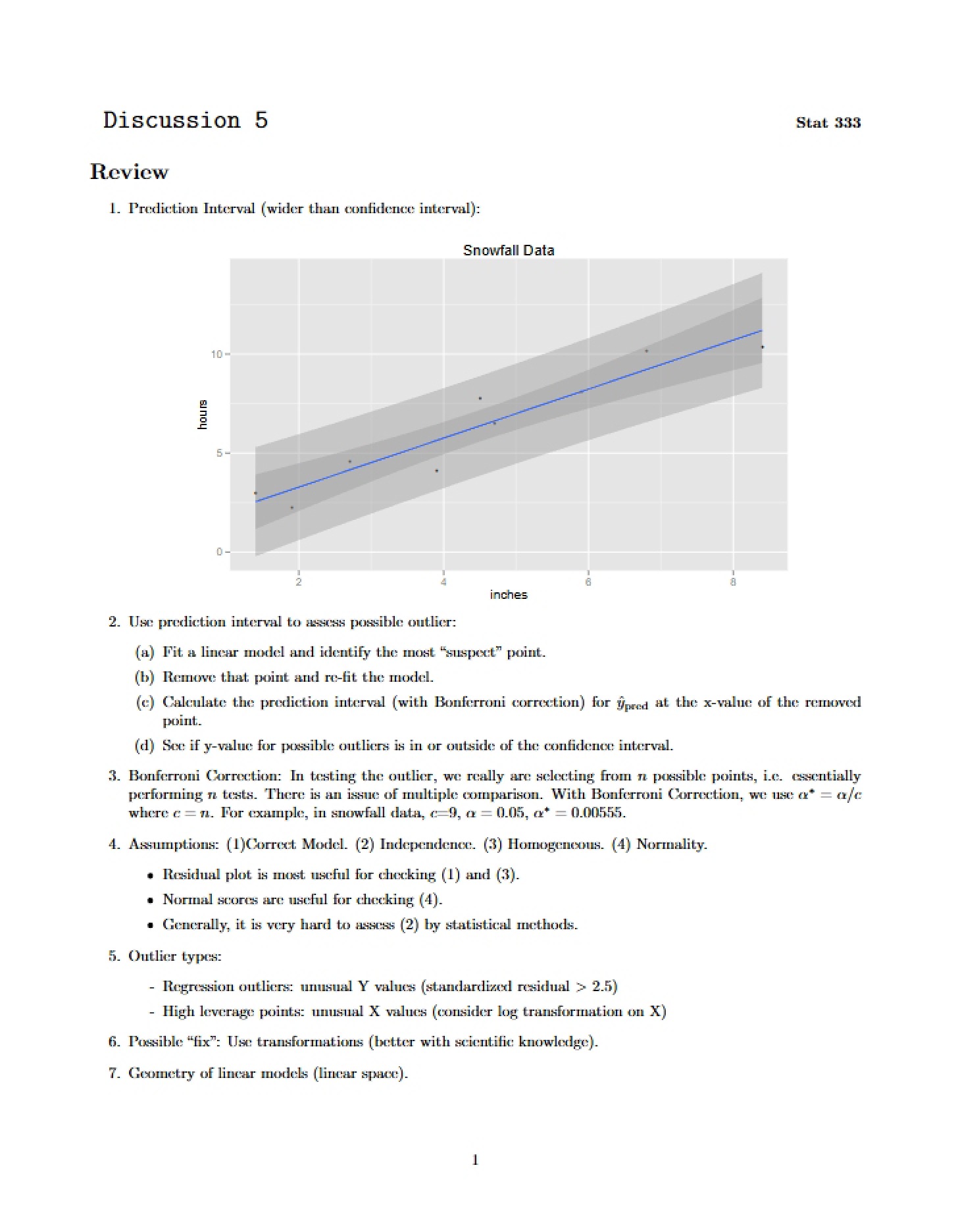
This is a detailed discussion section supporting the Applied Regression Analysis course (STAT 333) at the University of Wisconsin-Madison. It delves into practical applications of regression modeling, building upon core concepts taught in lectures. The material focuses on identifying and addressing potential issues within regression analysis, such as outlier detection and model assumption verification, using real-world datasets. It’s designed to reinforce understanding through applied examples and critical thinking exercises.
Why This Document Matters
Students enrolled in STAT 333 will find this discussion section particularly valuable when working through assignments and preparing for assessments. It’s ideal for those seeking a deeper understanding of how to implement regression techniques and interpret results, going beyond simply running the calculations. Individuals struggling with identifying influential data points or assessing model validity will benefit from the detailed exploration of these topics. This resource is best utilized *after* covering the foundational regression concepts in class and during independent practice.
Common Limitations or Challenges
This discussion section does not provide a comprehensive re-teaching of fundamental regression principles. It assumes a baseline understanding of linear models, hypothesis testing, and residual analysis. It also doesn’t offer fully worked-out solutions; instead, it guides you through the thought process and analytical steps involved in regression diagnostics. Access to statistical software (like R) and the associated datasets is also required for full engagement with the material.
What This Document Provides
* Exploration of methods for identifying potential outliers in regression datasets.
* Discussion of statistical corrections for multiple comparisons when testing for outliers.
* Guidance on interpreting diagnostic plots, such as residual plots and Q-Q plots, to assess model fit.
* A practical case study involving HIV viral load data and genotypic sensitivity scores.
* Considerations for data transformations to improve model assumptions.
* Comparative analysis of model results with and without identified outliers.