What This Document Is
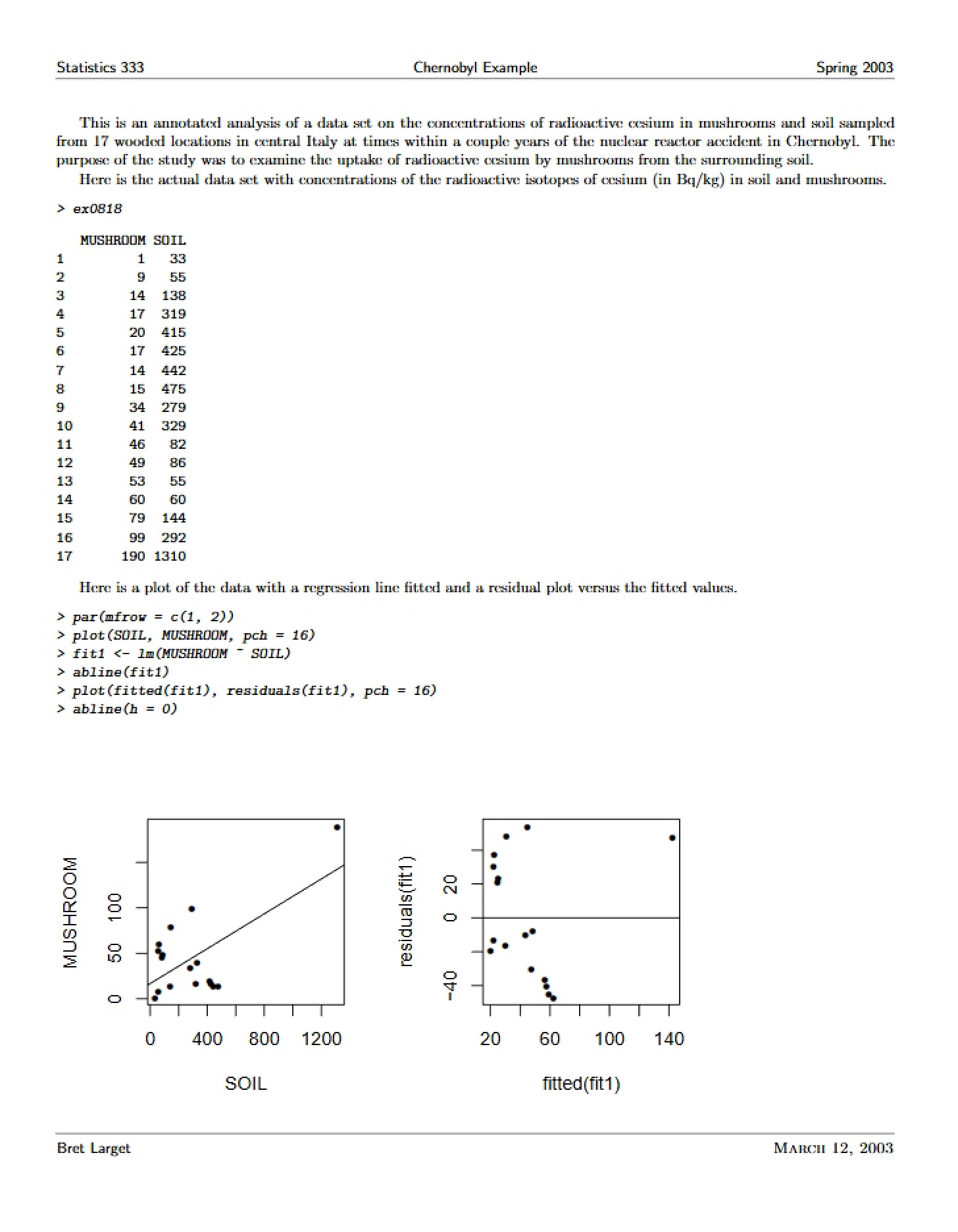
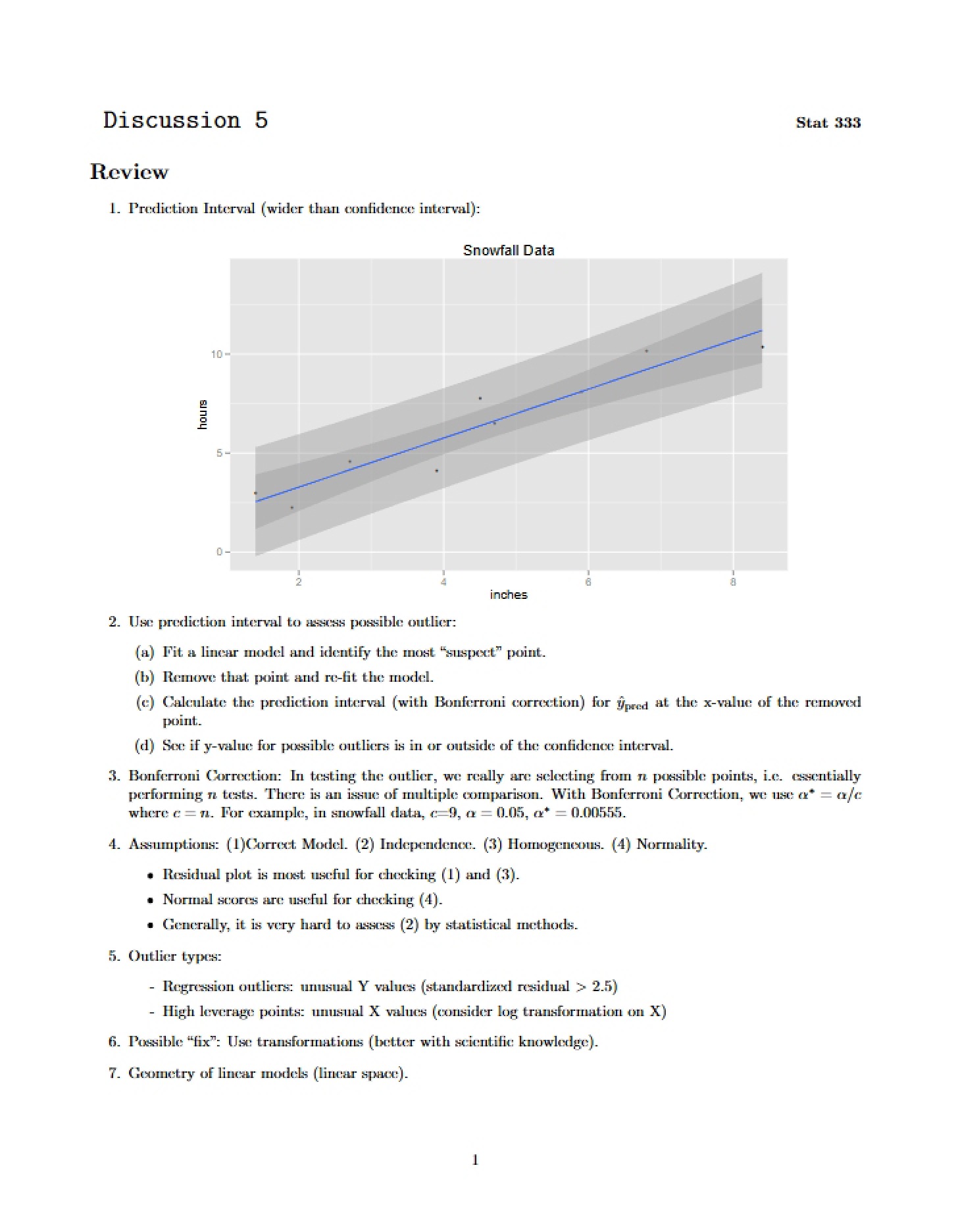
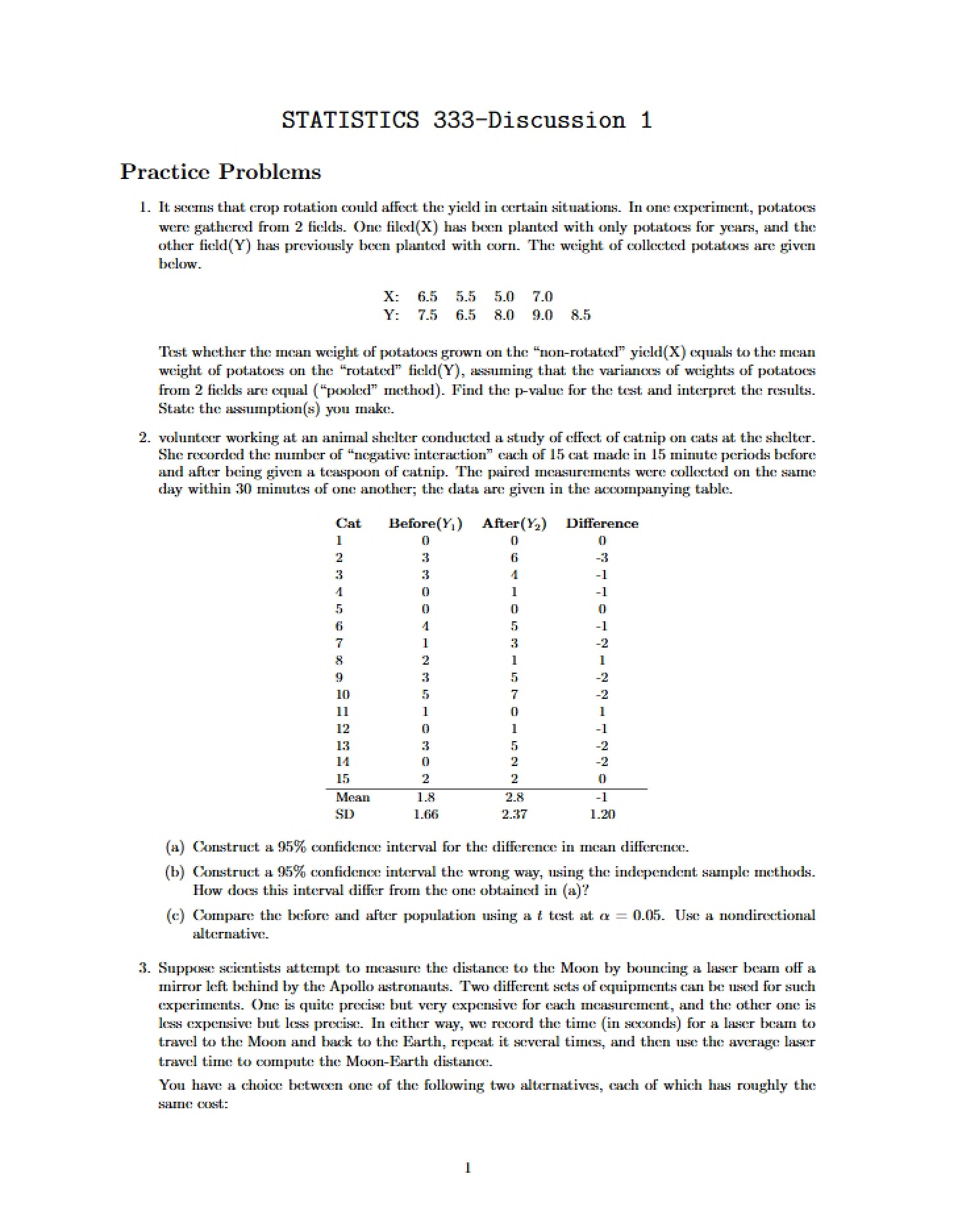
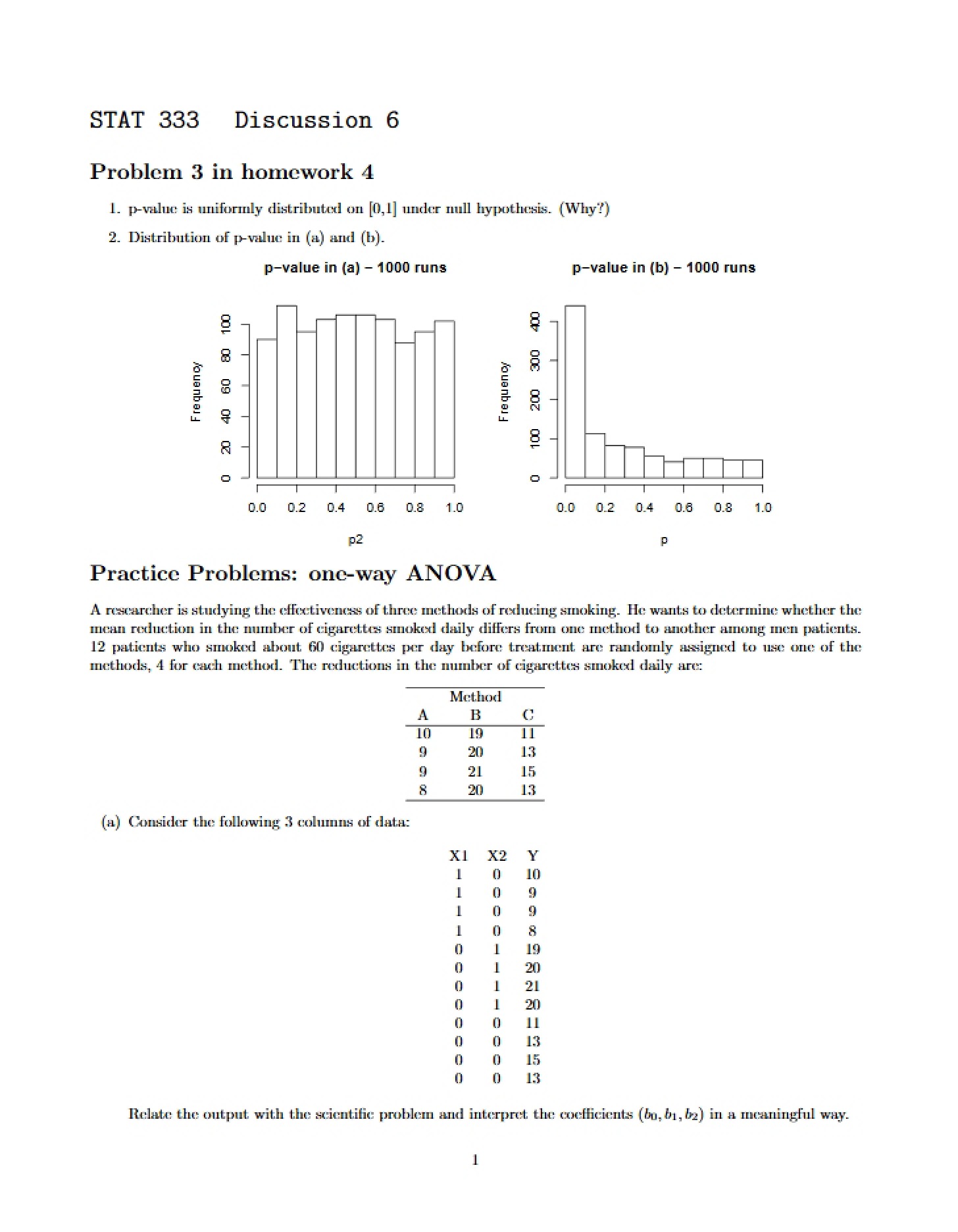
This is a practice discussion section designed to reinforce concepts covered in an Applied Regression Analysis course (STAT 333) at the University of Wisconsin-Madison. It focuses on applying regression techniques to a real-world dataset, building upon theoretical knowledge with practical application. The material centers around linear modeling and statistical inference within a multiple regression framework. It’s structured as a problem set, likely used to prepare students for more complex assignments or exams.
Why This Document Matters
Students enrolled in STAT 333, or similar upper-level statistics courses, will find this resource particularly valuable. It’s ideal for those seeking to solidify their understanding of regression analysis *beyond* lecture notes and textbook readings. Working through these types of problems helps bridge the gap between theory and practice, improving your ability to interpret model outputs and draw meaningful conclusions from data. This is especially helpful when preparing for homework assignments, quizzes, or exams that require computational skills and statistical reasoning.
Common Limitations or Challenges
This document is a focused practice set and does *not* provide a comprehensive review of all regression concepts. It assumes a foundational understanding of linear models, hypothesis testing, and matrix algebra. It also doesn’t offer detailed explanations of the underlying statistical theory; rather, it expects you to *apply* that theory to solve specific problems. Access to statistical software (like R, based on the code snippets) is also necessary to fully engage with the material.
What This Document Provides
* A dataset with multiple predictor variables and a response variable.
* Regression model output (summary statistics) for interpretation.
* Code snippets demonstrating data manipulation and calculations in a statistical computing environment.
* Exercises focused on calculating key regression statistics using matrix operations.
* Opportunities to explore variance estimation and standard error calculations.
* A framework for understanding the relationship between t-values and p-values in hypothesis testing.