What This Document Is
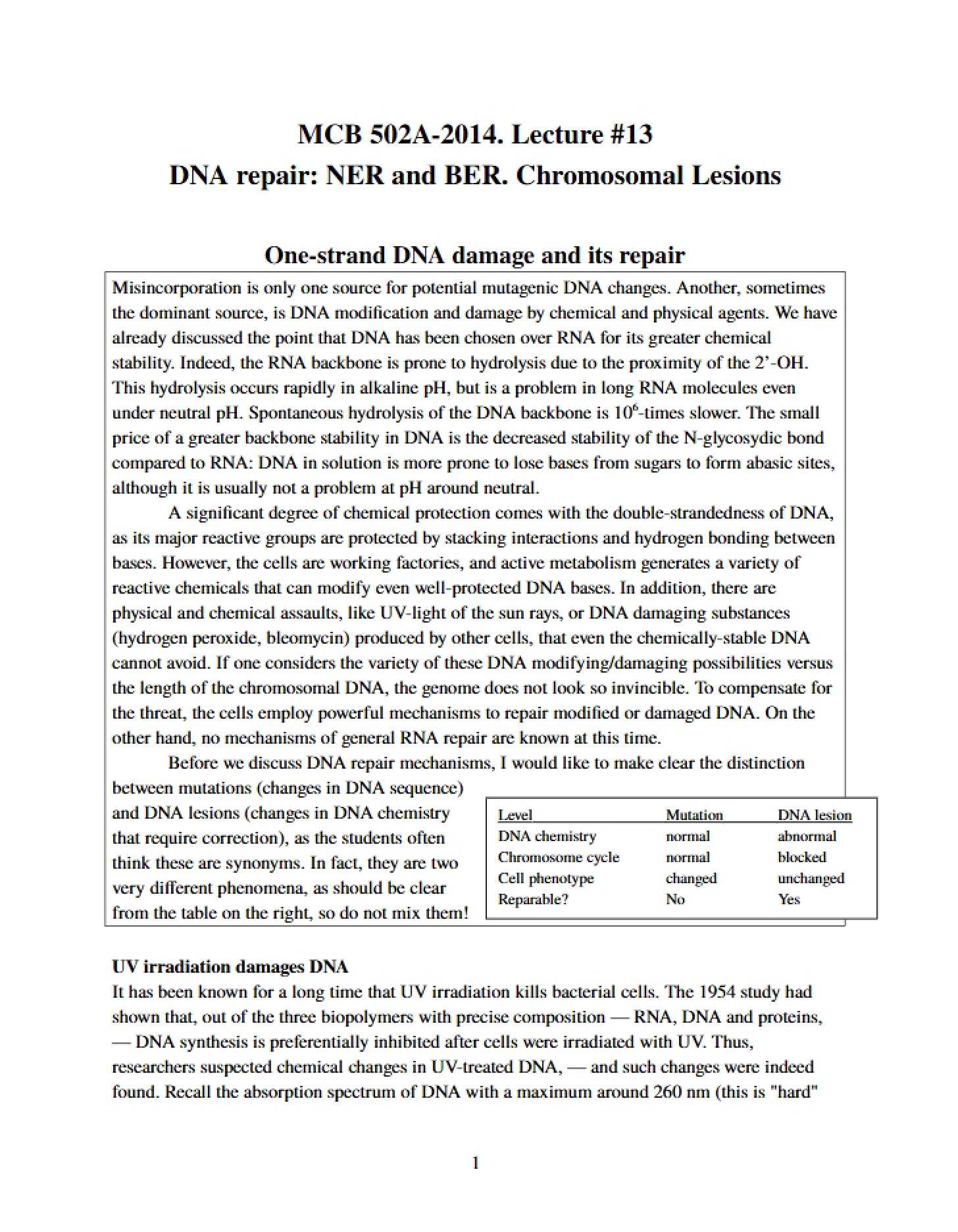
This document represents lecture notes from an advanced molecular genetics course (MCB 502) at the University of Illinois at Urbana-Champaign. Specifically, it delves into the intricate world of DNA repair mechanisms, focusing on both nucleotide excision repair (NER) and base excision repair (BER). It also explores chromosomal lesions and their implications. The material presented builds upon foundational genetics knowledge, moving into specialized repair pathways crucial for maintaining genomic integrity.
Why This Document Matters
Students enrolled in upper-level molecular genetics, genomics, or related biochemistry courses will find this resource particularly valuable. It’s ideal for supplementing lectures, preparing for in-depth discussions, and building a strong conceptual understanding of DNA maintenance. Researchers investigating DNA damage, mutagenesis, or cancer biology will also benefit from a detailed exploration of these core repair processes. This material is best utilized *alongside* textbook readings and active participation in course activities to maximize comprehension.
Common Limitations or Challenges
This document provides a focused exploration of specific DNA repair pathways and doesn’t encompass the entirety of molecular genetics. It assumes a pre-existing understanding of DNA structure, replication, and basic genetic principles. While it details the importance of these repair mechanisms, it does not offer practical laboratory protocols or experimental data. It’s designed to enhance understanding of *how* these systems work, not to provide a step-by-step guide for implementation.
What This Document Provides
* An overview of repair strategies for one-strand DNA damage.
* Detailed discussion of photoreactivation, including the role of photolyase.
* Exploration of methods used to detect and quantify pyrimidine dimers in DNA.
* Insights into the biochemical mechanisms underlying enzymatic photoreactivation.
* Information regarding the cofactors involved in photolyase function and their roles in energy transfer.
* Contextualization of these repair mechanisms within the broader field of genomic stability.