What This Document Is
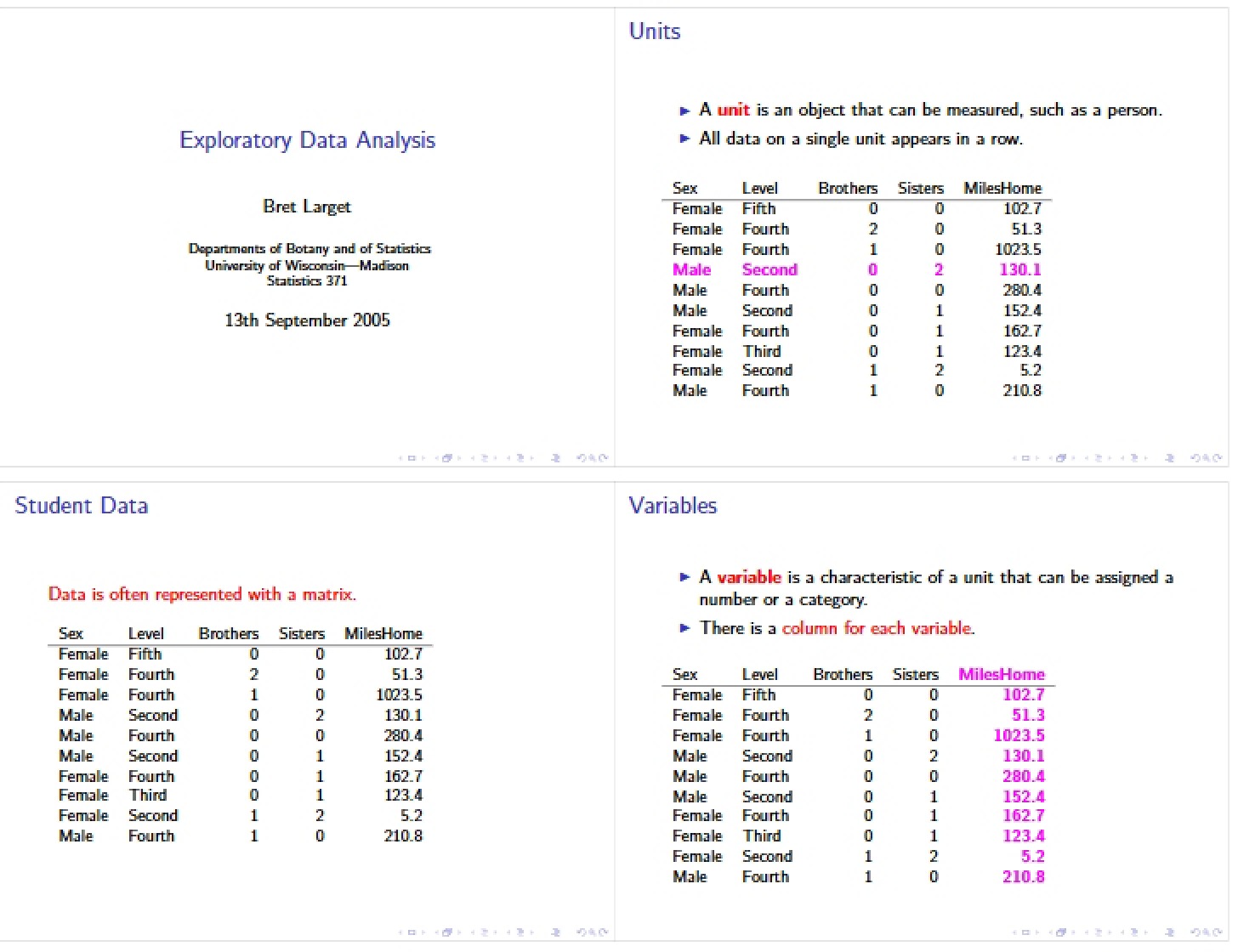
This resource is a focused exploration of Exploratory Data Analysis (EDA), a crucial component of the introductory statistics course (STAT 371) at the University of Wisconsin-Madison. It delves into the foundational principles and techniques used to initially investigate datasets, forming the basis for more rigorous statistical modeling. This isn’t a textbook replacement, but rather a concentrated guide designed to build practical skills in data understanding. The material appears to be structured around a series of concepts, building from fundamental ideas to more nuanced approaches.
Why This Document Matters
This guide is invaluable for students enrolled in STAT 371, or anyone beginning their journey in statistical analysis. It’s particularly helpful when you’re facing a new dataset and need a systematic way to uncover patterns, identify anomalies, and formulate hypotheses. Understanding EDA is essential *before* applying complex statistical tests, as it ensures you’re asking the right questions and interpreting results correctly. It’s most beneficial when used alongside lectures and practice problems, serving as a focused reference for key concepts. Students preparing for assignments or exams involving data interpretation will find this particularly useful.
Common Limitations or Challenges
This resource focuses specifically on the *process* of EDA. It does not provide pre-calculated statistical outputs or step-by-step instructions for using specific software packages (like R or Python). It also doesn’t cover inferential statistics or hypothesis testing – those topics are likely addressed in other course materials. While it outlines core concepts, it won’t substitute for a thorough understanding of the underlying mathematical principles. It assumes a basic familiarity with statistical terminology.
What This Document Provides
* A focused overview of key EDA principles.
* Discussion of strategies for initial data assessment.
* Exploration of techniques for visualizing data distributions.
* Considerations for identifying potential data quality issues.
* Guidance on formulating initial questions based on data exploration.
* Concepts related to summarizing and describing datasets.
* Discussion of how to approach data from different perspectives.
* Frameworks for interpreting initial data observations.