What This Document Is
This is a worksheet designed for students enrolled in an introductory computing course (ECE 120) at the University of Illinois at Urbana-Champaign. It focuses on the practical application of digital logic concepts, specifically relating to sequential circuits. This assignment challenges students to translate theoretical knowledge into concrete designs and analyses. It builds upon lecture material concerning state machines and their implementation using fundamental building blocks.
Why This Document Matters
This worksheet is crucial for students aiming to solidify their understanding of how digital systems function at a lower level. It’s particularly beneficial for those preparing for more advanced coursework in computer architecture and digital systems design. Working through these problems will enhance your ability to analyze and create circuits that exhibit specific sequential behaviors. It’s best utilized *after* reviewing the corresponding lecture notes and as preparation for in-class discussion sections.
Topics Covered
* Synchronous Counters: Design and analysis of counting circuits.
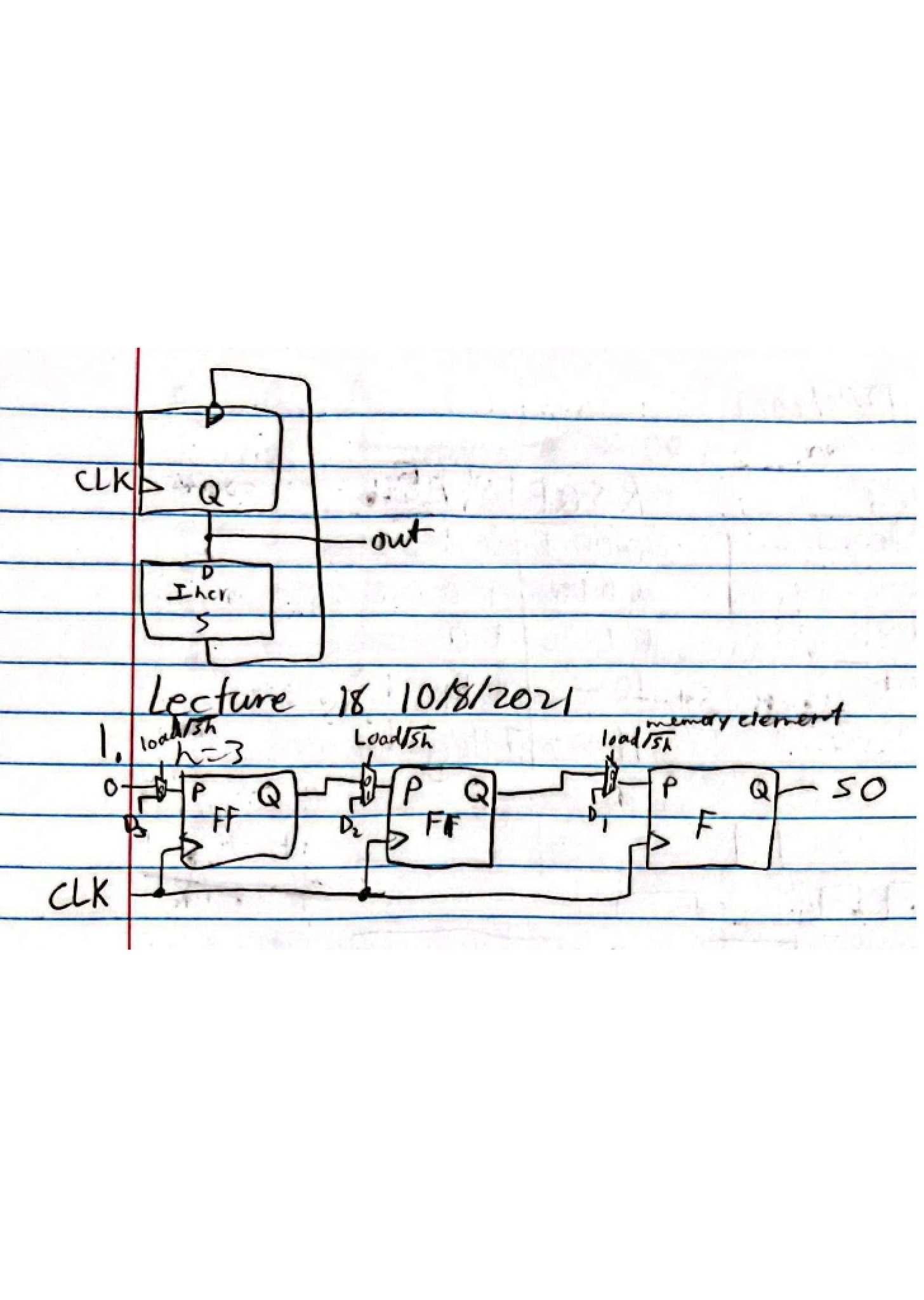
* Shift Registers: Implementation and characteristics of various shift register types.
* Sequential Logic: Application of flip-flops in building state-based systems.
* State Diagrams & Tables: Representing and utilizing state-based system behavior.
* Combinational Logic: Utilizing logic gates to define next-state functions.
* Digital System Design: Applying fundamental concepts to create functional digital circuits.
What This Document Provides
* Problem Statements: Detailed descriptions of design challenges related to counters and shift registers.
* Design Tasks: Opportunities to create circuit diagrams and state representations.
* Conceptual Questions: Prompts to evaluate understanding of key principles like self-starting counters.
* Circuit Schematics: Partially completed diagrams requiring students to add necessary connections.
* A Foundation for Discussion: Exercises designed to be a starting point for collaborative problem-solving.