What This Document Is
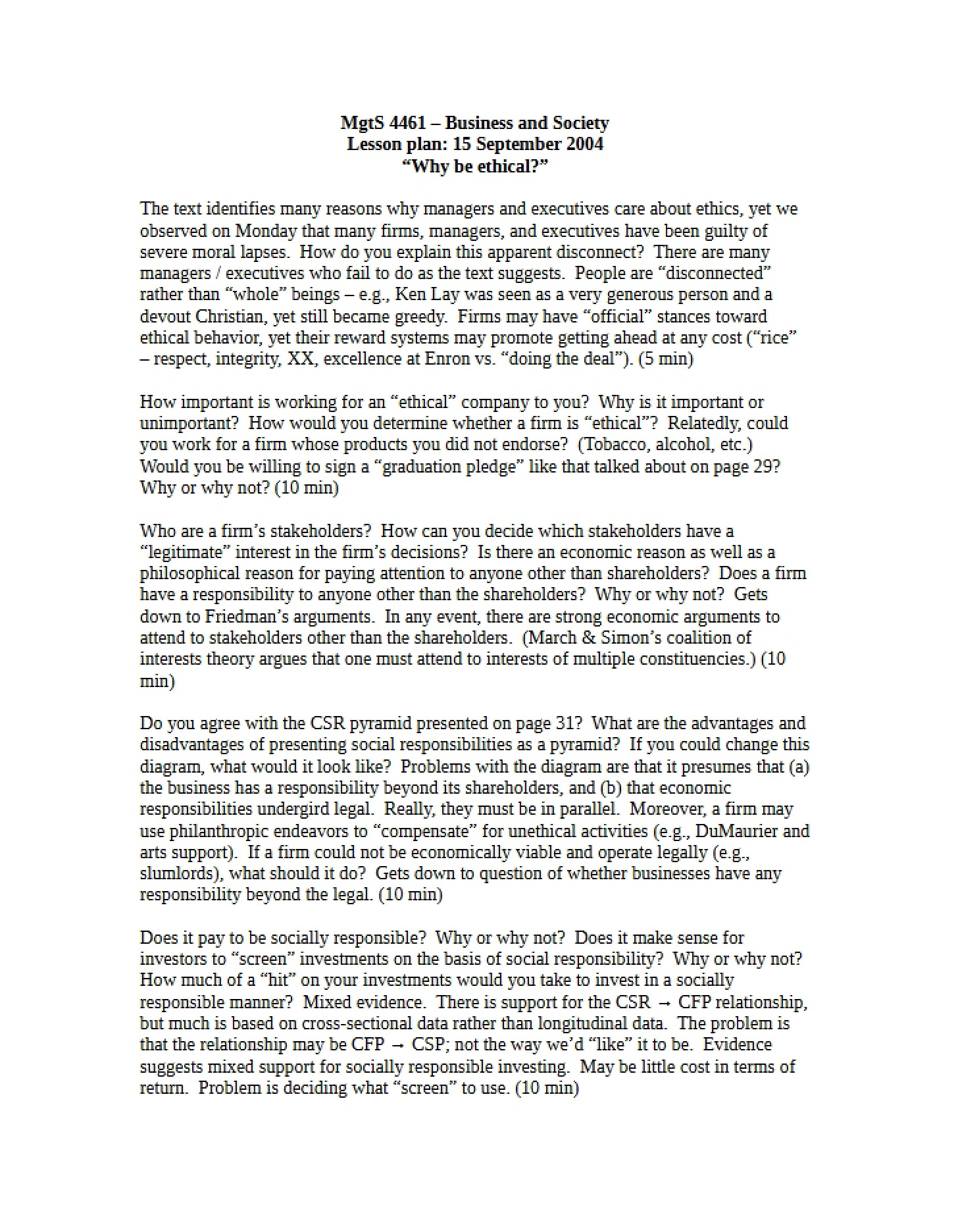
This study guide delves into the complex intersection of ethics and organizational management, specifically within a business context. It’s built around a lesson plan focused on “Managing for Ethical Conduct,” exploring how companies can foster – and sometimes hinder – ethical behavior amongst their employees. The material centers on critical thinking and application of ethical frameworks to real-world scenarios, prompting deep reflection on the motivations behind corporate actions and individual choices.
Why This Document Matters
Students enrolled in Business and Society courses, particularly those focusing on corporate responsibility, organizational behavior, or business ethics, will find this resource invaluable. It’s especially helpful when preparing for class discussions, grappling with case studies, or formulating arguments about the role of ethics in modern business. Individuals preparing to enter management roles, or those currently navigating ethical dilemmas in the workplace, will also benefit from the thought-provoking questions and considerations presented. This guide is designed to enhance understanding of the nuances of ethical leadership and the challenges of building an ethical organizational culture.
Common Limitations or Challenges
This resource is designed to *stimulate* thought and analysis, not to provide definitive answers. It does not offer pre-packaged solutions to ethical problems, nor does it present a comprehensive overview of all ethical theories. It focuses specifically on the influence of organizational structures – particularly reward systems – on employee behavior. It also relies heavily on self-reflection and application of concepts to personal experiences, meaning its value is maximized through active engagement with the material.
What This Document Provides
* A series of probing questions designed to challenge assumptions about ethical influence.
* Exploration of the relationship between situational factors and individual ethical choices.
* Consideration of the potential benefits and drawbacks of understanding personality in an organizational context.
* Frameworks for analyzing the ethical implications of reward systems.
* A case study prompt for evaluating organizational responses to ethical breaches.