What This Document Is
This resource is a focused exploration of cytogenetics, a core area within the broader fields of genetics and evolution. It delves into the structure and behavior of chromosomes, examining both typical chromosomal arrangements and variations that can occur. The material investigates the implications of these chromosomal differences, connecting them to observable traits and genetic conditions. It builds upon foundational genetics knowledge to explore more complex chromosomal-level phenomena.
Why This Document Matters
This material is particularly valuable for students enrolled in advanced genetics or evolutionary biology courses. It’s ideal for those seeking a deeper understanding of the physical basis of heredity and the mechanisms driving genetic change. It can be used to supplement lecture notes, prepare for exams, or reinforce understanding of complex concepts. Students interested in medical genetics or genetic counseling will also find this a helpful resource for building a strong foundational knowledge base.
Topics Covered
* Chromosome structure and classification in both prokaryotic and eukaryotic cells
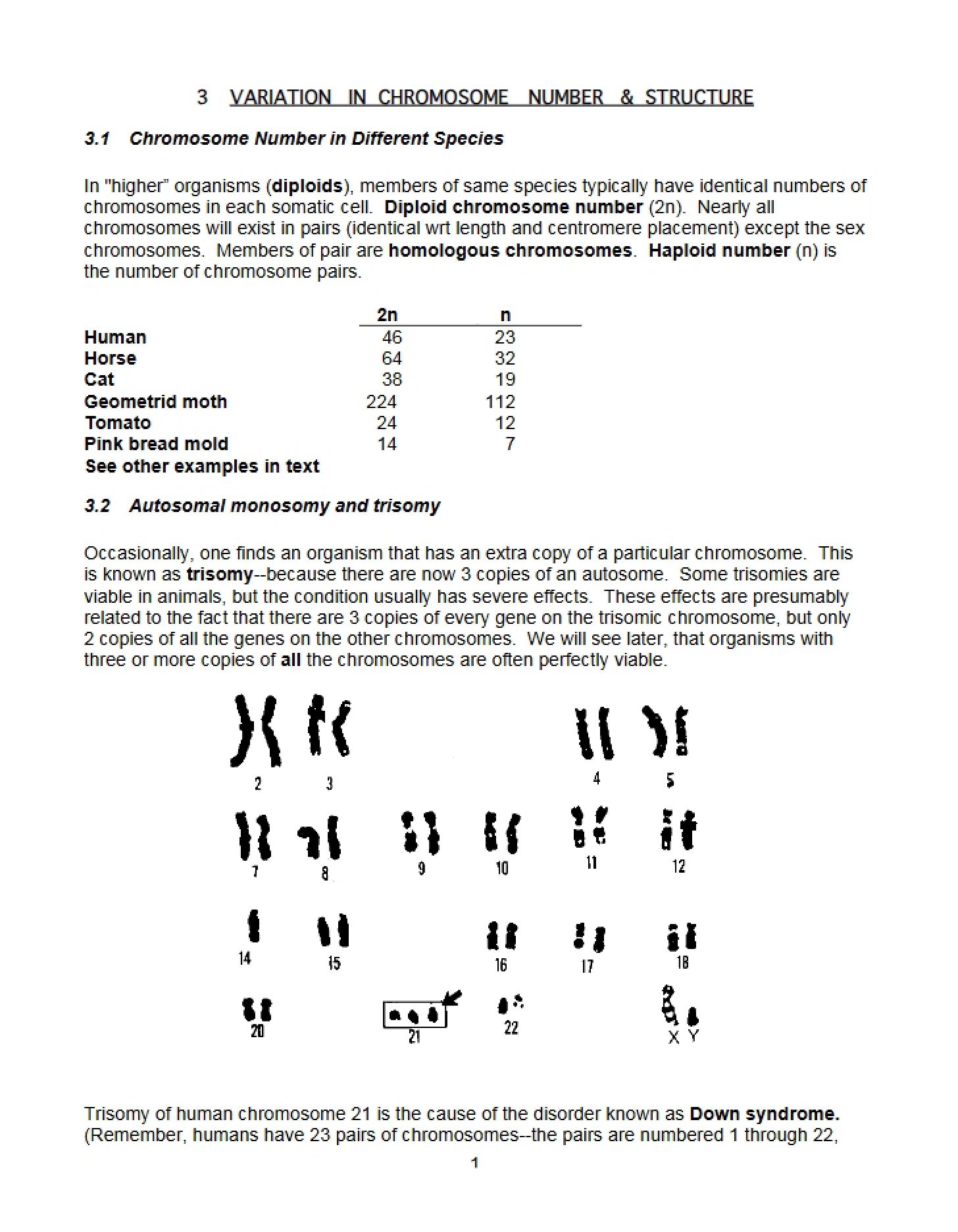
* The significance of karyotypes and their application in identifying chromosomal abnormalities
* The concepts of euploidy and aneuploidy, including monosomy, trisomy, and nullisomy
* Genetic conditions resulting from chromosomal variations, such as Down Syndrome, Cri du Chat Syndrome, and Patau Syndrome
* Mechanisms leading to chromosomal abnormalities, with a focus on nondisjunction
* Structural changes to chromosomes, including deletions, duplications, inversions, and translocations
What This Document Provides
* Detailed explanations of key cytogenetic terminology
* Visual representations of chromosomal arrangements and abnormalities
* An exploration of the connection between chromosomal variations and phenotypic effects
* A focused look at specific examples of human genetic conditions linked to chromosomal changes
* A framework for understanding the evolutionary implications of chromosomal alterations.