What This Document Is
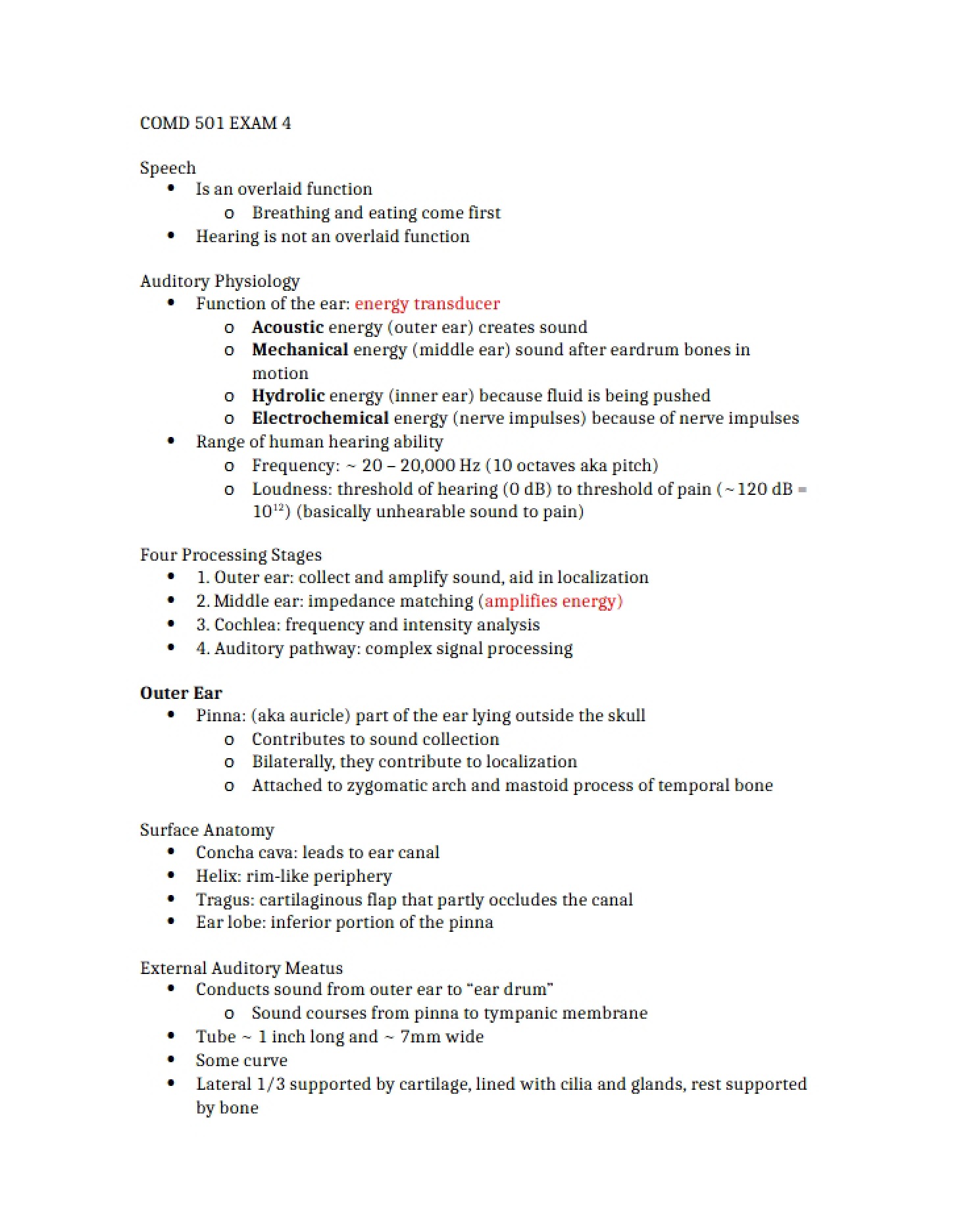
This document is an exam for COMD 501, a graduate-level course focusing on the Anatomy and Physiology of Speech and Hearing Mechanisms at the University of South Carolina. Specifically, it assesses understanding of the structures involved in articulation – how we modify sounds into speech – and the foundational skeletal framework supporting those processes. It’s designed to test comprehensive knowledge of bony landmarks and their functional relevance to communication.
Why This Document Matters
This exam preparation resource is invaluable for students currently enrolled in COMD 501, or those reviewing core anatomical principles related to speech production. It’s particularly useful as a self-assessment tool leading up to a formal evaluation. Individuals preparing for graduate-level studies in Communication Sciences and Disorders will also find it beneficial for gauging their existing knowledge base and identifying areas needing further study. Successfully navigating the concepts tested here is crucial for understanding more advanced topics in speech pathology and audiology.
Common Limitations or Challenges
This exam does *not* include detailed explanations of the anatomical structures. It is a test of existing knowledge, not a teaching tool. It won’t provide definitions, step-by-step breakdowns of complex processes, or clinical applications of the anatomy. Furthermore, it focuses specifically on the skeletal components and their relationship to articulation; it does not cover musculature, neurological control, or physiological processes in detail. Access to the full document is required to reveal the specific questions and assess your understanding.
What This Document Provides
* A comprehensive assessment of knowledge regarding the bones of the skull.
* Focus on the distinction between cranial and facial bones and their respective functions.
* Evaluation of understanding of key anatomical landmarks and their significance.
* Testing of knowledge related to sutures and their role in skull structure.
* Assessment of familiarity with the bony structures forming the oral and nasal cavities.
* Questions relating to the specific bones contributing to articulation and sound production.