What This Document Is
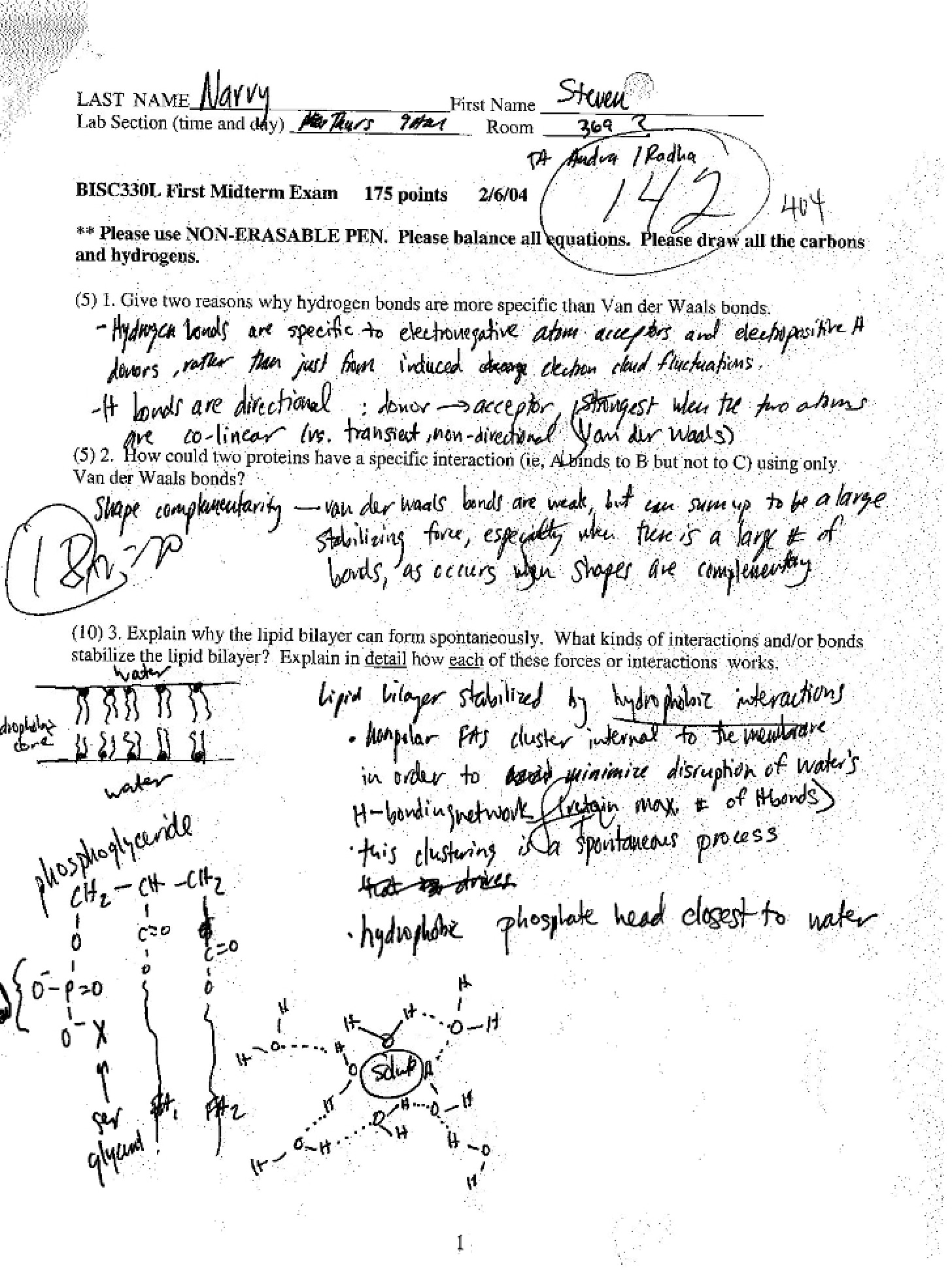
This is a past exam from Biochemistry (BISC 330L) at the University of Southern California, administered in Spring 2007. It represents a comprehensive assessment of core concepts covered in the course during the first midterm examination period. The document includes scoring rubrics and administrative details related to exam review and grading policies. It’s designed to reflect the style, depth, and format of questions students can expect on similar evaluations.
Why This Document Matters
This resource is invaluable for students currently enrolled in BISC 330L, or those preparing for a similar biochemistry course. It’s particularly useful for understanding the types of questions asked, the level of detail expected in answers, and the overall assessment strategy employed by the instructor. Reviewing past exams is a proven method for identifying knowledge gaps and refining test-taking strategies. It can be used for self-assessment, practice under timed conditions, and to gauge the relative importance of different topics within the course curriculum.
Common Limitations or Challenges
Please be aware that this is a historical exam. While the fundamental principles of biochemistry remain constant, specific content emphasis or question wording may differ in current iterations of the course. This document does *not* include answer keys or detailed explanations of correct solutions. It serves as a practice tool, but should not be relied upon as a definitive guide to future exam content. Furthermore, grading policies and TA assignments may have changed since 2007.
What This Document Provides
* A full reproduction of the original exam questions, covering a range of biochemistry topics.
* Point values assigned to each question, indicating relative importance.
* Detailed rubrics outlining the criteria used for grading specific question types.
* Administrative information regarding exam re-grade requests and procedures.
* Insight into the expected format and style of exam questions in BISC 330L.
* Topics covered include carbohydrate structure, lipid bilayers, protein structure, enzyme reactions, and the role of ATP.