What This Document Is
This is a study guide designed to help students prepare for Exam One in Northeastern University’s Foundations of Psychology (PSYC 1101) course. It provides a focused overview of key figures, concepts, and schools of thought covered in the early stages of the course. The guide is structured around prominent thinkers and their contributions to the field.
Why This Document Matters
This study guide is essential for students enrolled in PSYC 1101 who are looking to efficiently review material for their first exam. It’s most useful during the week leading up to the exam as a consolidation tool. It exists to help students identify core concepts they need to master and to understand the historical development of psychological thought.
Common Limitations or Challenges
This study guide is a *preview* of the material and does not replace attending lectures, completing readings, or engaging with course materials. It’s a condensed resource and won’t provide in-depth explanations or comprehensive coverage of every detail. It is not a substitute for a thorough understanding of the assigned textbook chapters.
What This Document Provides
This study guide includes summaries of:
* Early philosophical influences on psychology (Plato, philosophical empiricism, dualism).
* Key information about Wilhelm Wundt and the establishment of the first psychology laboratory.
* An overview of structuralism and introspection.
* Details on William James and the development of functionalism.
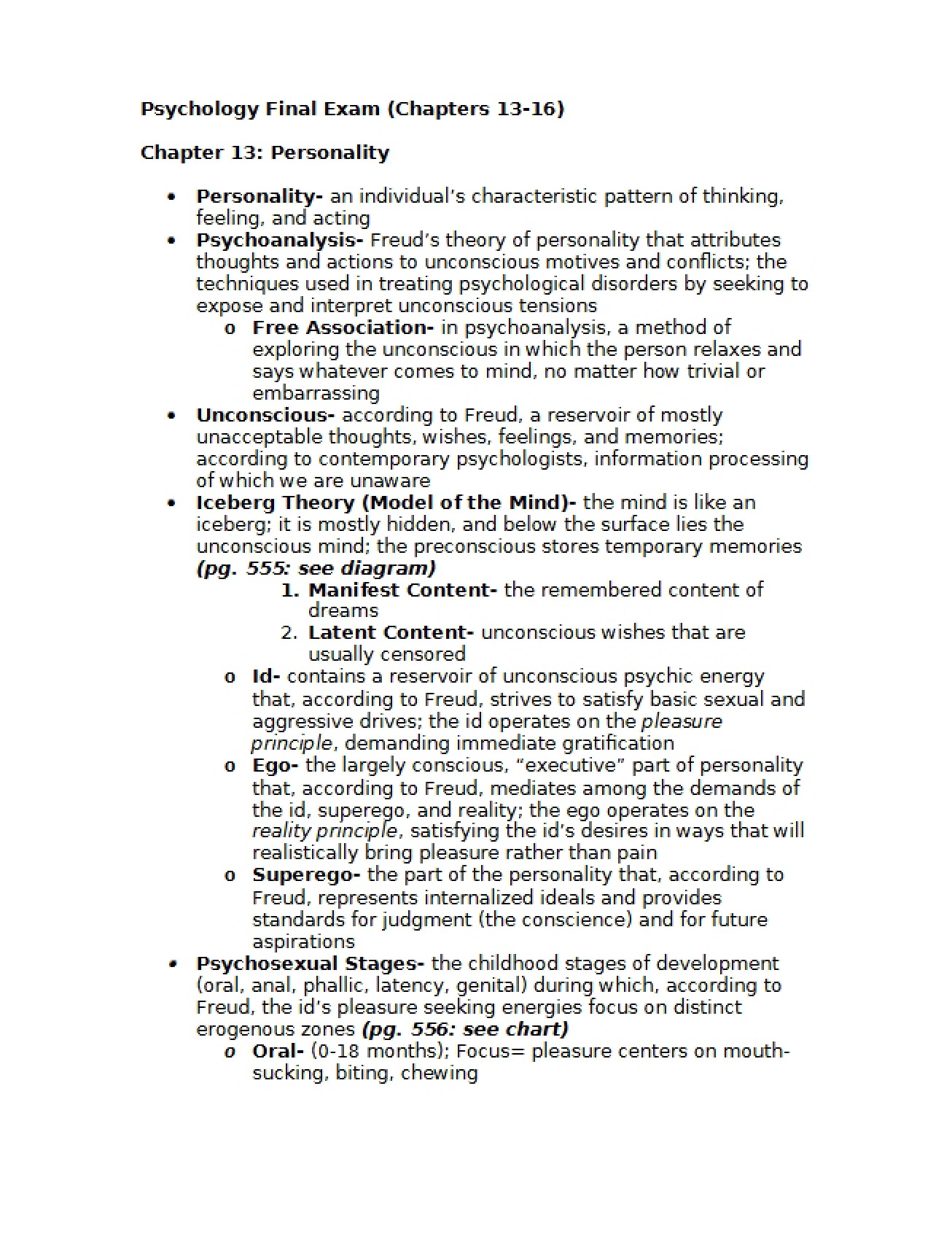
* A summary of Sigmund Freud and the core tenets of psychoanalytic theory.
* An introduction to behaviorism and the contributions of Pavlov, Watson, and Skinner.
This preview *does not* include practice questions, detailed explanations of complex theories, or a complete list of all terms covered on the exam. It also does not include information beyond the scope of Exam One.