What This Document Is
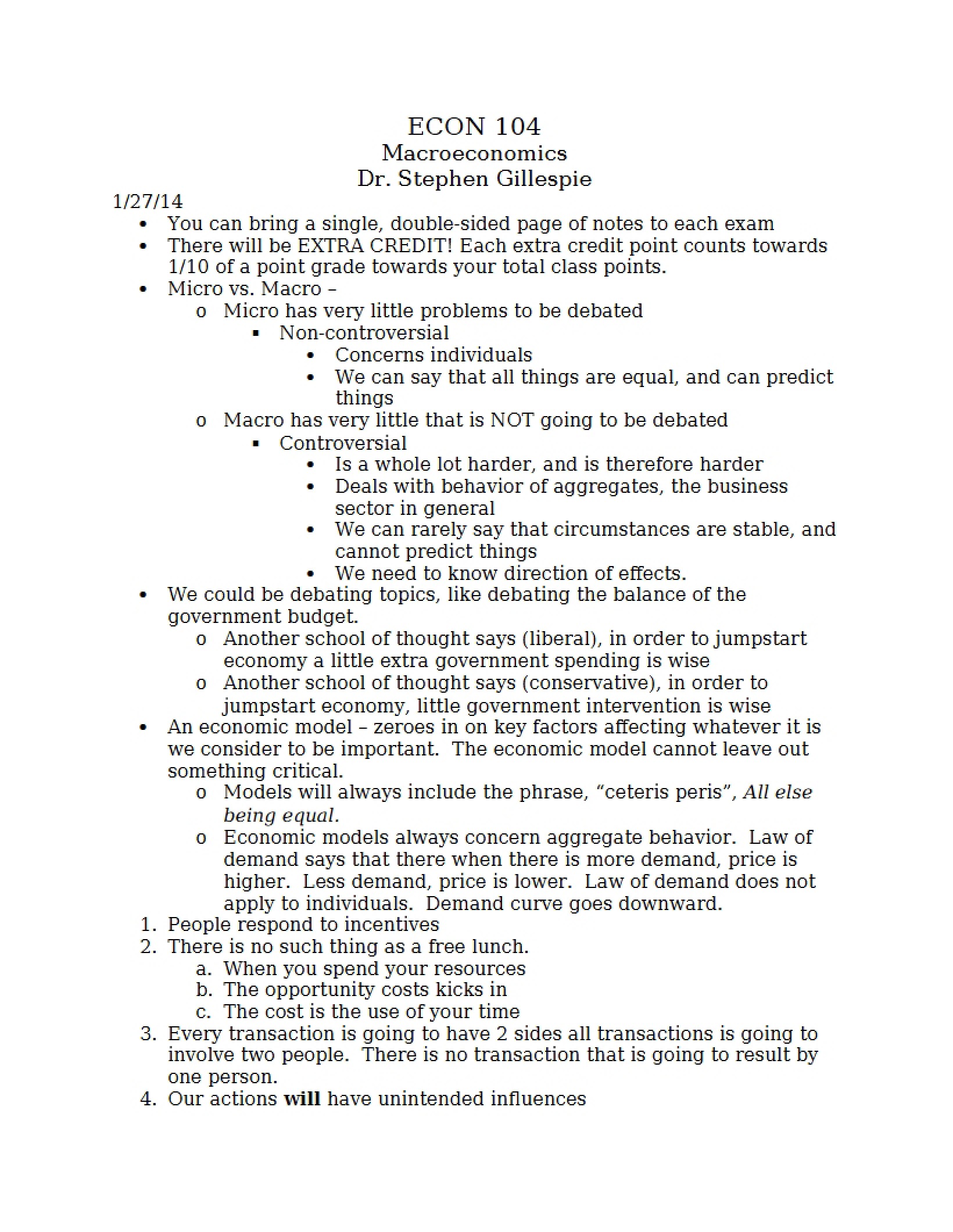
These are notes compiled for Exam Two in George Mason University’s Macroeconomic Principles (ECON 104) course, prepared by a student for use with Professor Rustici’s lectures. The notes cover foundational concepts in macroeconomics, tracing the historical development of thought around money and economic models.
Why This Document Matters
This study guide is valuable for students currently enrolled in ECON 104 preparing for their second exam. It’s particularly useful for reviewing key historical perspectives on money and understanding the differences between Classical, Keynesian, and Neoclassical economic models. It serves as a condensed review of lecture material, intended to aid in focused studying.
Common Limitations or Challenges
This document is a student-created study guide, not an official course document. It represents one interpretation of the course material and should be used in conjunction with lecture notes, the textbook, and other official resources. It does not offer complete coverage of all exam topics, nor does it provide practice problems or solutions.
What This Document Provides
The notes include definitions of macroeconomics and explanations of money’s role in the economy, drawing on the work of historical economists like Homer, Adam Smith, and Karl Manger. It outlines the Commodity Theory of Money, the concept of the double coincidence of wants, and Manger’s idea of money as a “spontaneous instrument.” The guide also differentiates between nominal and real prices, introduces National Income Accounting (GDP vs. GNP), and touches upon the need for adjustments due to changes in the price of money (CPI). However, it does *not* include detailed explanations of CPI calculations, comprehensive coverage of all National Income Accounting adjustments, or in-depth analysis of specific economic policies.