What This Document Is
This is a focused review resource designed to help students prepare for Exam Two in PCOL 331: Pharmacology for Dentistry at the University of Illinois at Chicago. It comprehensively covers key principles and concepts related to dental pharmacology, specifically concentrating on autonomic pharmacology and drug-receptor interactions. This isn’t a textbook replacement, but a targeted tool to reinforce understanding before a significant assessment.
Why This Document Matters
This resource is invaluable for students in PCOL 331 who are looking to solidify their grasp of complex pharmacological concepts. It’s best utilized during the study period leading up to Exam Two, serving as a concentrated review of essential material. Students who utilize this prep guide will be better equipped to approach exam questions with confidence and a clear understanding of the underlying principles. It’s particularly helpful for identifying areas needing further review.
Topics Covered
* Drug-Receptor Interactions: Principles and mathematical descriptions.
* Potency vs. Efficacy of drugs.
* Biochemical Classification of Receptors (membrane-bound and cytosolic/nuclear).
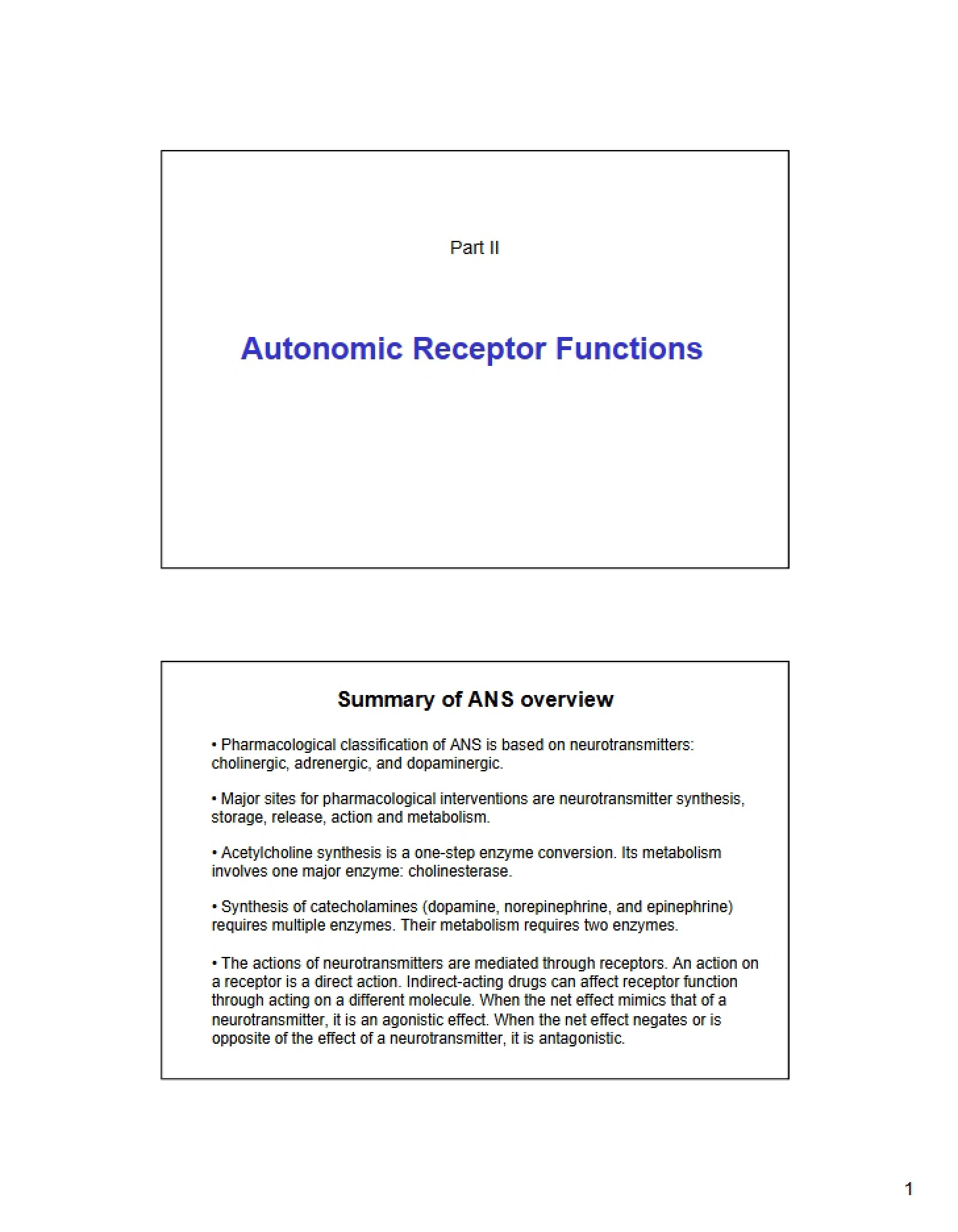
* Autonomic Pharmacology: Cholinergic and Adrenergic systems.
* Neurotransmission: Synthesis, release, and metabolism of neurotransmitters.
* Receptor Functions: Agonistic, antagonistic, direct-acting, and indirect-acting mechanisms.
* Organ System Innervation: Predominant innervation types and their physiological effects.
* Cholinergic and Adrenergic Receptor Subtypes and their effects.
What This Document Provides
* A focused overview of signal-transducing receptors and their characteristics.
* A detailed exploration of the differences between various receptor interactions (agonists, antagonists, etc.).
* A comparative analysis of cholinergic and adrenergic systems, including key enzymes and mechanisms.
* A breakdown of how pharmacological activation or blockade impacts major organ systems.
* A review of the physiological consequences associated with different receptor activations.