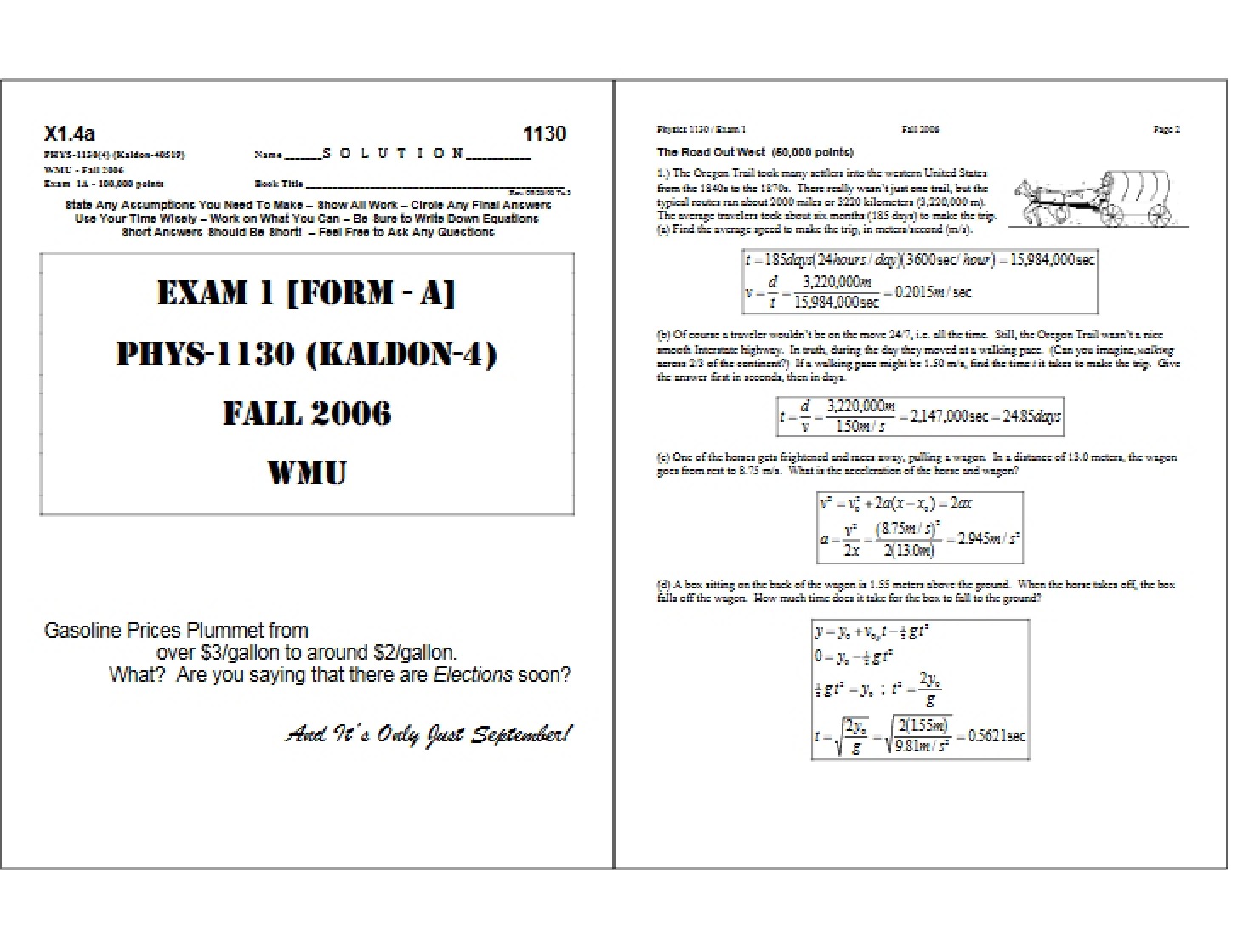
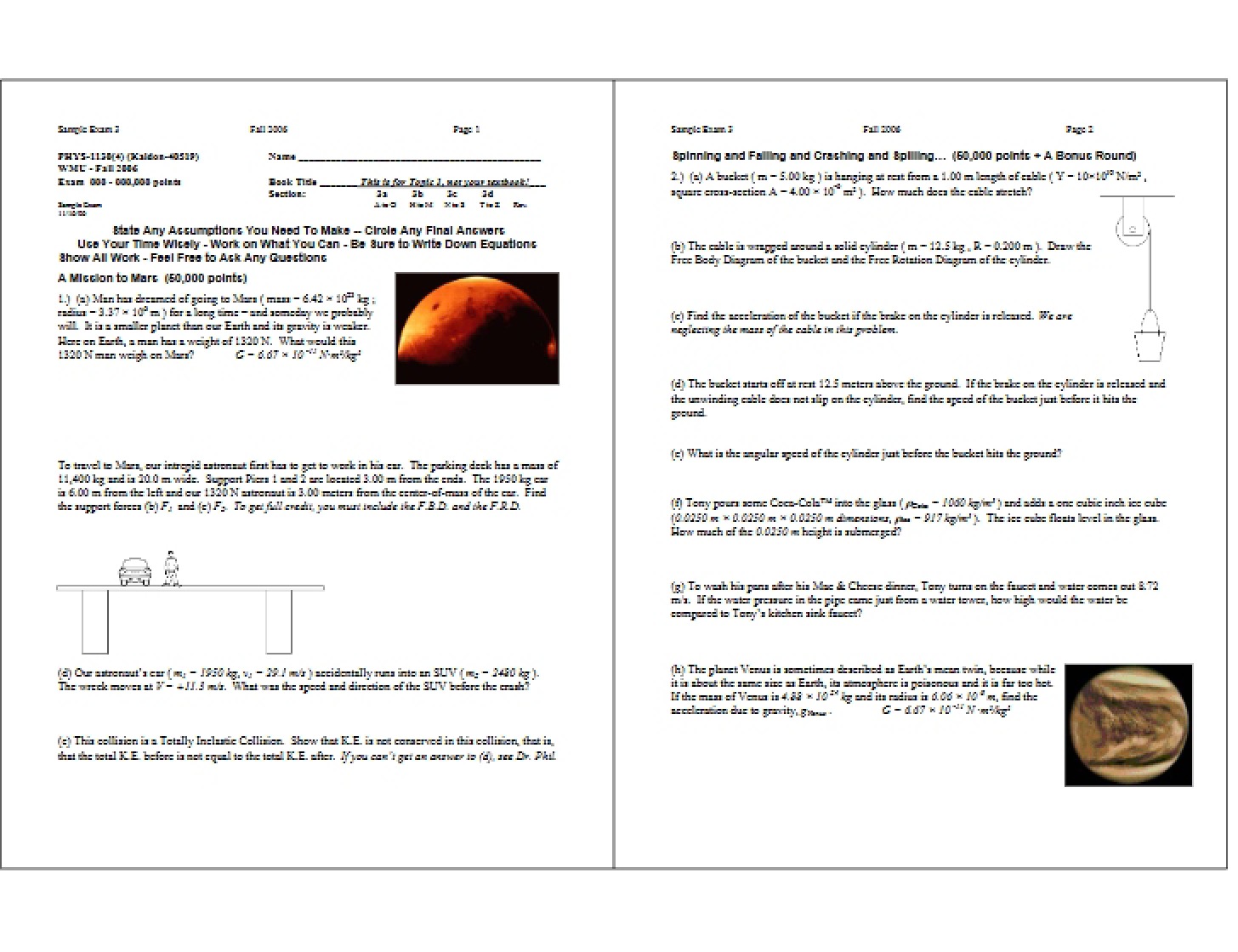
What This Document Is
This is a final examination for a General Physics I course (PHYS 1130) at Western Michigan University. It’s designed to comprehensively assess a student’s understanding of core physics principles covered throughout the semester. The exam focuses on applying theoretical knowledge to practical, real-world scenarios, utilizing complex problem-solving. Expect a focus on mechanics, likely including topics like forces, energy, rotational motion, and equilibrium.
Why This Document Matters
This resource is invaluable for students currently enrolled in General Physics I, or those preparing to take a similar introductory physics course. It’s particularly useful for students who want to gauge the depth and breadth of topics covered on a university-level physics final. Reviewing the types of problems presented can help identify areas where further study is needed and refine test-taking strategies. It’s best utilized *after* completing coursework and practice problems, as a final check of preparedness.
Common Limitations or Challenges
This examination does not include detailed explanations of concepts or step-by-step solutions. It presents problems requiring application of physics principles, but doesn’t offer instruction on *how* to solve them. It also doesn’t cover every single topic potentially included in a General Physics I course; the focus is on a specific selection of concepts. Access to this document alone will not guarantee success – it’s a tool for self-assessment, not a substitute for learning the material.
What This Document Provides
* A range of quantitative problems testing understanding of physics concepts.
* Scenarios involving real-world applications of physics, such as analyzing the mechanics of large-scale machinery.
* Problems requiring the application of formulas and calculations related to force, work, energy, and rotational motion.
* Opportunities to practice problem-solving skills under timed conditions, simulating an exam environment.
* Insight into the expected level of rigor and complexity of questions on a university physics final exam.