What This Document Is
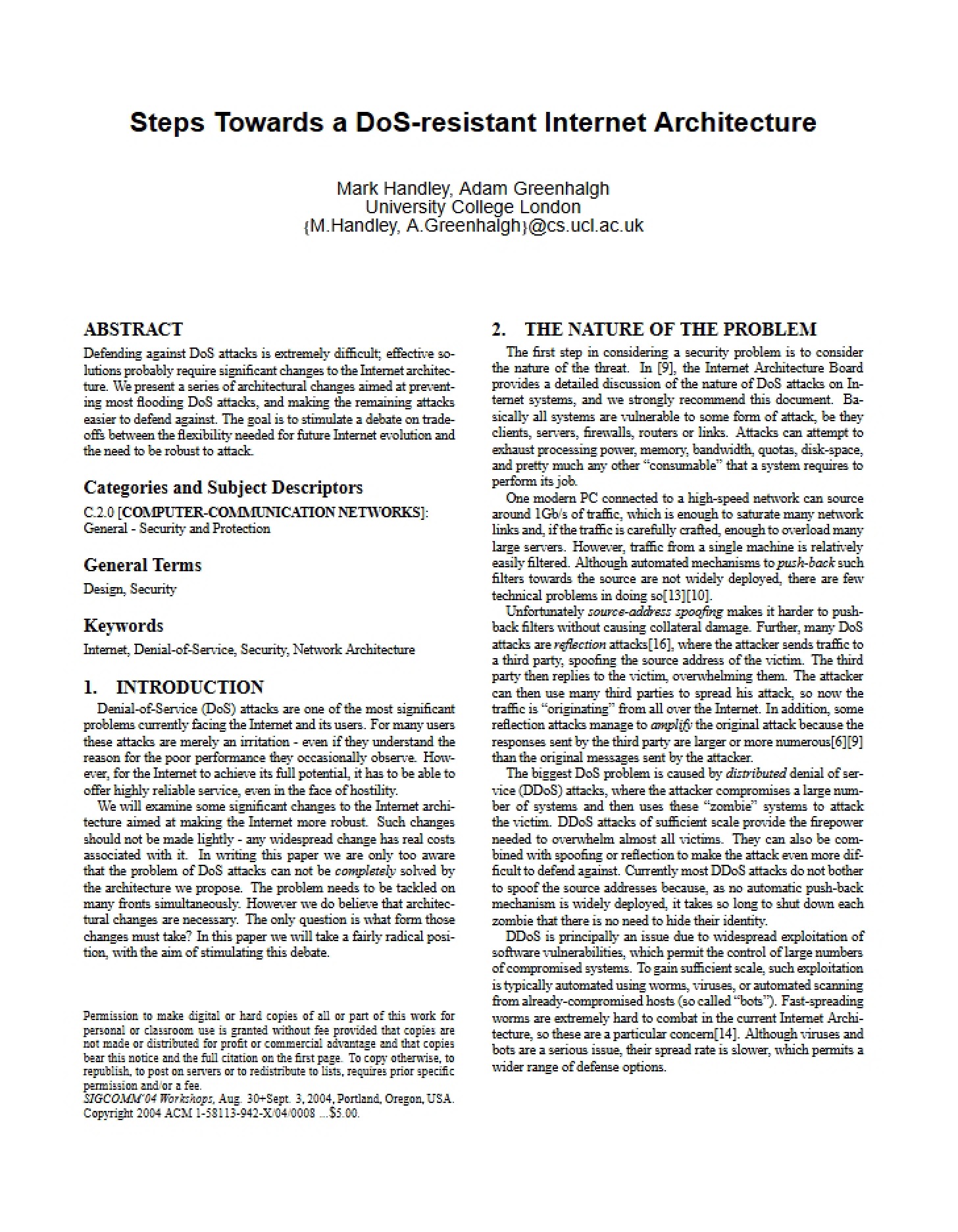
This document is a focused exploration of denial-of-service (DoS) attacks, presented as a seminar-level study within the field of applied optics and photonics. It delves into the security implications of these attacks, moving beyond typical confidentiality and authenticity concerns to concentrate specifically on the disruption of service availability. The material examines DoS vulnerabilities not just from a theoretical standpoint, but with a strong emphasis on practical engineering considerations and potential defense strategies.
Why This Document Matters
Students enrolled in advanced optics and photonics courses – particularly those with a focus on secure communication systems or network infrastructure – will find this resource valuable. It’s especially relevant when analyzing system vulnerabilities, designing robust network architectures, or considering the security implications of interconnected devices. Professionals working on security protocols or risk assessment will also benefit from the detailed examination of this critical threat. This study guide is designed to supplement core coursework and provide a deeper understanding of a complex security challenge.
Topics Covered
* The categorization of security threats and the unique challenges posed by denial-of-service attacks.
* The importance of considering the end-user when designing security measures.
* Analysis of potential attack vectors targeting various system components (servers, networks, clients).
* Engineering considerations for mitigating DoS vulnerabilities.
* The impact of cost-saving measures on overall system security.
* Real-world application of DoS concepts within a specific infrastructure context.
What This Document Provides
* A detailed case study approach to understanding DoS attacks.
* A framework for analyzing the interconnectedness of system components in relation to service availability.
* Discussion of the responsibilities of service providers in maintaining system integrity.
* Exploration of potential vulnerabilities arising from both physical and non-physical system elements.
* A focused perspective on the complexities of defending against intentional service disruption.