What This Document Is
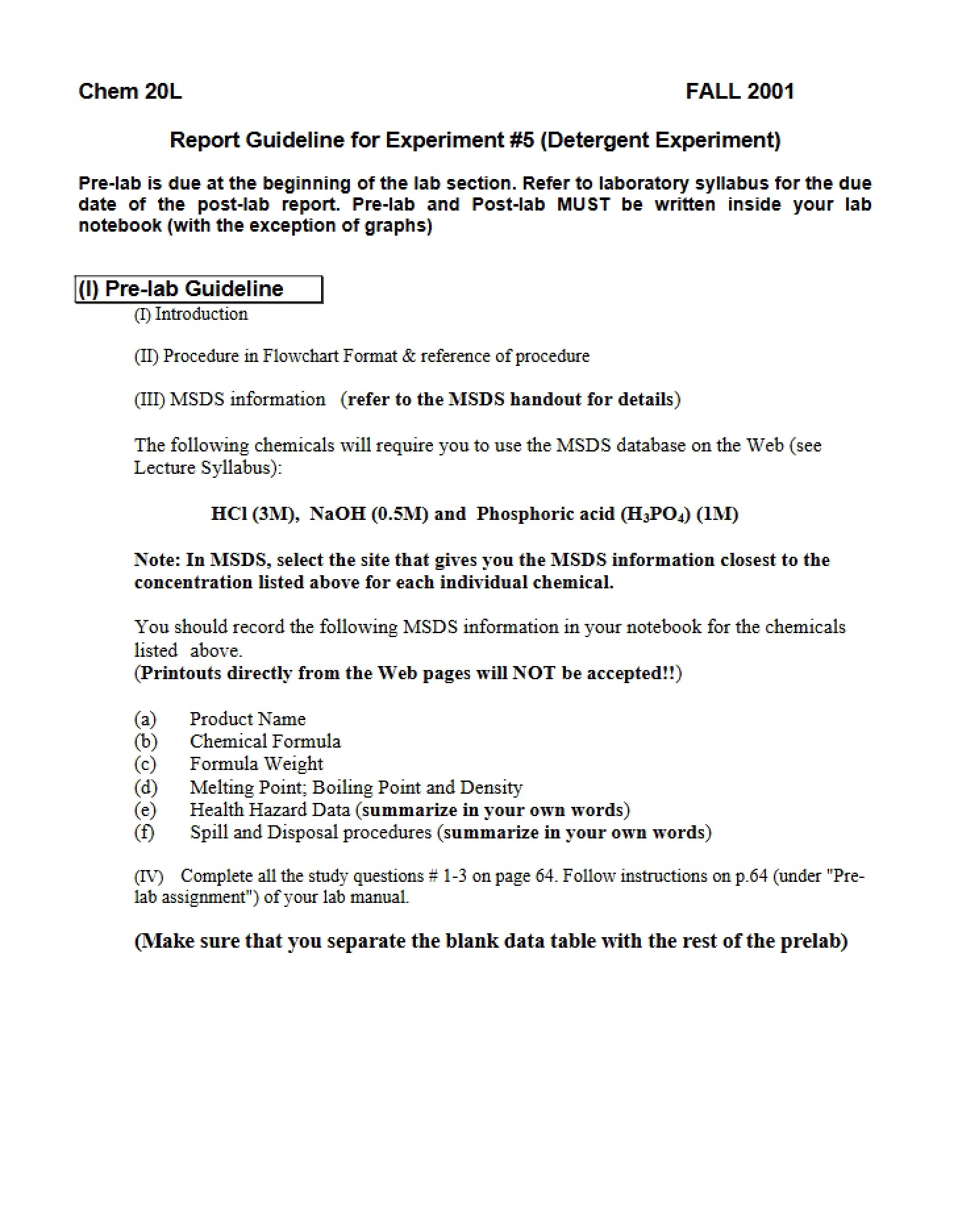
This document provides comprehensive guidelines for completing Experiment 3 in the UCLA General Chemistry Laboratory (CHEM 20L) course, often referred to as the “Cigarette Experiment.” It details the expectations for both pre-laboratory preparation and the final post-laboratory report. This resource is designed to help students successfully navigate the experimental process, data analysis, and scientific reporting requirements for this specific lab.
Why This Document Matters
This guide is essential for students enrolled in CHEM 20L who are preparing for and completing Experiment 3. It clarifies the structure and content expected in both the pre-lab work completed *before* the experiment and the comprehensive post-lab report submitted *after* the experiment. Understanding these guidelines will help students maximize their scores and demonstrate a strong grasp of experimental methodology and data interpretation. It’s particularly useful for group work, as the post-lab report is a collaborative effort.
Topics Covered
* Pre-laboratory report requirements
* Safety protocols and Material Safety Data Sheet (MSDS) information
* Data collection and organization techniques
* Particulate matter analysis in cigarette smoke
* Spectrophotometric analysis and Beer’s Law
* Quantitative chemical analysis of NOx compounds
* Error analysis and propagation of uncertainty
* Proper formatting of scientific graphs and data tables
* Group collaboration and report responsibilities
What This Document Provides
* A detailed outline of the pre-lab report, including required sections like the experiment title, procedure references, introduction, and procedural flowchart.
* Specific instructions for obtaining and recording crucial safety information using the MSDS database.
* A breakdown of the post-lab report structure, emphasizing the importance of clear data presentation and collaborative contributions.
* Guidance on the calculations needed for particulate analysis, including determining the weight and concentration of particulates.
* Instructions for creating and interpreting a Beer’s Law calibration graph for nitrite ion analysis.
* A framework for performing error analysis related to both particulate matter and spectrophotometric measurements.