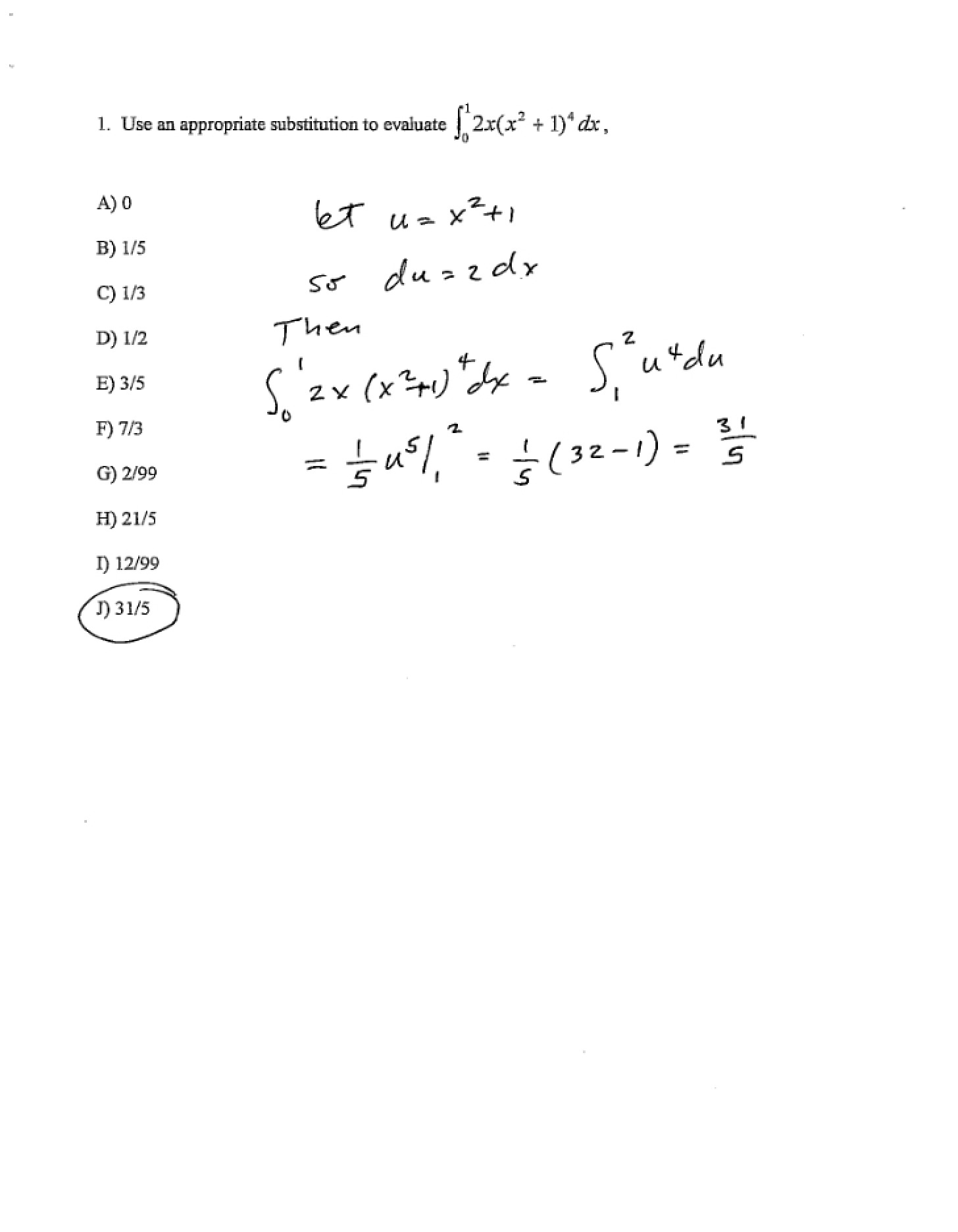
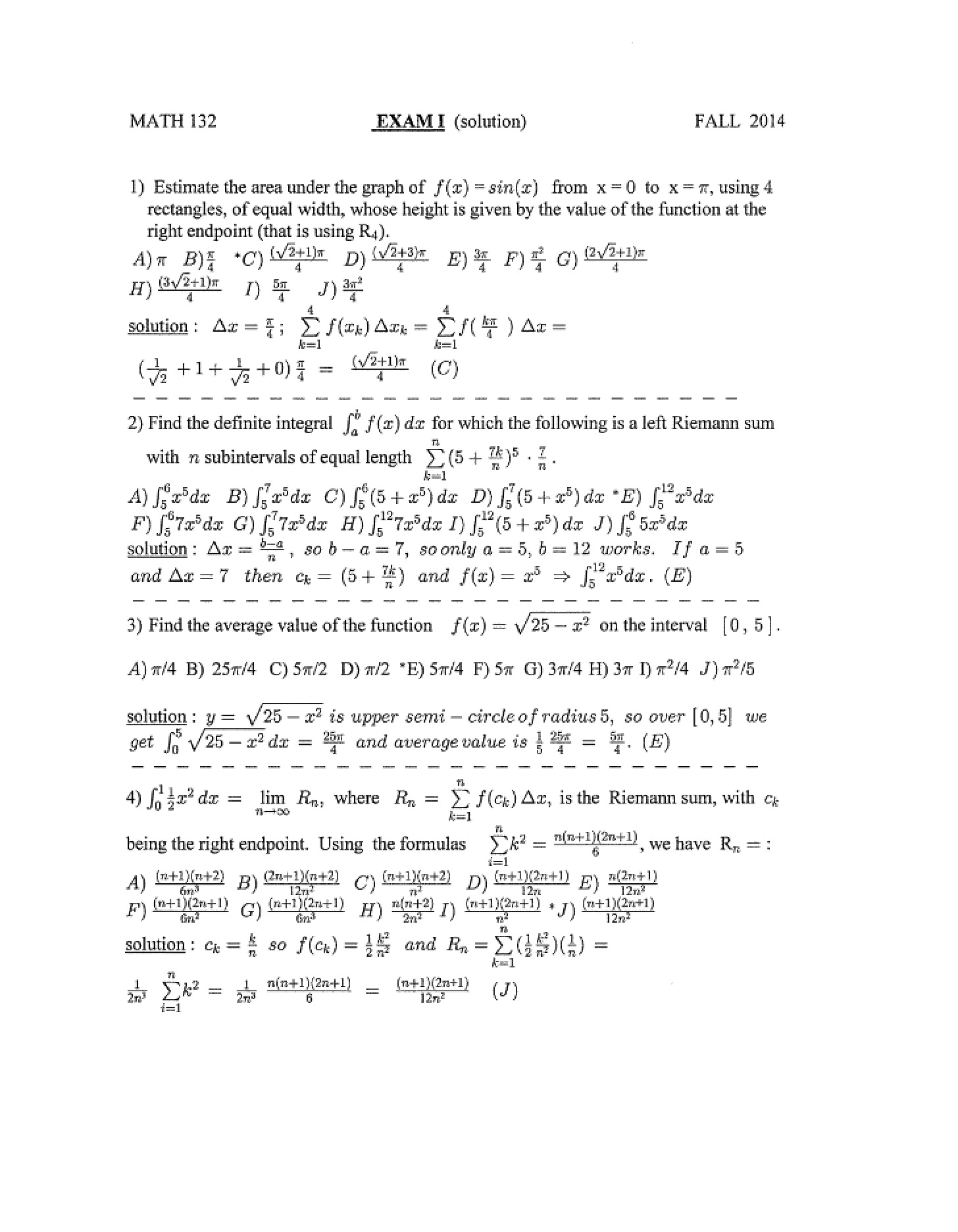
What This Document Is
This document is a past final exam for MATH 132, Calculus II, at Washington University in St. Louis, specifically from the Fall 2011 semester (Part 4). It’s designed to assess a student’s comprehensive understanding of the core concepts covered throughout the course. The exam format consists of multiple-choice questions, requiring students to demonstrate both computational proficiency and conceptual grasp of calculus principles. It represents a realistic sample of the types of questions and problem-solving skills expected in a Calculus II final examination at this institution.
Why This Document Matters
This resource is invaluable for students currently enrolled in Calculus II, or those preparing to take the course. It’s particularly useful for self-assessment, identifying areas of strength and weakness, and familiarizing yourself with the exam style and difficulty level employed by the instructor, Dr. Shapiro. Studying past exams is a proven method for improving test-taking strategies and reducing anxiety. It can also be used as a practice tool to hone your speed and accuracy in solving calculus problems. Students who are looking to solidify their understanding before a major evaluation will find this particularly helpful.
Common Limitations or Challenges
While this exam provides a strong indication of the course’s expectations, it represents a specific instance from Fall 2011. The exact content and emphasis may vary in subsequent semesters. This document does *not* include detailed solutions or explanations; it is purely the exam itself. Therefore, it’s most effective when used in conjunction with course notes, textbooks, and other learning materials. It also assumes a foundational understanding of Calculus I concepts.
What This Document Provides
* A complete, previously administered Calculus II final exam.
* 20 multiple-choice questions covering a range of topics within the Calculus II curriculum.
* Questions designed to test application of integration techniques (substitution, parts, partial fractions).
* Problems assessing understanding of applications of integration, including area, volume, and arc length.
* Questions related to differential equations and series (convergence, Maclaurin/Taylor series).
* A glimpse into the format and point value of questions on Dr. Shapiro’s exams.
* A reference to provided data for trigonometric functions and power series during the exam.