What This Document Is
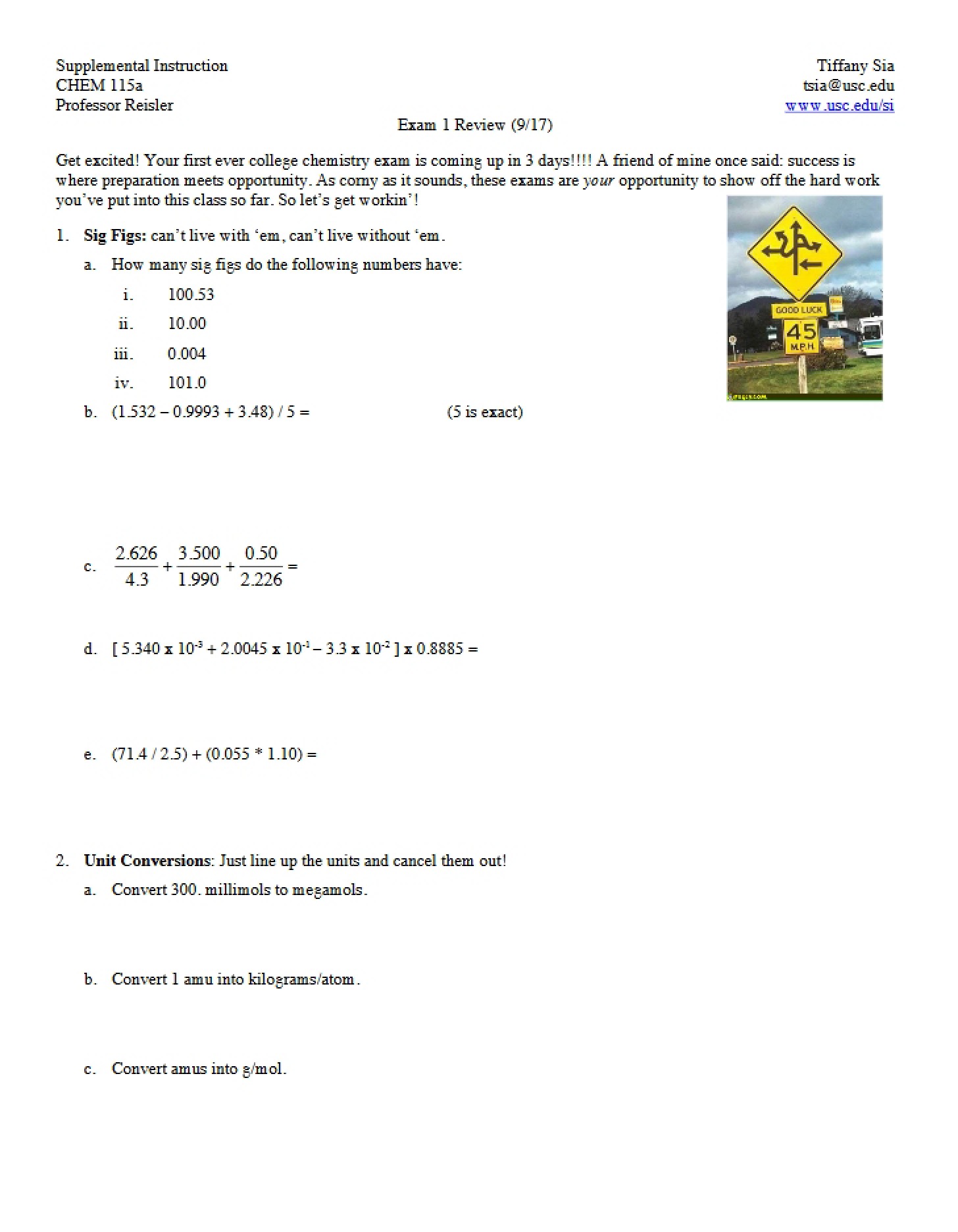
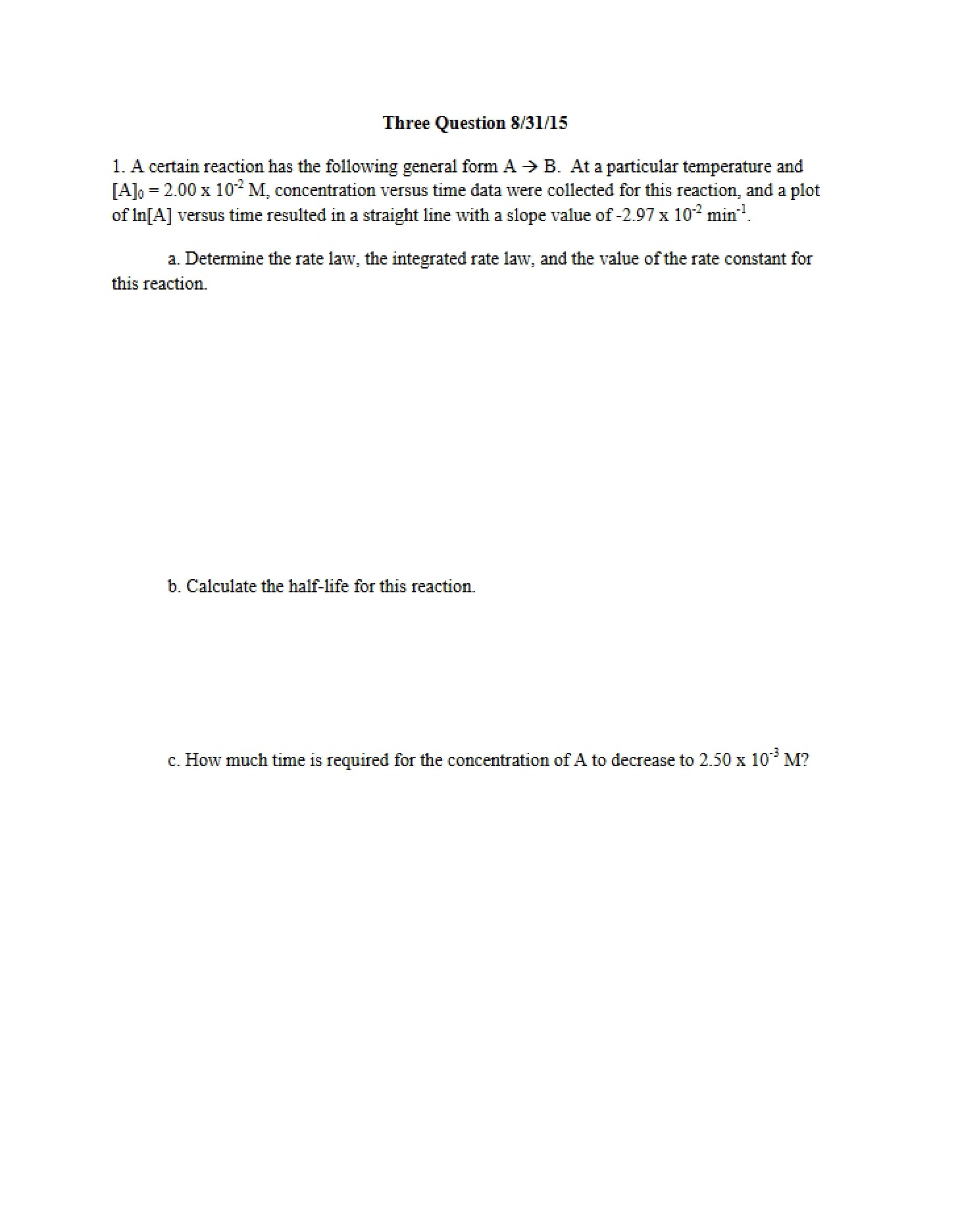
This is a past exam from a General Chemistry (CHEM 105) course at the University of Southern California. Specifically, it’s the first exam administered in Fall 2012 (Chem 105a). It’s designed to assess a student’s understanding of foundational chemistry concepts typically covered early in a first-semester college chemistry course. The exam focuses on problem-solving and application of principles, requiring students to demonstrate their work for full credit.
Why This Document Matters
This resource is incredibly valuable for students currently enrolled in, or preparing to take, a similar General Chemistry course. It provides a realistic glimpse into the exam format, question types, and overall difficulty level expected by the instructor. Utilizing past exams like this one is a proven strategy for effective exam preparation, allowing students to identify knowledge gaps and refine their test-taking skills. It’s particularly useful for self-assessment and practice under timed conditions. Students who want to understand the scope of material covered on exams will find this particularly helpful.
Common Limitations or Challenges
While this exam is a strong indicator of potential exam content, it’s important to remember that course curricula and instructor emphasis can change over time. This exam reflects the specific topics and weighting chosen by the professor in Fall 2012, and may not perfectly align with a current course. It does *not* include answer keys or detailed explanations of the solutions. It is intended as a practice tool, not a substitute for thorough understanding of course material.
What This Document Provides
* A full set of exam questions covering core chemistry topics.
* Insight into the types of calculations and conceptual questions asked.
* Practice with unit conversions and significant figures.
* Exposure to problems involving atomic structure and isotopic abundance.
* Examples of questions related to chemical formulas and nomenclature.
* Problems involving density and mass relationships.
* Practice with molar mass calculations and percent composition.
* A clear understanding of the exam’s structure and instructions.