What This Document Is
This is a study guide designed to help students prepare for the first lecture exam (Unit 1 material) in BIO 141: Anatomy and Physiology at Northern Virginia Community College, Annandale campus. It outlines key concepts and terms covered in the course, intended for use *after* attending lectures, completing labs, and reviewing textbook readings. It was originally created for a Spring 2017 course, but the core concepts remain relevant.
Why This Document Matters
This study guide is valuable for students enrolled in introductory Anatomy and Physiology courses. It serves as a focused review tool, highlighting the specific topics the instructor, L.D. Williams, emphasized for the first exam. It’s most useful when used *in conjunction with* course materials – it’s not a substitute for them. Students can use it to identify areas where they need further study and to test their understanding of fundamental concepts.
Common Limitations or Challenges
This document is a *guide*, not a comprehensive textbook. It provides an overview of topics but doesn’t offer in-depth explanations or detailed illustrations. The handwritten notes and cross-references ("You should look at that warm up she gave you," "recheck") indicate it was a working document, and some information may be incomplete or require clarification from course materials. It also focuses specifically on the content covered in Spring 2017, so minor variations in current course content are possible.
What This Document Provides
This study guide includes:
* Key definitions for anatomy and physiology, levels of organization, and anatomical terms (anterior, posterior, superior, etc.).
* An overview of the 11 human organ systems and their functions.
* An explanation of homeostasis, including the components of a feedback mechanism.
* A comparison of positive and negative feedback loops with examples.
* A definition of “set point” and examples of physiological values.
* A summary of the steps involved in the scientific method and its application in clinical settings.
* A review of the three states of matter and the major/minor elements important to the human body.
What This Preview Does NOT Include:
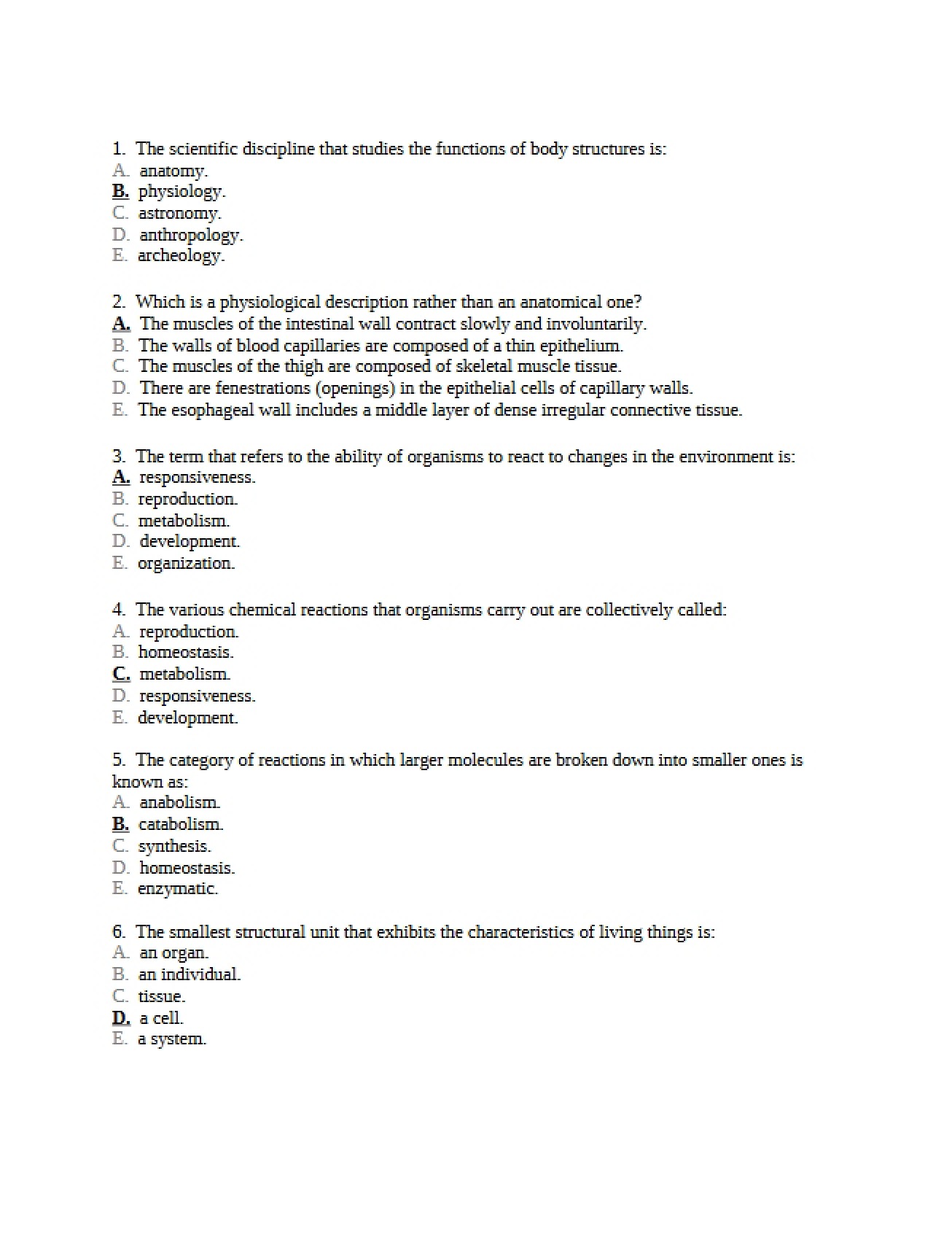
This preview does not include detailed explanations of biochemical processes, complete lists of all anatomical terms, or the full context of the instructor’s “warm up” assignments. It also does not provide answers to practice questions or detailed illustrations. It is a preview to help you determine if the full study guide will be a useful resource for your exam preparation.