What This Document Is
This resource offers a foundational exploration of the concept of “family” within the context of Human Development and Family Studies. It delves into the complexities of defining family structures and understanding their evolution across time and cultures. It’s designed to provide a comprehensive overview of key terminology and theoretical frameworks used in the field, setting the stage for more in-depth study of family dynamics.
Why This Document Matters
This material is particularly valuable for students enrolled in courses focused on family studies, sociology, or related disciplines. It’s ideal for early-stage learners seeking to grasp core concepts and establish a strong base of knowledge. Students preparing for discussions, essays, or more advanced coursework will find this a helpful starting point for understanding the multifaceted nature of families and their role in society. It’s best utilized at the beginning of a unit on family structures and research methods.
Topics Covered
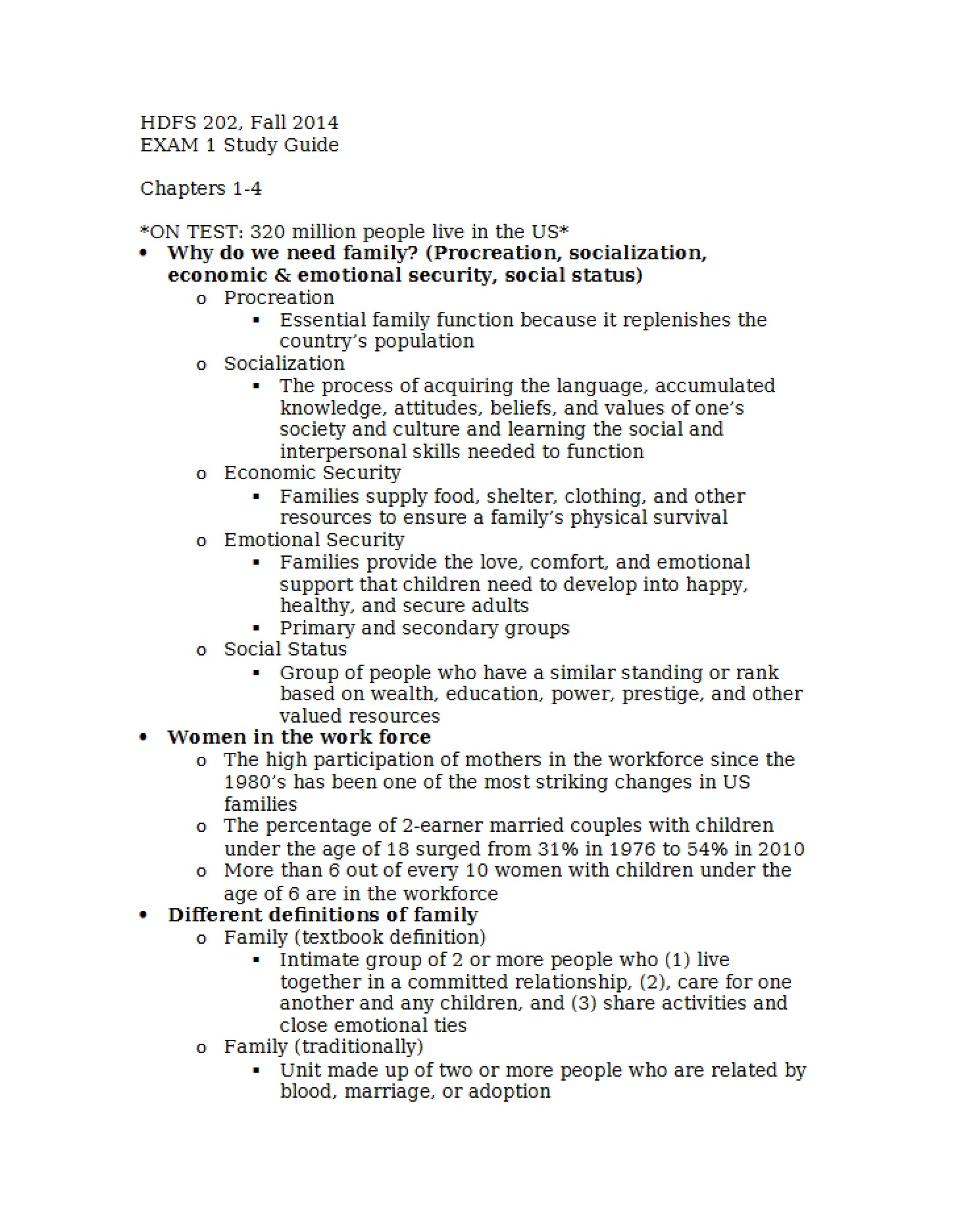
* Defining “Family” – exploring various perspectives and challenges
* Historical perspectives on family structures and their functions
* Different types of family structures (e.g., nuclear, extended, families of origin)
* The role of family as a social institution and its associated responsibilities
* An introduction to research methodologies used in the study of families
* The interplay between theory and research in understanding family dynamics
* Current demographic trends related to family formation and composition
What This Document Provides
* Clear definitions of key terms related to family studies.
* An overview of the scientific method as applied to family research.
* A discussion of qualitative and quantitative research approaches.
* An introduction to various research methods, including surveys, clinical research, and field observations.
* A framework for understanding the complexities of studying families in a changing world.
* Statistical data points illustrating current family trends.