What This Document Is
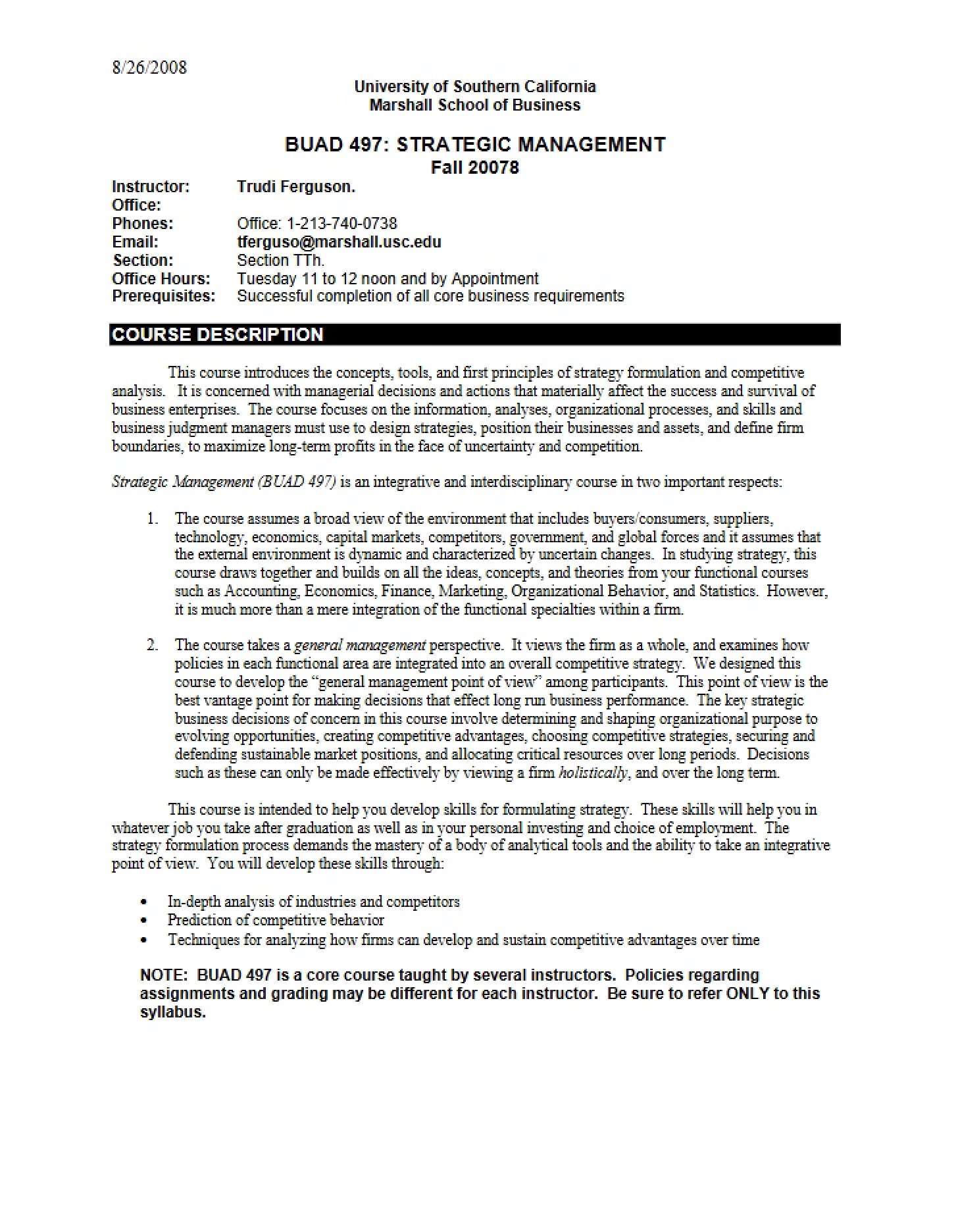
This is a comprehensive course outline for BUAD 497: Strategic Management, offered at the University of Southern California’s Marshall School of Business. It details the structure, expectations, and assessment components of a summer course focused on developing skills in strategic analysis and decision-making. The material appears to be from a 2007 offering, but the core principles of strategic management remain highly relevant. It’s designed to provide a roadmap for students navigating a challenging and dynamic field of study.
Why This Document Matters
This outline is invaluable for prospective students or those currently enrolled in a similar strategic management course. It’s particularly useful for understanding the course’s unique pedagogical approach, which emphasizes competitive performance and real-world application. Students can use this to gauge the workload, identify key areas of focus, and prepare for the types of assignments and evaluations they will encounter. It’s also helpful for understanding the relative weight of different graded components and planning study efforts accordingly. Anyone seeking a rigorous introduction to strategic management principles will find this overview beneficial.
Common Limitations or Challenges
This document is a high-level overview and does *not* contain the actual course content, case studies, or simulation exercises. It outlines the topics covered and the assessment methods, but it does not provide detailed explanations of strategic frameworks, analytical tools, or specific company analyses. It also doesn’t include the full text of assigned readings or the specifics of the Business Strategy Game simulation. Access to the full course materials is required for in-depth learning and successful completion of the course.
What This Document Provides
* A clear statement of the course’s core learning objectives.
* An overview of the key subject areas, including cash flow analysis, market structure, and competitive rivalry.
* A detailed course schedule outlining reading assignments and exercise due dates.
* A breakdown of the grading components, including individual and group work.
* Information regarding course policies, such as those related to missed assignments and guest lectures.
* A list of required and optional textbooks for the course.
* An indication of the experiential learning components, such as a business simulation.