What This Document Is
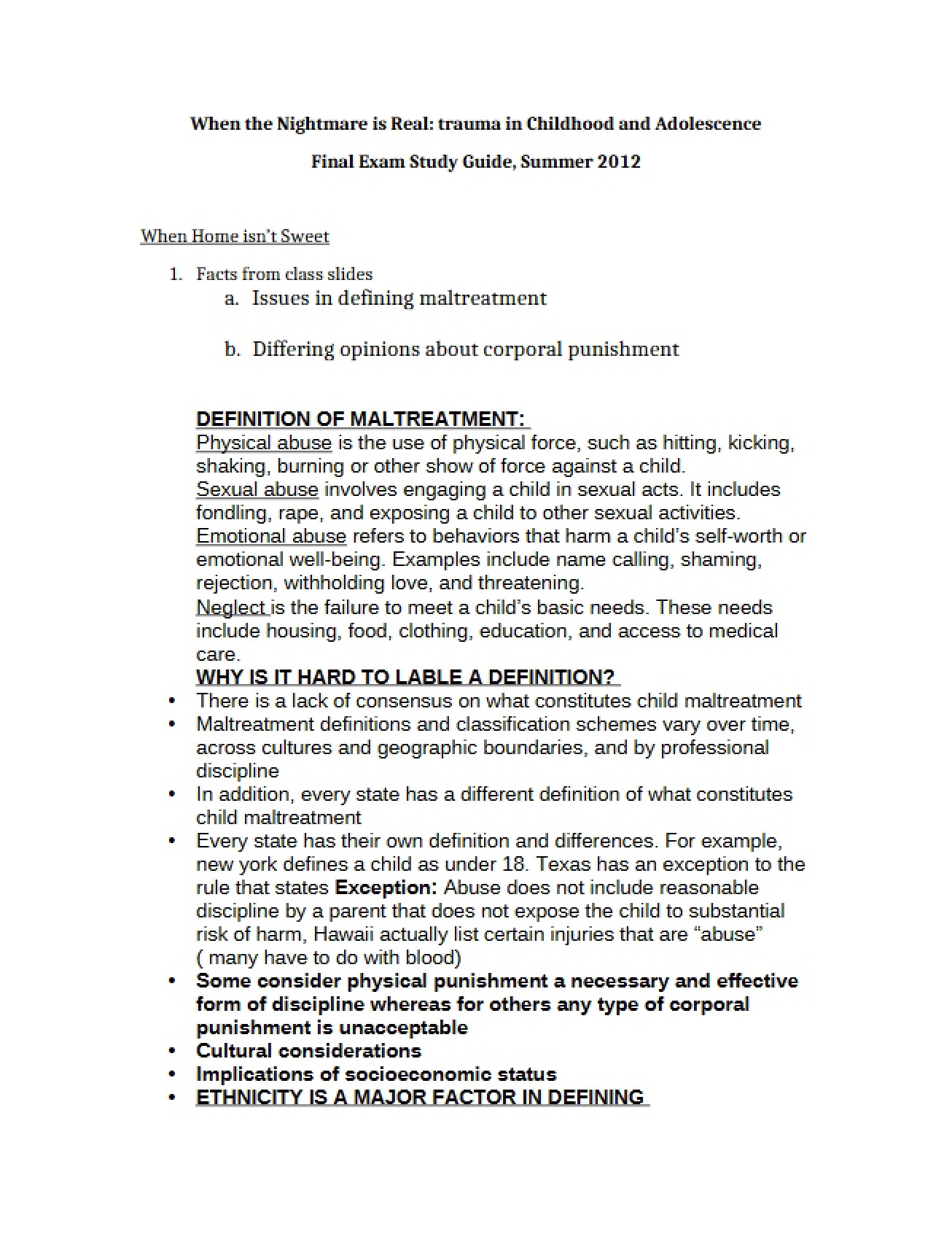
This study guide provides a focused review of key concepts covered in CAMSUA 104: Trauma in Childhood, specifically designed to aid in preparation for the final exam. It concentrates on child maltreatment – encompassing physical, sexual, emotional abuse, and neglect – and the complex issue of sexual abuse of children and adolescents.
Why This Document Matters
This guide is essential for students enrolled in CAMSUA 104 who are looking to consolidate their understanding of trauma’s impact on children and adolescents. It’s most valuable during the exam preparation phase, helping students identify core areas for review. The guide exists to support learning and improve exam performance by highlighting critical research findings and key areas of focus from the course.
Common Limitations or Challenges
This study guide is a *review* tool, not a substitute for attending lectures, completing readings, or engaging with course materials. It provides an overview of topics but does not offer in-depth explanations or new content. It will not replace the need for comprehensive study of the full course syllabus.
What This Document Provides
The full study guide includes:
* Detailed breakdowns of the four types of child maltreatment with definitions.
* Key findings from studies on corporal punishment, including predictors of its use.
* Factors influencing positive changes in parental beliefs about physical punishment.
* A comparison of sexual abuse experiences for males and females (prevalence, risk factors, consequences, symptoms).
* An overview of the Oats et al. study on intergenerational factors in sexual abuse.
* A list of consequences and signs associated with sexual abuse.
* Risk factors and consequences related to child prostitution.
This preview does *not* include the full details of the studies mentioned, specific statistical data, or a comprehensive list of consequences and signs. It is designed to give you a sense of the topics covered, not to provide complete answers.