What This Document Is
This is a comprehensive study guide designed to support students enrolled in an introductory Earth Science course (GEOL 101) at the University of South Carolina. Specifically, it focuses on key concepts related to Earth’s systems, with a strong emphasis on the processes governing water movement and the characteristics of flowing water. It appears to be geared towards preparation for a final exam, offering a focused review of important course material.
Why This Document Matters
This guide is an invaluable resource for students looking to solidify their understanding of fundamental geological principles. It’s particularly helpful for those who benefit from a structured review of core concepts before a major assessment. Students who are struggling with the complexities of Earth’s processes, or those aiming for a high level of mastery in the course, will find this guide to be a useful tool. It’s best utilized during the final review stages of the semester, allowing for targeted study and identification of knowledge gaps.
Common Limitations or Challenges
This study guide is intended as a *supplement* to course lectures, readings, and assignments – it is not a replacement for active participation in the learning process. It does not include detailed explanations of every topic covered in the course, nor does it provide practice questions or sample exam problems. The guide focuses on core principles and definitions, and assumes a baseline understanding of the material presented throughout the semester. It represents a snapshot of concepts as understood in December 2013, and may not reflect the most current scientific understanding.
What This Document Provides
* An overview of the Earth’s hydrologic cycle and its major components.
* A breakdown of the Earth’s water reservoirs, including relative proportions of salt and fresh water.
* Definitions and explanations of key processes involved in water movement (evaporation, precipitation, infiltration, runoff).
* Discussion of factors influencing runoff and infiltration rates.
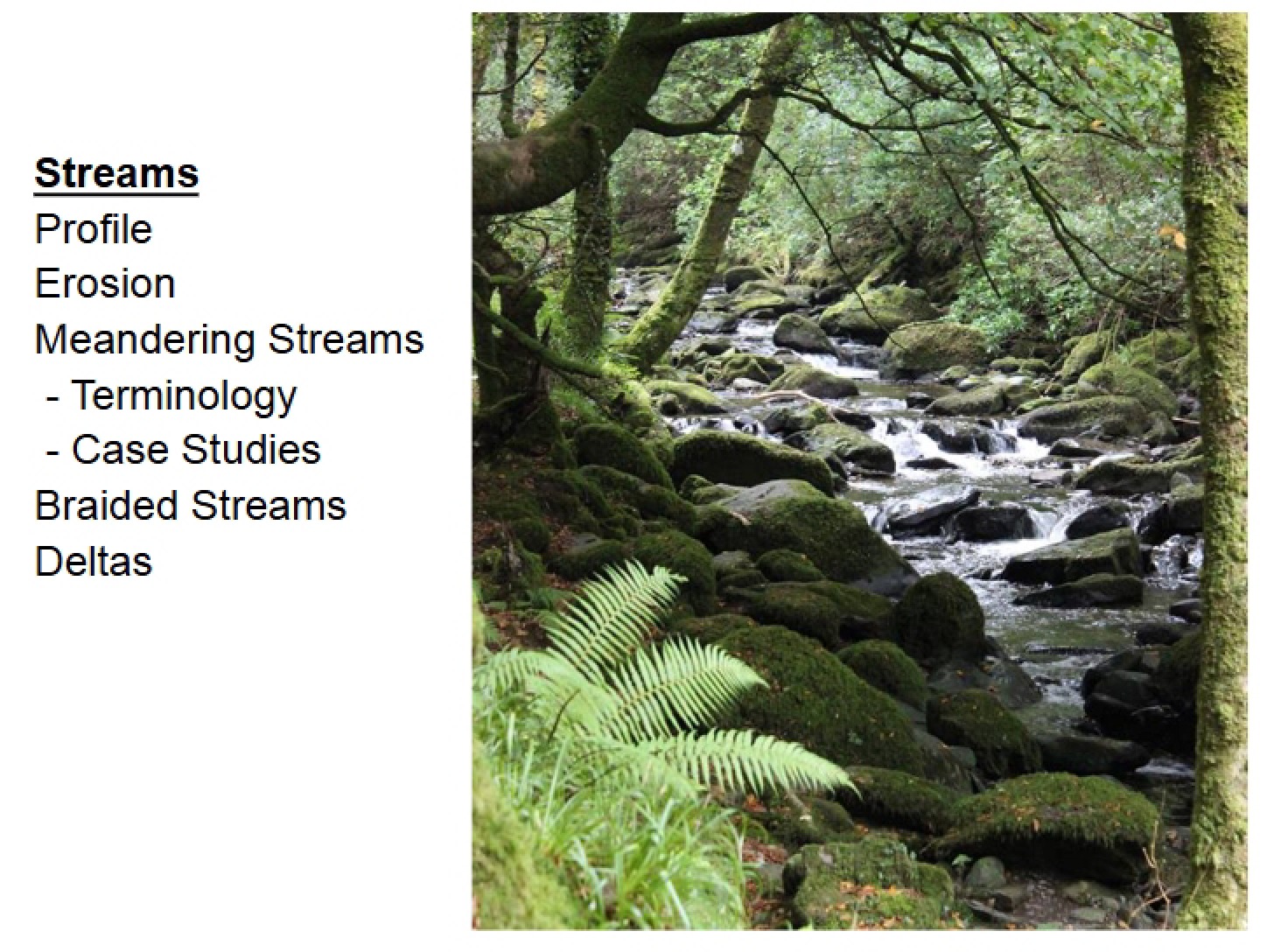
* An exploration of stream dynamics, including flow types and the concept of stream gradient.
* Key terminology related to stream features (tributaries, trunk streams, mouths, distributaries).
* An introduction to the concept of stream discharge and its relationship to channel characteristics.