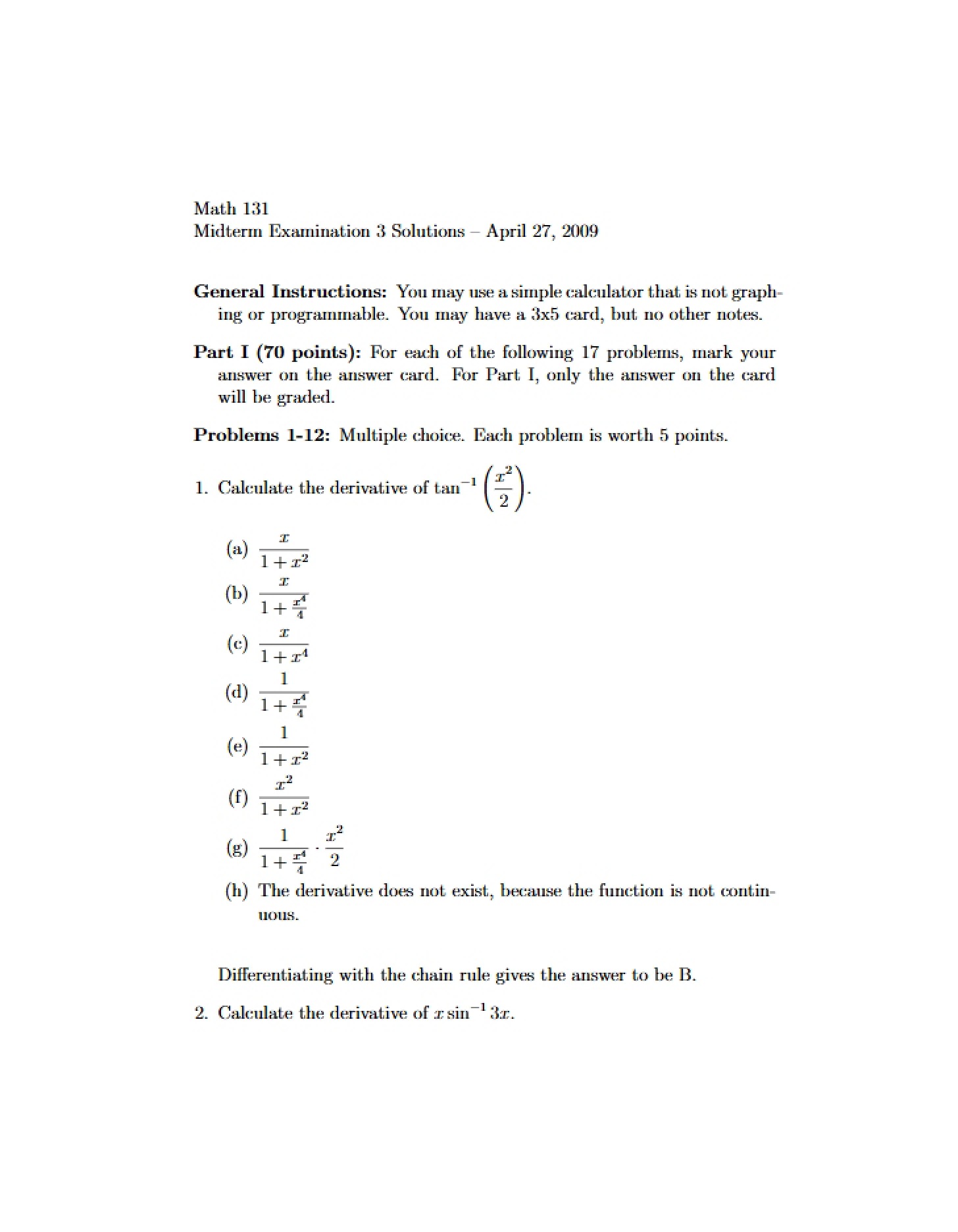
What This Document Is
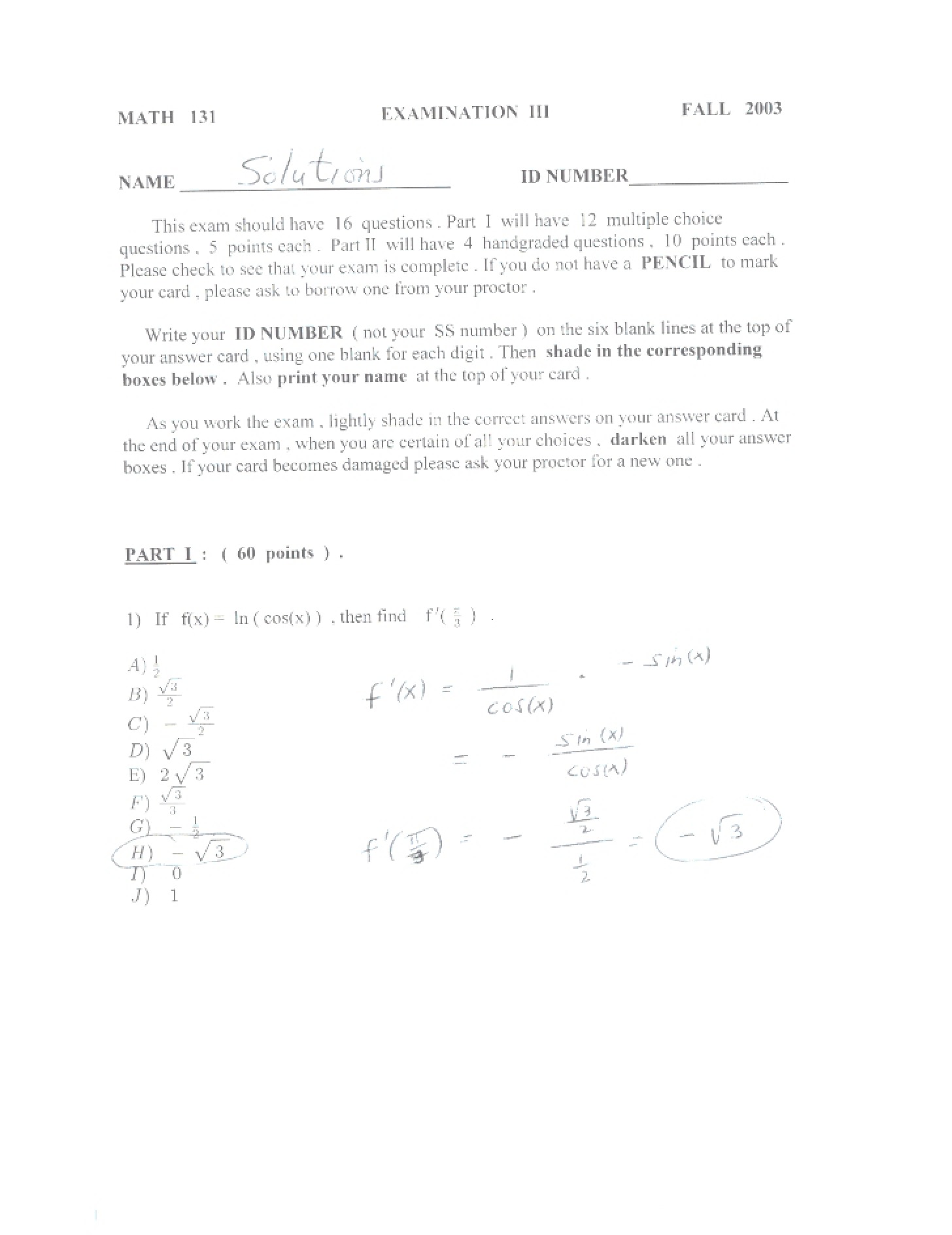
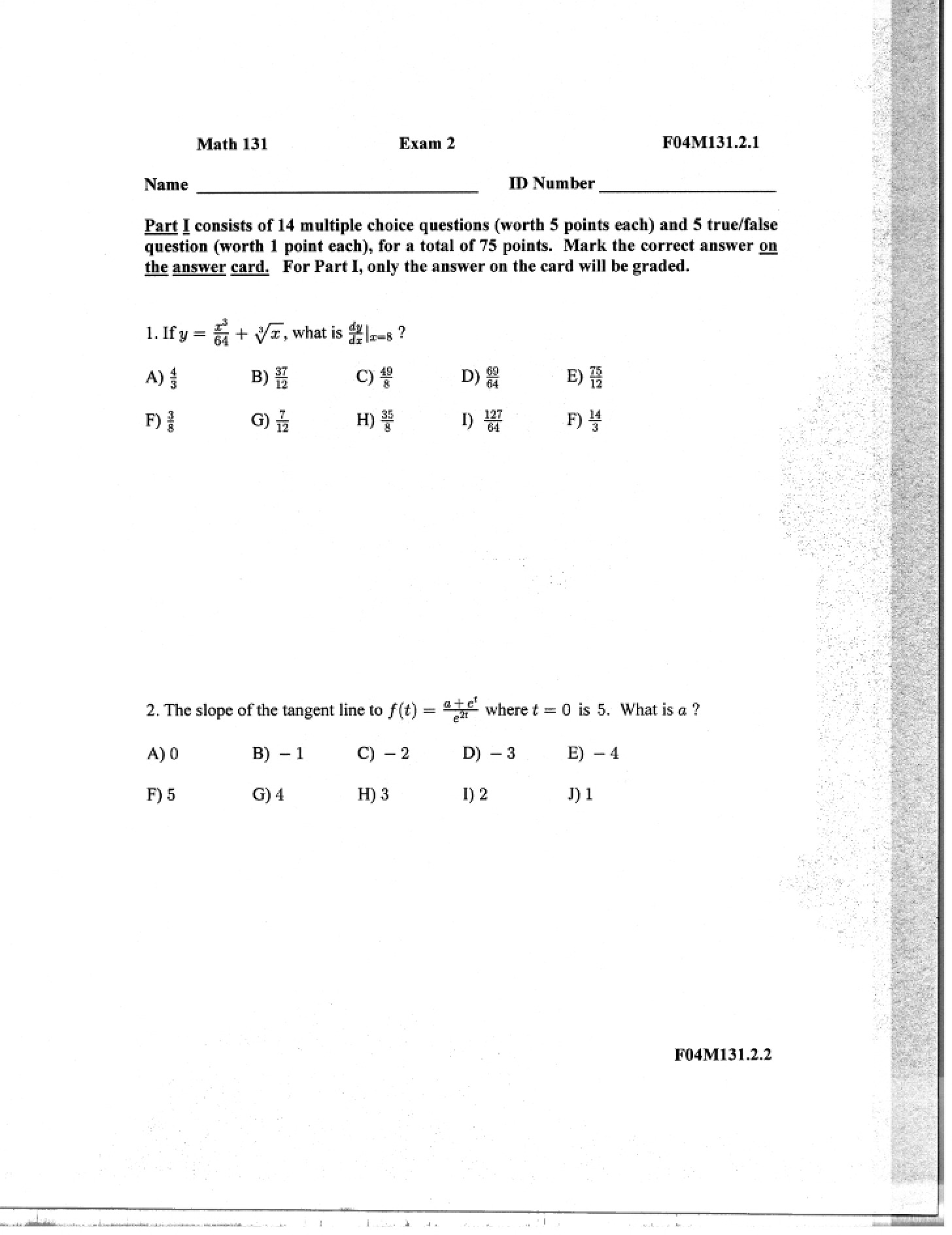
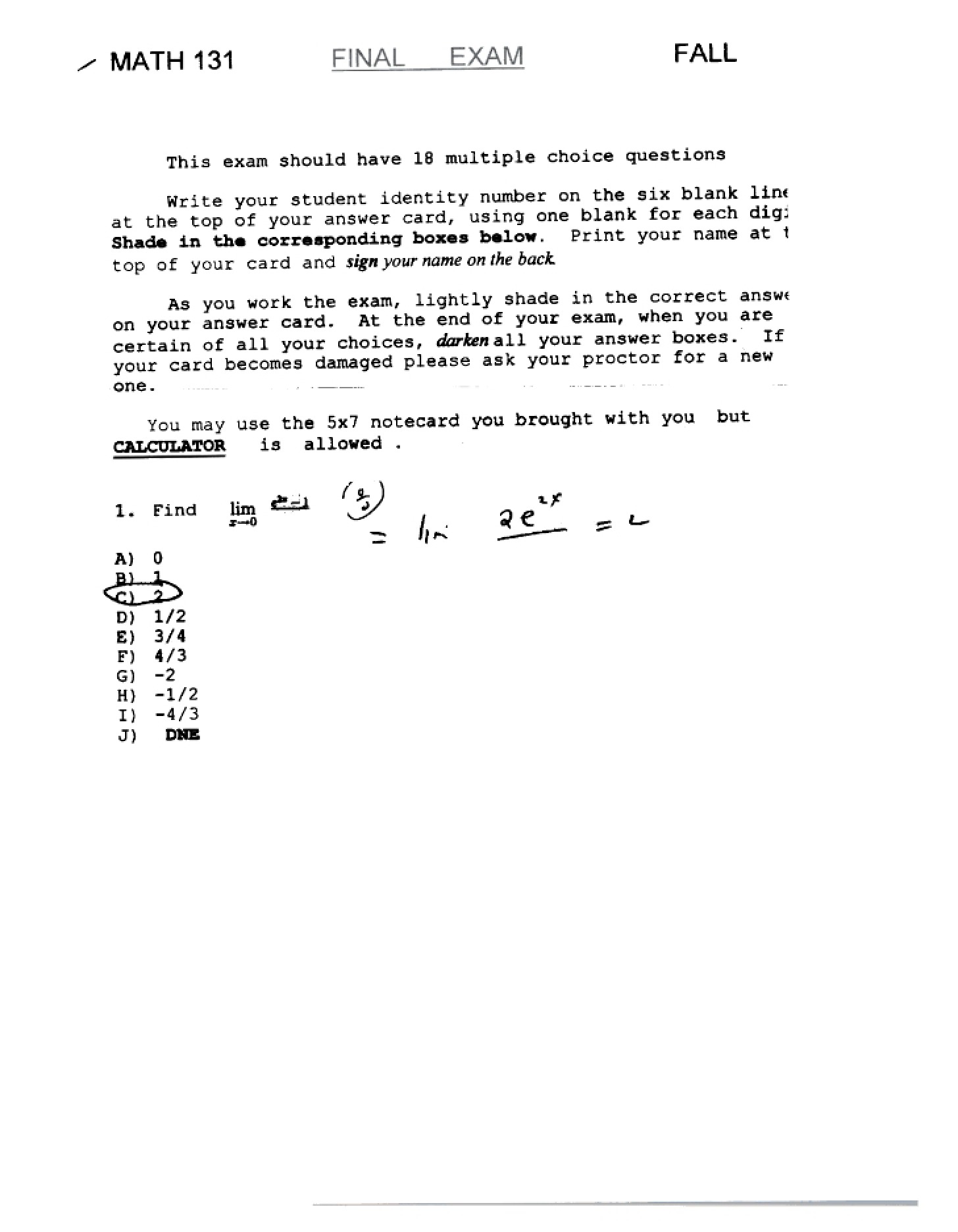
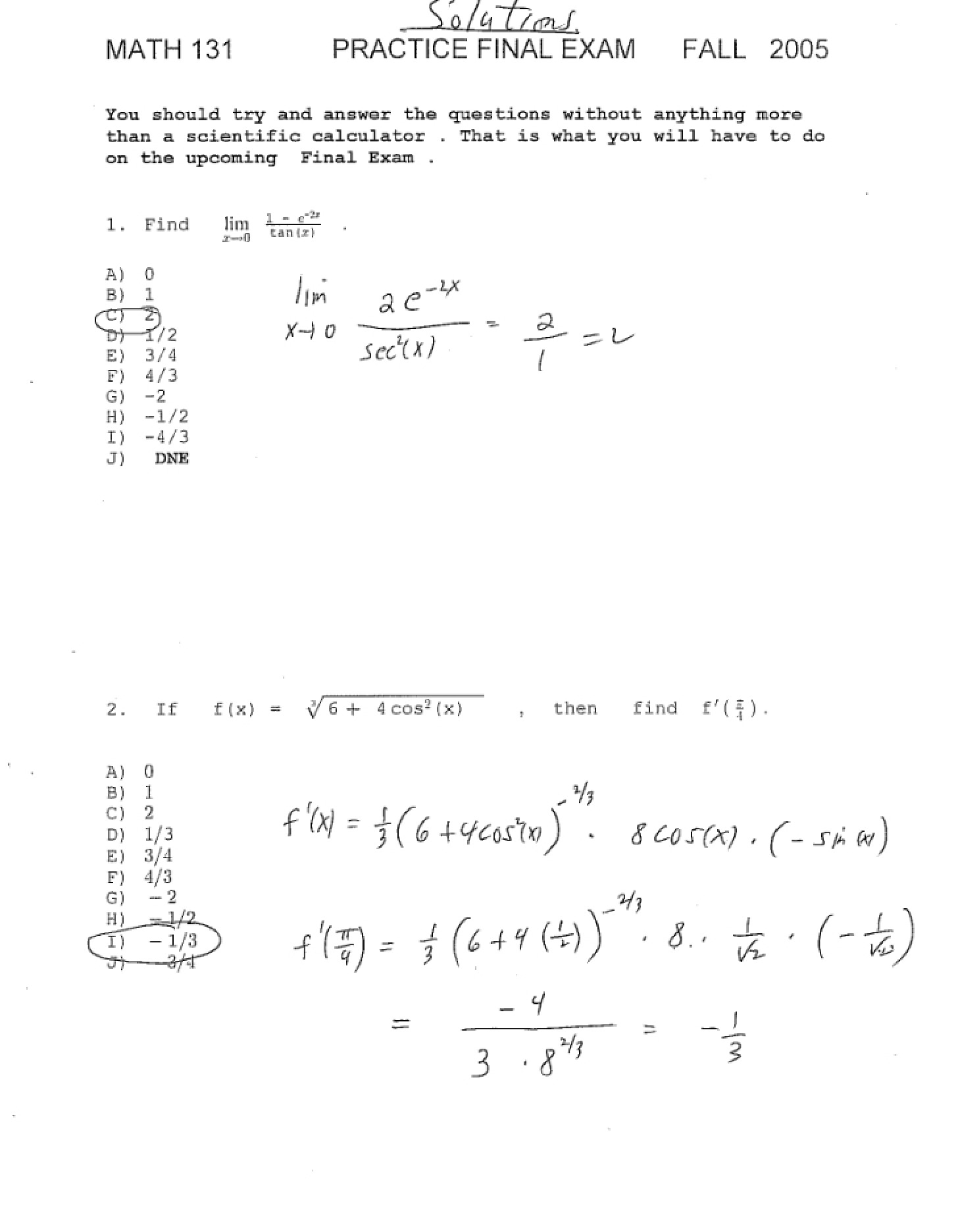
This document comprises a collection of questions from a past final examination in Calculus I (Math 131) at Washington University in St. Louis, specifically from the Spring 2008 semester. It’s designed to replicate the style and scope of a comprehensive final assessment for this introductory calculus course. The questions cover a broad range of topics typically addressed in a first-semester calculus curriculum.
Why This Document Matters
This resource is invaluable for students preparing for their own Calculus I final exam. It’s particularly useful for self-assessment, identifying areas of strength and weakness, and becoming familiar with the types of problems encountered in a university-level calculus course. Students who have completed a similar course, or are currently enrolled, can benefit from working through these problems as a practice exercise under exam-like conditions. It’s also helpful for instructors seeking examples of assessment questions. Utilizing past exams can help gauge understanding and refine study strategies.
Common Limitations or Challenges
While this document provides a substantial set of practice questions, it does not include detailed step-by-step solutions or explanations. It’s intended as a testing tool, not a teaching resource. Furthermore, the specific content emphasis may vary slightly from current course syllabi. Accessing the full document is necessary to review the complete questions and test your problem-solving abilities. This preview only offers a glimpse into the format and breadth of the material.
What This Document Provides
* A substantial number of multiple-choice questions covering core Calculus I concepts.
* Problems relating to integral calculus, including definite and indefinite integrals.
* Questions assessing understanding of techniques like substitution and the midpoint rule.
* Applications of calculus concepts, such as finding displacement and distance traveled from velocity functions.
* Problems focused on antiderivatives and average function values.
* Questions requiring application of concepts to functions involving trigonometric and exponential terms.
* A final problem involving finding the area enclosed by two functions, requiring intersection point determination.