What This Document Is
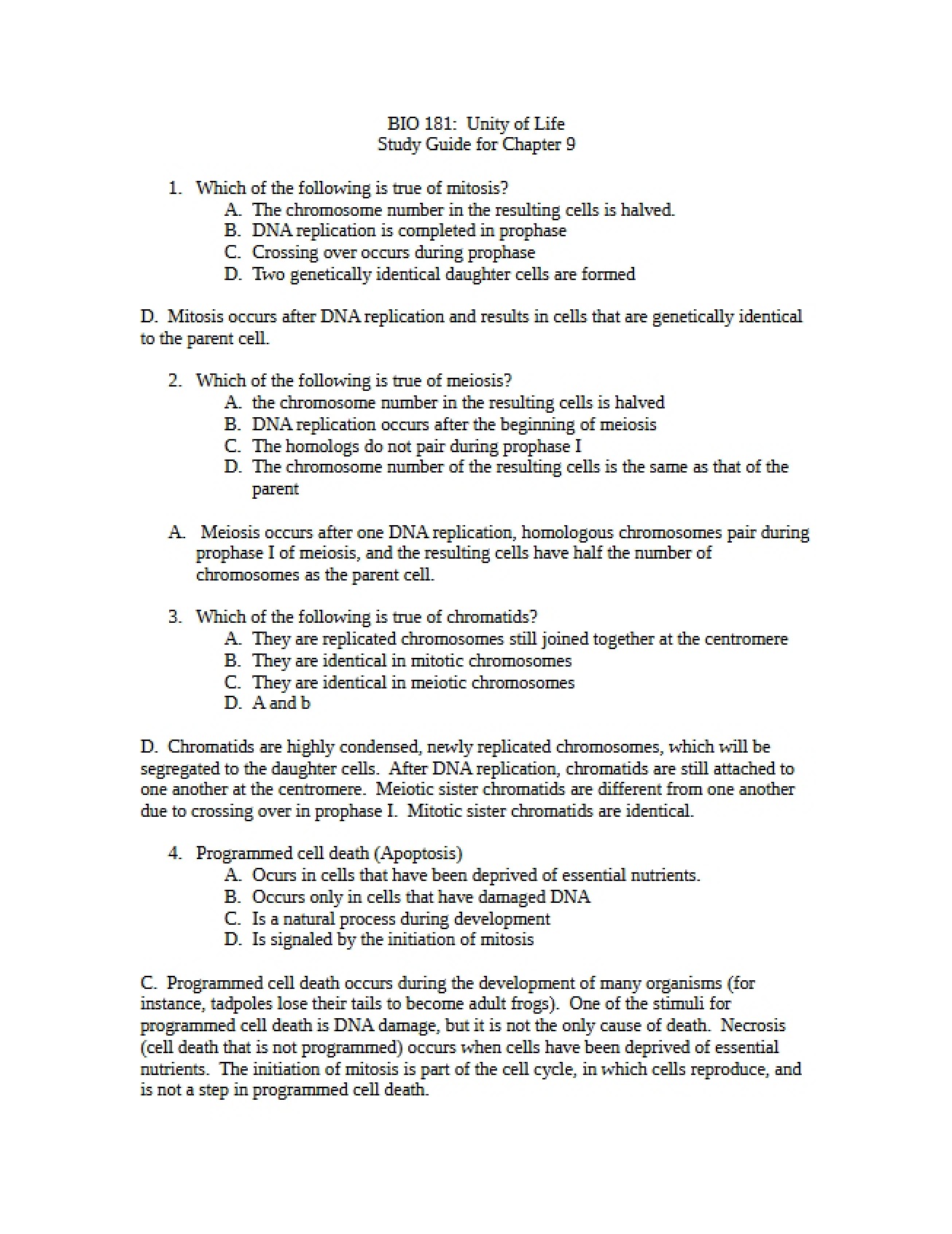
This document is a review key designed to help students prepare for the final exam in BIO 181: Unity of Life I – Life of the Cell, at Northern Arizona University. It covers core concepts from the course, focusing on cells, basic chemistry, and macromolecules. It’s structured as a question-and-answer format, providing a concise overview of key topics.
Why This Document Matters
This review key is essential for students nearing the end of the course who want to assess their understanding of fundamental biological principles. It’s most useful during self-study and exam preparation, helping to identify areas needing further review. It exists to consolidate learning and improve exam performance.
Common Limitations or Challenges
This document is a *review* key, meaning it assumes prior learning. It doesn’t provide in-depth explanations of concepts, nor does it introduce new material. It’s not a substitute for attending lectures, completing readings, or engaging with other course materials. It also doesn’t offer practice problems beyond the questions presented.
What This Document Provides
This review key includes:
* Key distinctions between prokaryotic and eukaryotic cells, and plant versus animal cells.
* Identification and function of major cell organelles (rough ER, smooth ER, nucleus, nucleolus, peroxisomes, lysosomes, Golgi apparatus, ribosomes, centrioles).
* An explanation of cellular compartmentalization and its benefits.
* Definitions of covalent, ionic, and hydrogen bonds, and the differences between polar and non-polar covalent bonds.
* Identification of reactants and products in a chemical reaction.
* An overview of the four major macromolecules (lipids, carbohydrates, proteins, nucleic acids) and their monomers.
* Explanations of dehydration and hydrolysis reactions.
* A comparison of saturated and unsaturated fatty acids and their impact on substance consistency.
This preview *does not* include detailed explanations of complex biochemical processes, comprehensive lists of all organelles, or extensive practice questions. It provides a high-level overview to help you determine if the full review key will be a valuable study tool.