What This Document Is
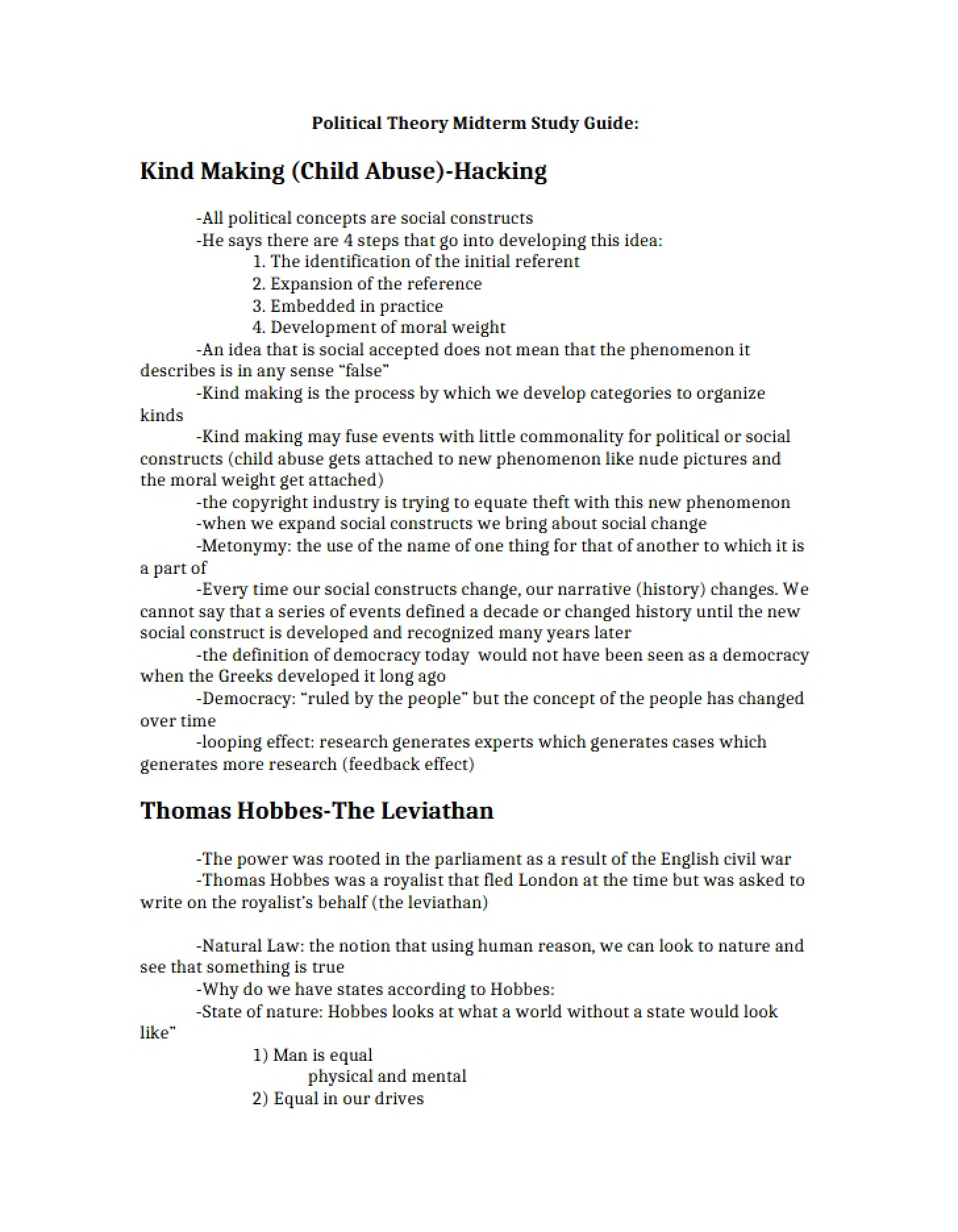
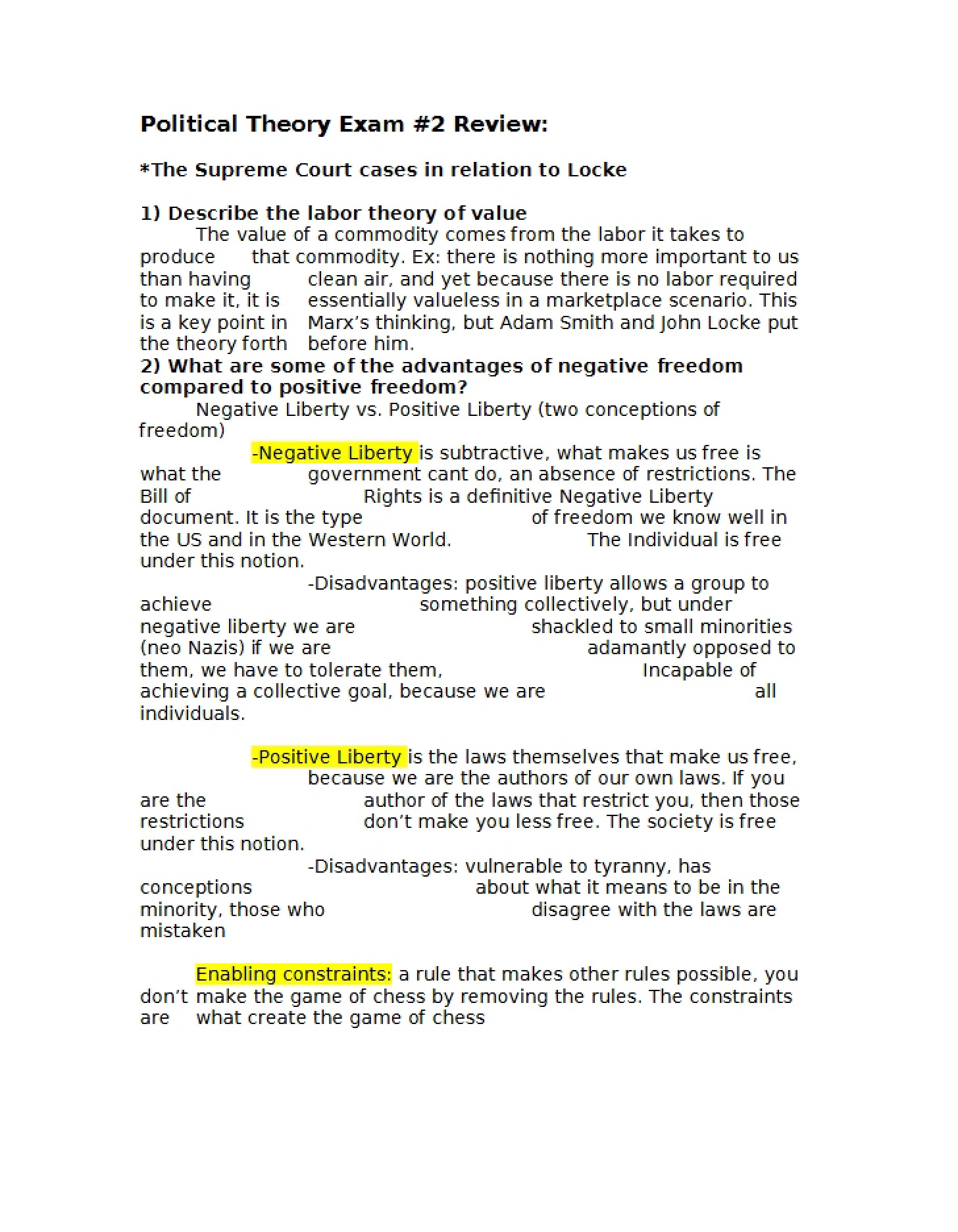
This document is a comprehensive review session designed to prepare students for a final exam in Political Theory (POLITSC 2400) at The Ohio State University. It consolidates key concepts and thinkers explored throughout the course, offering a focused overview of complex theoretical frameworks. This isn’t a substitute for attending lectures or completing assigned readings, but rather a tool to synthesize and reinforce your understanding before a major assessment.
Why This Document Matters
This review is invaluable for students seeking to solidify their grasp of core political theory concepts before an exam. It’s particularly helpful for those who benefit from seeing how different ideas connect and for identifying areas where further study might be needed. Use this resource in the days leading up to the final exam to test your knowledge and build confidence. It’s best used *after* you’ve engaged with the course materials and are looking for a structured way to review.
Topics Covered
* Competing approaches to political modeling – formal versus agent-based.
* Theories of distributive justice and their implications for the role of the state.
* Complexities of racial identity formation and critical perspectives on Afrocentrism.
* Feminist theory, specifically the work of Simone de Beauvoir and her social agenda.
* The relationship between diversity, ability, and problem-solving.
* Historical perspectives on the justification of political violence, drawing from Luther and Calvin.
* Connections between key thinkers like Dubois and Sartre to contemporary political thought.
What This Document Provides
* A focused exploration of central arguments from key political theorists.
* An overview of different theoretical approaches to understanding justice, identity, and power.
* A synthesis of complex ideas into a more manageable format for review.
* A framework for understanding the connections between historical and contemporary political thought.
* Points of consideration regarding the strengths and weaknesses of various theoretical positions.