What This Document Is
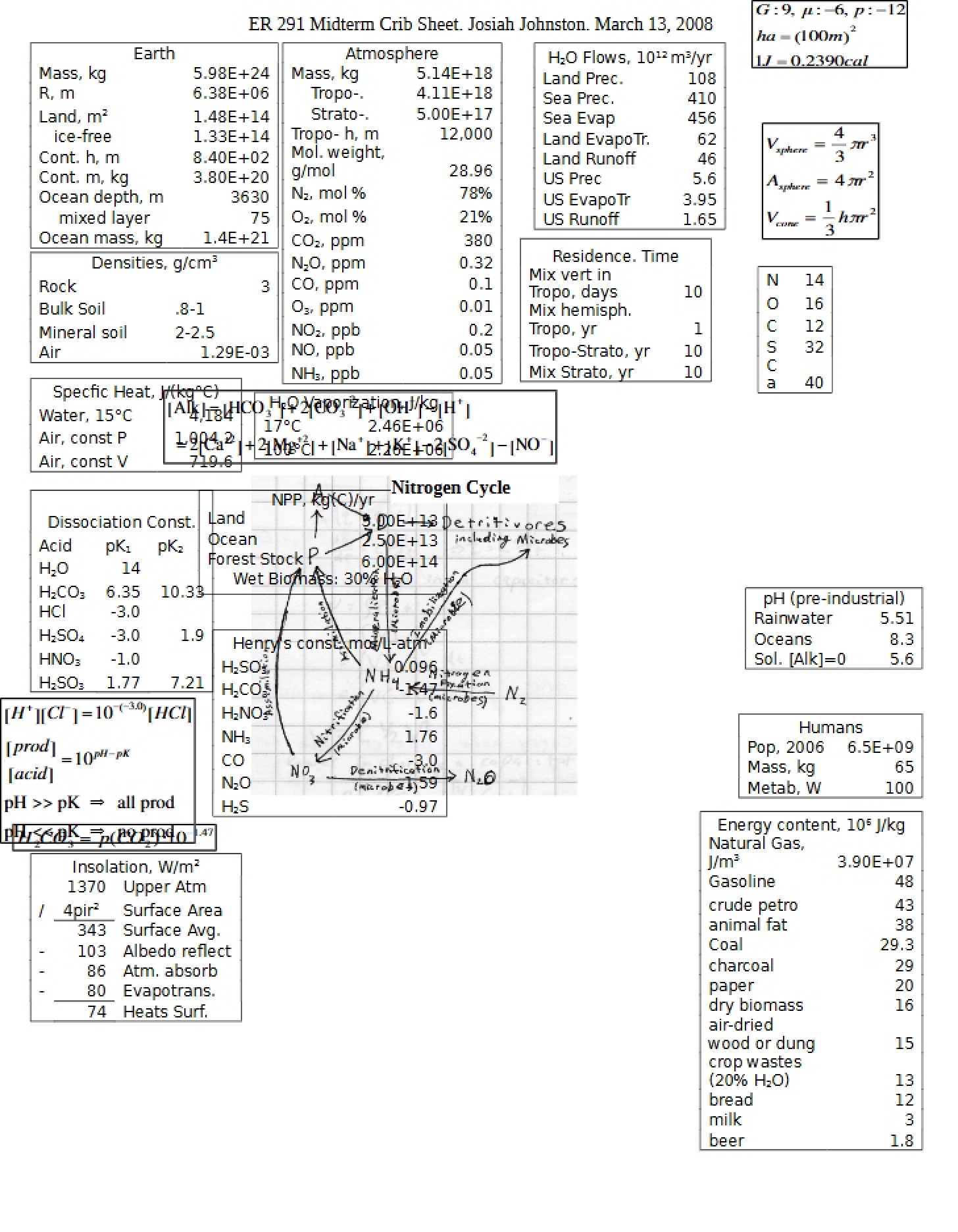
This is a focused cheat sheet designed to support students enrolled in Quantitative Aspects of Global Environmental Problems (ENE,RES 102) at UC Berkeley. It consolidates a substantial amount of numerical data and key parameters relevant to understanding Earth’s systems and global environmental challenges. This resource is intended for quick reference during exam preparation and review of core concepts. It’s a compilation of essential figures, not a comprehensive textbook replacement.
Why This Document Matters
Students tackling complex quantitative problems in environmental science will find this cheat sheet particularly valuable. It’s ideal for those needing a rapid refresher on frequently used values and relationships before an exam, while working through problem sets, or during in-class activities. This resource is especially helpful for students who benefit from having key data readily available to support their calculations and analyses. Access to the full resource will streamline your study process and boost your confidence.
Topics Covered
* Atmospheric Composition and Properties
* Oceanic Dimensions and Volumes
* Global Water Stocks and Flows
* Earth and Land Mass Characteristics
* Ecosystem Parameters (Soil, Erosion)
* Energy Budgets and Densities
* Heat Capacity of Key Substances
* Global Carbon Cycle (Stocks & Flows)
* Sulfur Cycle (Stocks & Flows)
* Nitrogen Cycle (Stocks & Flows)
* Phosphorus Cycle (Stocks & Flows)
What This Document Provides
* Numerical values for atmospheric mass, molecular weight, and height parameters.
* Data on ocean areas, volumes, and depths.
* Quantified stocks of water in various reservoirs (oceans, ice, groundwater, etc.).
* Key figures related to Earth’s mass, surface area, and distance from the sun.
* Representative values for energy flows (solar output, NPP, energy consumption).
* Energy densities of common fuels and biomass.
* Important physical constants like heat capacities of water and air.
* Global cycle data including stocks and flows of carbon, sulfur, nitrogen, and phosphorus.