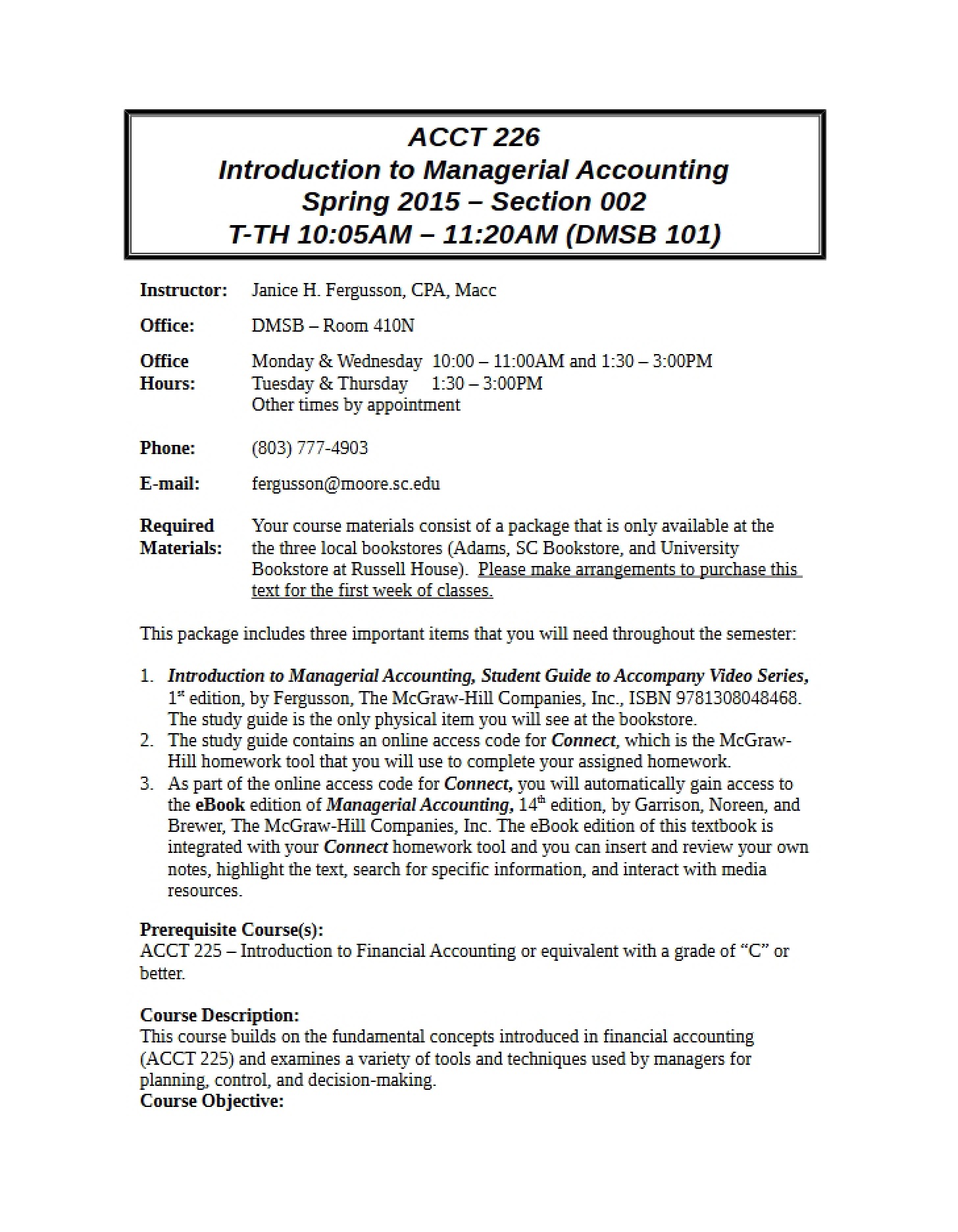
What This Document Is
This document is a comprehensive practice examination designed to assess your understanding of core principles in Managerial Accounting (ACCT 226) at the University of South Carolina. It’s structured to mirror the format and difficulty level of a final exam, offering a valuable self-assessment tool. The practice questions cover a broad spectrum of topics typically included in an introductory managerial accounting course.
Why This Document Matters
This resource is ideal for students currently enrolled in or recently completed an introductory managerial accounting course. It’s particularly beneficial as you prepare for a final examination, aiming to solidify your knowledge and identify areas needing further review. Utilizing this practice exam will help you build confidence and improve your test-taking strategies by simulating the real exam environment. It’s best used *after* you’ve engaged with course materials like textbooks, lectures, and homework assignments.
Common Limitations or Challenges
While this practice exam is designed to be representative, it doesn’t encompass *every* possible topic or question type that might appear on your actual final exam. It serves as a strong indicator of preparedness, but shouldn’t be considered a complete substitute for thorough study of all course content. Furthermore, detailed explanations or step-by-step solutions are not included within this preview; access to the full document is required for those.
What This Document Provides
* A variety of multiple-choice questions testing key managerial accounting concepts.
* Questions relating to cost accounting methodologies, including job-order and process costing.
* Problems focused on calculating cost of goods manufactured and sold.
* Scenarios involving overhead application and variance analysis.
* Questions exploring activity-based costing principles.
* Practice with process costing calculations, including equivalent units of production.
* Questions related to cost behavior (fixed vs. variable costs).
* Problems requiring application of cost accounting principles to real-world business situations.