What This Document Is
This document contains a collection of final examinations from STAT 309, Introduction to Mathematical Statistics, offered at the University of Wisconsin-Madison. It comprises several distinct exam variations (labeled Exam A through F, and numbered variations within those), representing comprehensive assessments of the course material. The exams cover a range of topics central to mathematical statistics, designed to test both computational skills and conceptual understanding. The document is dated December 20, 2008.
Why This Document Matters
This resource is invaluable for students currently enrolled in or preparing for a similar mathematical statistics course. It’s particularly useful for those seeking to gauge the scope and difficulty of exams, and to familiarize themselves with the types of questions commonly asked. Students can use these exams to practice applying statistical concepts and methods under timed conditions, helping to build confidence and identify areas needing further study. It’s best utilized *after* completing coursework and seeking clarification on challenging topics – think of it as a final self-assessment tool.
Common Limitations or Challenges
While these exams offer a strong representation of the course’s assessment style, they do not provide detailed explanations or worked-out solutions. The document presents the problems themselves, requiring the user to independently apply their knowledge to arrive at answers. Furthermore, the specific content covered may vary slightly in more recent iterations of the course. This collection represents a snapshot in time and shouldn’t be considered a definitive, exhaustive list of all possible exam questions.
What This Document Provides
* Multiple complete final exam variations (Exam 1C, 1D, 2D, 2E, 2F, 3C, 3D)
* A diverse set of problems covering probability, random variables, distributions (Geometric, Poisson, Uniform), joint densities, and expected values.
* Questions requiring both analytical calculations and interpretations of statistical results.
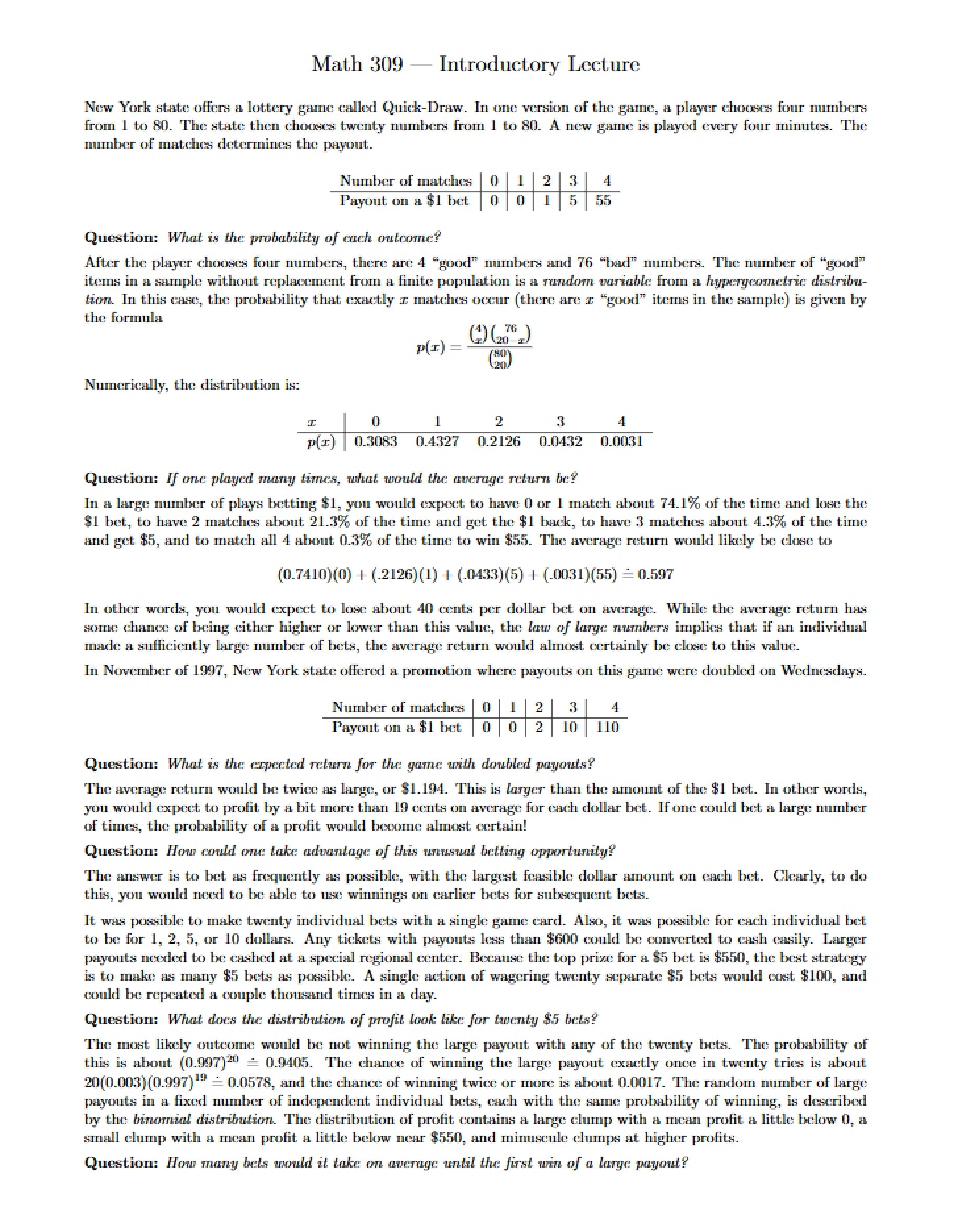
* Problems framed within real-world scenarios (e.g., lottery games, dice rolls) to illustrate practical applications of statistical concepts.
* Exam instructions regarding solution format and presentation of answers.