What This Document Is
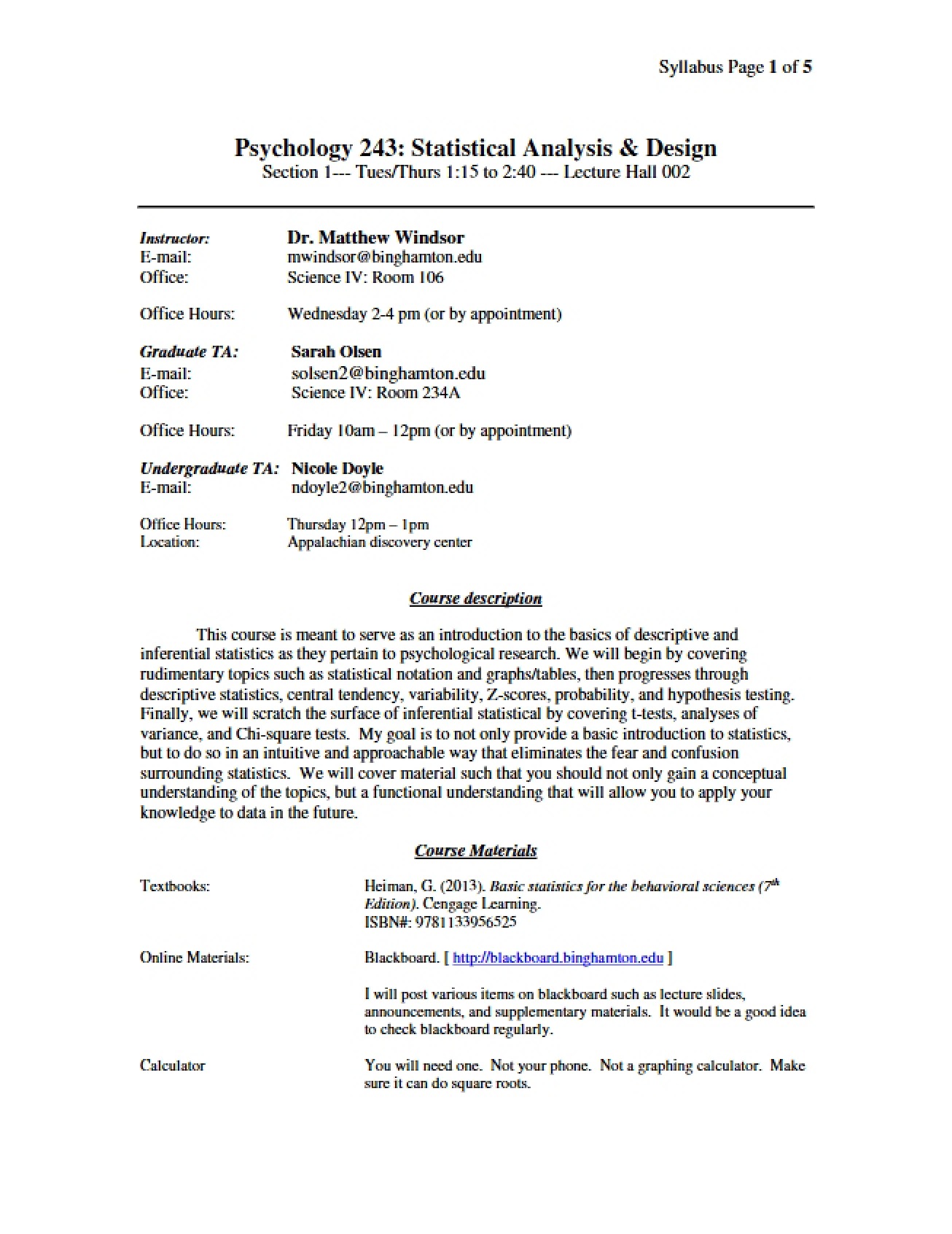
These are notes compiled for the first exam in PSYC 243: Statistical Analysis & Design at Binghamton University. The notes cover foundational concepts in statistics, including the distinction between descriptive and inferential statistics, population versus sample, and the importance of sampling methods. They also introduce basic research methods – correlational and experimental – and the core principles of establishing cause-and-effect relationships.
Why This Document Matters
These notes are essential for students preparing for the first exam in this course. They provide a concentrated review of the key terms, concepts, and distinctions that will likely be assessed. Understanding these fundamentals is crucial for success not only in this exam but also for subsequent topics in statistical analysis and research methodology. They are most useful when used *in conjunction with* course lectures, readings, and assignments.
Common Limitations or Challenges
This document is a *summary* of course material, not a replacement for it. It does not include detailed explanations of statistical calculations, practice problems with solutions, or in-depth explorations of complex statistical techniques. It’s a review tool, best used after engaging with the primary course materials. It will not teach you statistics from scratch.
What This Document Provides
The notes include definitions and explanations of:
* Key statistical terms (data, variable, population, sample, parameter, statistic)
* The difference between descriptive and inferential statistics
* An overview of the correlational method and its limitations (correlation vs. causation)
* An introduction to the experimental method, including manipulation, control, independent variables, and the goal of establishing causality.
* The concept of sampling error and its implications.
This preview does *not* include detailed examples of statistical tests, formulas, or practice exam questions. It also does not cover all topics that may be on the exam.