What This Document Is
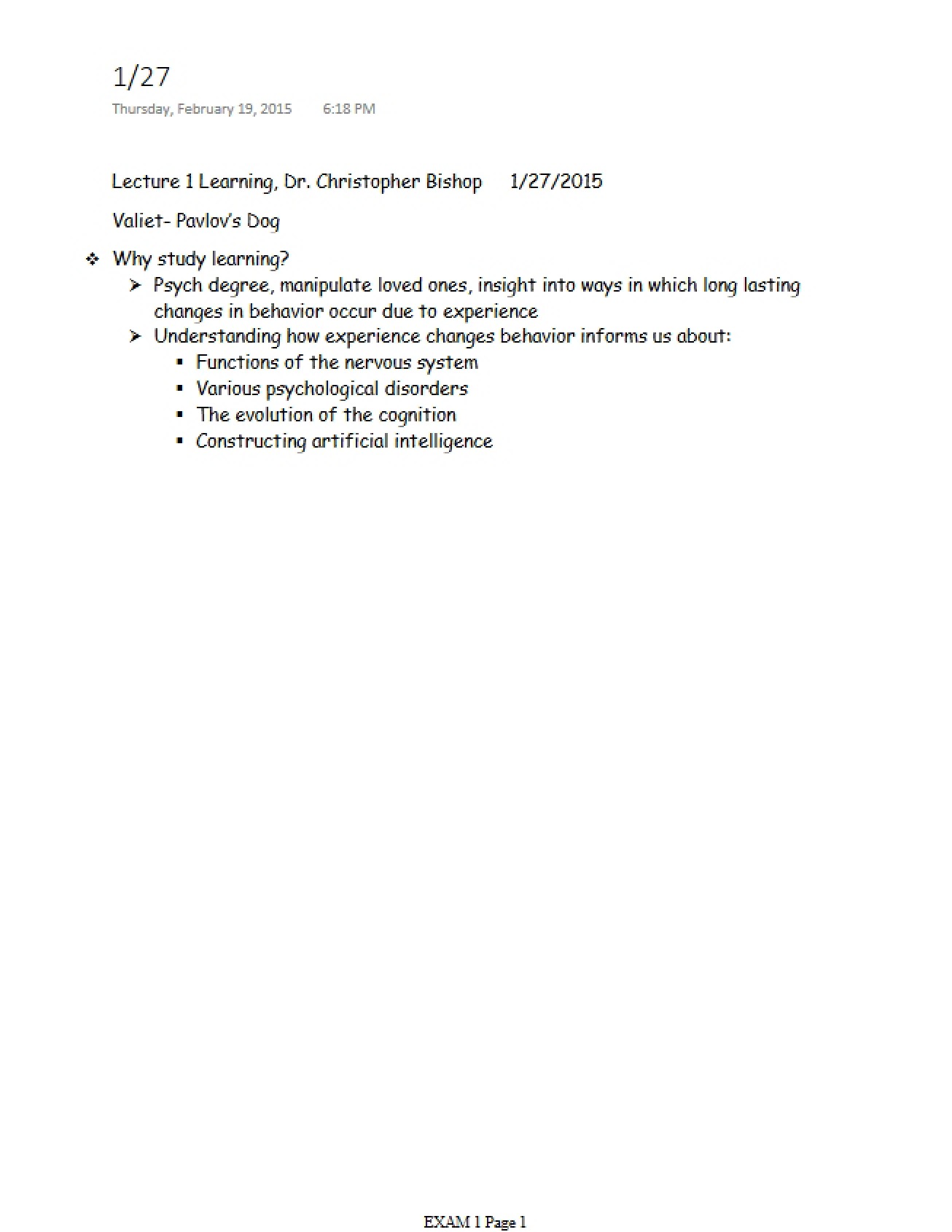
These are notes taken during the first lecture of PSYC 356: Exp Psyc Learning at Binghamton University, covering foundational concepts in the study of learning. The notes trace the historical roots of learning theory, beginning with philosophical perspectives and moving towards early physiological investigations. It focuses on the shift from ideas of “free will” to the emerging understanding of behavior as a product of environmental interaction and biological processes.
Why This Document Matters
This document is valuable for students enrolled in PSYC 356 who are preparing for the first exam. It provides a concentrated overview of the historical context and core definitions that underpin the entire course. Understanding these early perspectives is crucial for grasping the more complex learning theories that will be explored later. It’s most useful as a review tool *before* an exam or while completing related readings.
Common Limitations or Challenges
These notes represent a single lecture’s content and do not encompass the full scope of the course. They are a starting point for understanding the material, but should not be used as a substitute for attending lectures, completing readings, or engaging with other course materials. This preview only covers the historical and definitional foundations of learning; it does not include experimental details or applications of these concepts.
What This Document Provides
The full document includes:
* A definition of learning as a biological process for adaptation.
* A historical overview of learning theory, including the contributions of René Descartes and the development of dualism.
* An explanation of the reflex arc and its significance.
* An introduction to empiricism and the contributions of John Locke and Thomas Hobbes.
* A detailed breakdown of Aristotle’s “Rules of Association” (Contiguity, Similarity, and Contrast).
* Notes on the work of Ivan Pavlov and IM Sechenov and their contributions to reflexology.
This preview provides a high-level overview of the historical and philosophical foundations discussed in the first lecture. It does *not* include detailed explanations of experimental methods, specific research findings, or applications of learning principles.