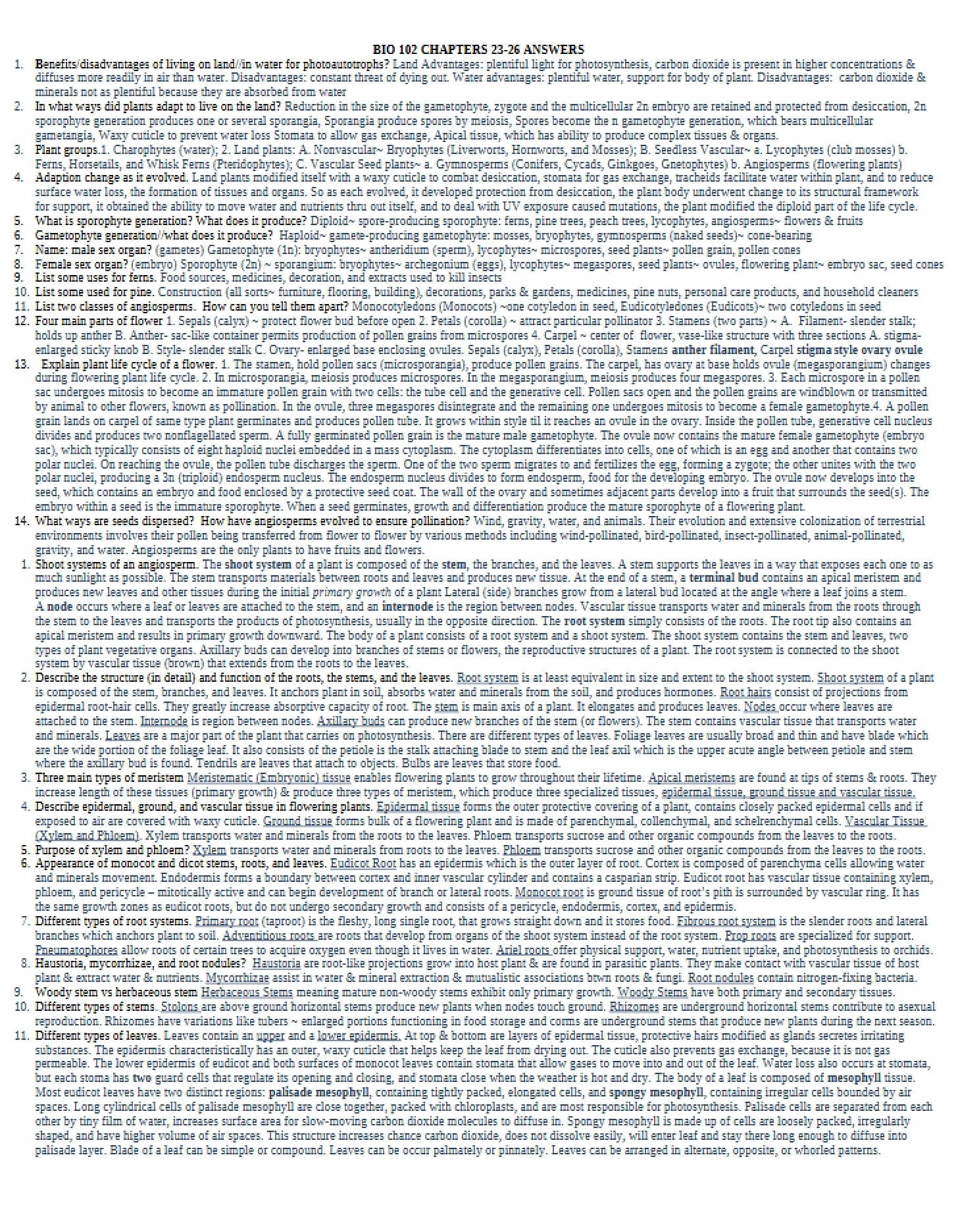
What This Document Is
This comprehensive study guide delves into the intricate world of flowering plant biology, specifically tailored for students in a biomedical engineering context. It focuses on the structure and organization of angiosperms – plants that bear flowers – providing a foundational understanding of plant anatomy and physiology. This resource is designed to accompany course material from BIOMED CM102 at UCLA, offering a detailed exploration of the key components that make up these vital organisms.
Why This Document Matters
This guide is an invaluable resource for biomedical engineering students seeking a strong grasp of biological systems. Understanding plant structure and function provides a comparative framework for understanding more complex biological systems, and is crucial for fields like biomaterials, biomechanics, and bioinspired design. It’s particularly helpful when preparing for assessments, reinforcing lecture material, or seeking a deeper understanding of plant biology’s role in the broader life sciences. Students who utilize this guide will build a solid foundation for advanced coursework.
Topics Covered
* Root and shoot systems: organization and components
* Detailed anatomy of roots, stems, and leaves
* The role of meristems in plant growth and development
* Differentiation and function of key plant tissues (epidermal, ground, and vascular)
* Cellular components of flowering plants and their specific roles
* Transport mechanisms within plant structures
* Bud and node structures and their impact on plant growth
What This Document Provides
* Detailed descriptions of plant organ systems and their interrelationships.
* An exploration of the specialized tissues that contribute to plant function.
* A focused look at the cellular building blocks of flowering plants.
* A framework for understanding plant growth processes.
* A resource to enhance comprehension of complex biological structures.
* A strong foundation for further study in plant biology and related biomedical fields.