What This Document Is
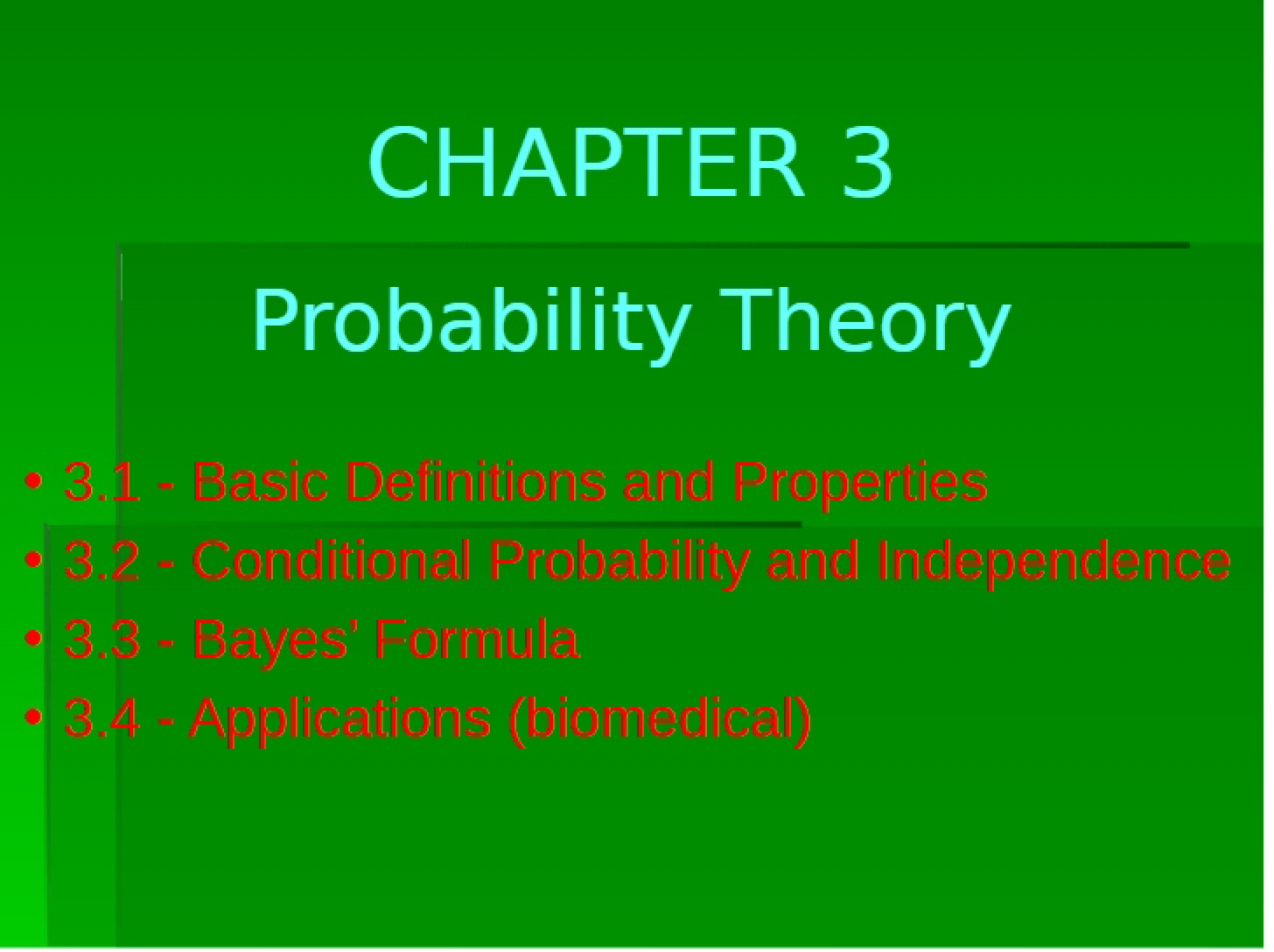
This document is a focused exploration of Bayes’ Theorem, a fundamental principle within probability theory. It’s part of a larger course on statistical methods, specifically designed for students at the University of Wisconsin-Madison (STAT 301). The material delves into the core concepts underpinning how we update probabilities based on new evidence, moving beyond basic probability calculations to consider conditional probabilities and their relationships. It builds upon foundational knowledge of probability definitions and properties.
Why This Document Matters
This resource is invaluable for students grappling with the application of probability in real-world scenarios. Anyone studying statistics, data science, engineering, or fields like medicine and machine learning will find this understanding crucial. It’s particularly helpful when you need to revise existing beliefs in light of observed data – a common task in data analysis and decision-making. If you’re struggling to understand how prior probabilities influence posterior probabilities, or how to effectively use conditional probabilities, this material will provide a solid foundation.
Common Limitations or Challenges
This document focuses specifically on the theoretical framework and illustrative applications of Bayes’ Theorem. It does *not* provide a comprehensive treatment of all probability concepts, nor does it offer detailed derivations of related theorems. It also doesn’t cover computational aspects of Bayesian statistics or advanced modeling techniques. The examples presented are intended to illustrate the principle, and may not cover the full breadth of potential applications. It assumes a basic understanding of probability notation and terminology.
What This Document Provides
* A clear articulation of the relationship between conditional probabilities and Bayes’ Theorem.
* Illustrative scenarios designed to demonstrate the practical application of the theorem.
* Discussion of how prior probabilities impact the calculation of posterior probabilities.
* Exploration of scenarios involving partitioning of populations to apply Bayes’ Theorem.
* Conceptual groundwork for understanding Bayesian inference and statistical modeling.