What This Document Is
This document represents the lecture materials for the fourth session of CHEM 153A, Biochemistry, at UCLA. It delves into the fascinating world of proteins, moving beyond their structure to explore their diverse functions within biological systems. The lecture focuses on how proteins interact with other molecules and perform critical roles in processes essential for life. It builds upon previous concepts to provide a deeper understanding of biochemical mechanisms.
Why This Document Matters
This material is crucial for students in introductory biochemistry courses seeking a solid foundation in protein function and its connection to metabolic processes. It’s particularly helpful for those preparing for quizzes and exams on protein behavior, oxygen transport, and the principles governing molecular interactions. Reviewing these concepts will enhance your understanding of more complex biochemical pathways discussed later in the course. It’s best utilized *during* and *after* the corresponding lecture to reinforce learning.
Topics Covered
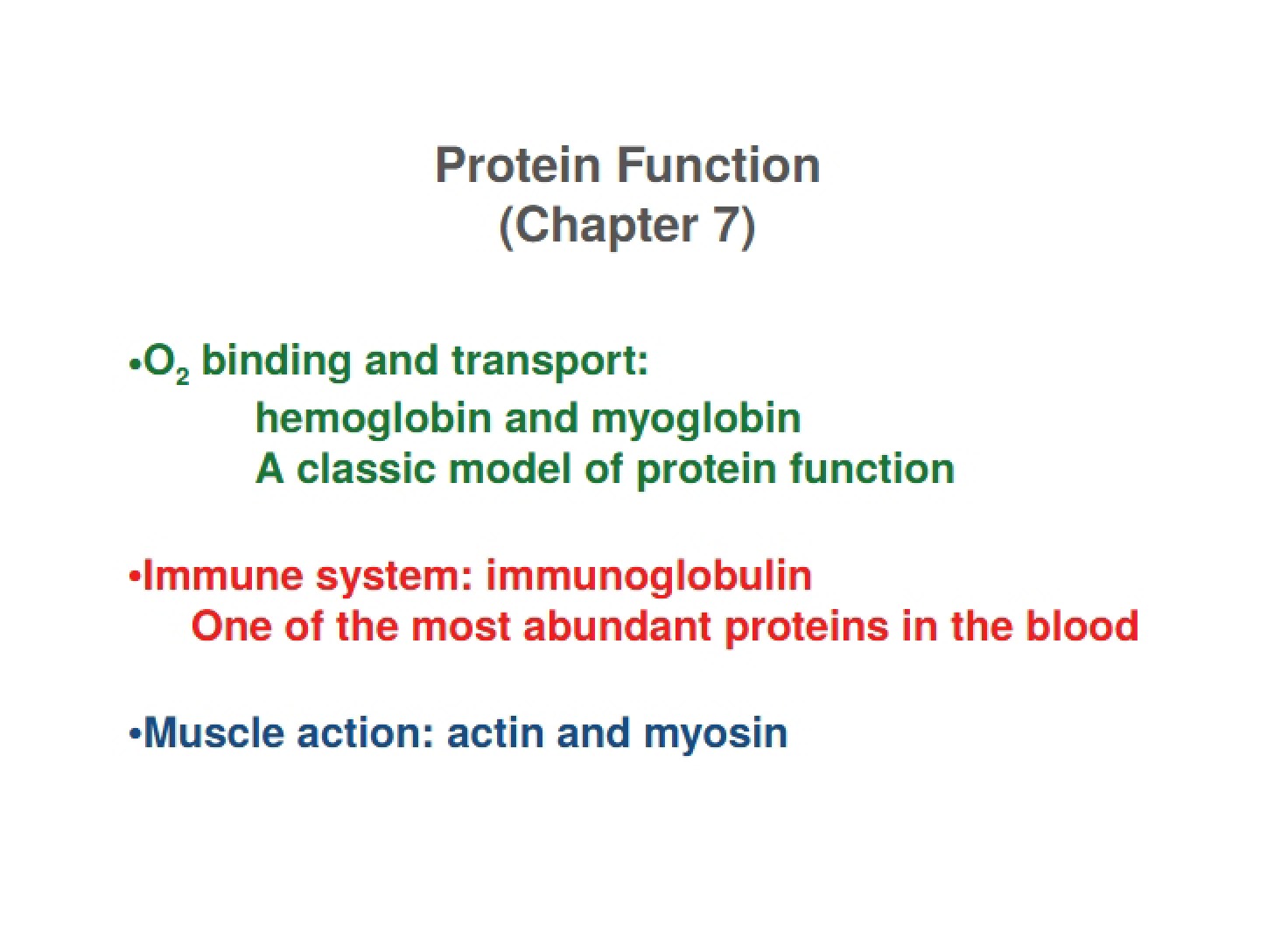
* The functional diversity of proteins – exploring roles in transport, immunity, and muscle action.
* The structure and significance of heme as a prosthetic group.
* Detailed examination of Myoglobin – its structure, oxygen binding properties, and limitations as an oxygen transporter.
* Introduction to Hemoglobin – its tetrameric structure and conformational states.
* The principles of ligand binding, including dissociation constants and their application to oxygen binding.
* The relationship between partial pressure and gas solubility in biological systems.
What This Document Provides
* Detailed diagrams illustrating the structure of heme and its components.
* Visual representations of Myoglobin and Hemoglobin structures.
* An overview of the different conformational states of Hemoglobin (T and R states).
* Explanations of key terms related to protein-ligand interactions.
* A conceptual framework for understanding oxygen binding curves and their significance.
* Illustrations of the interfaces between subunits within Hemoglobin.