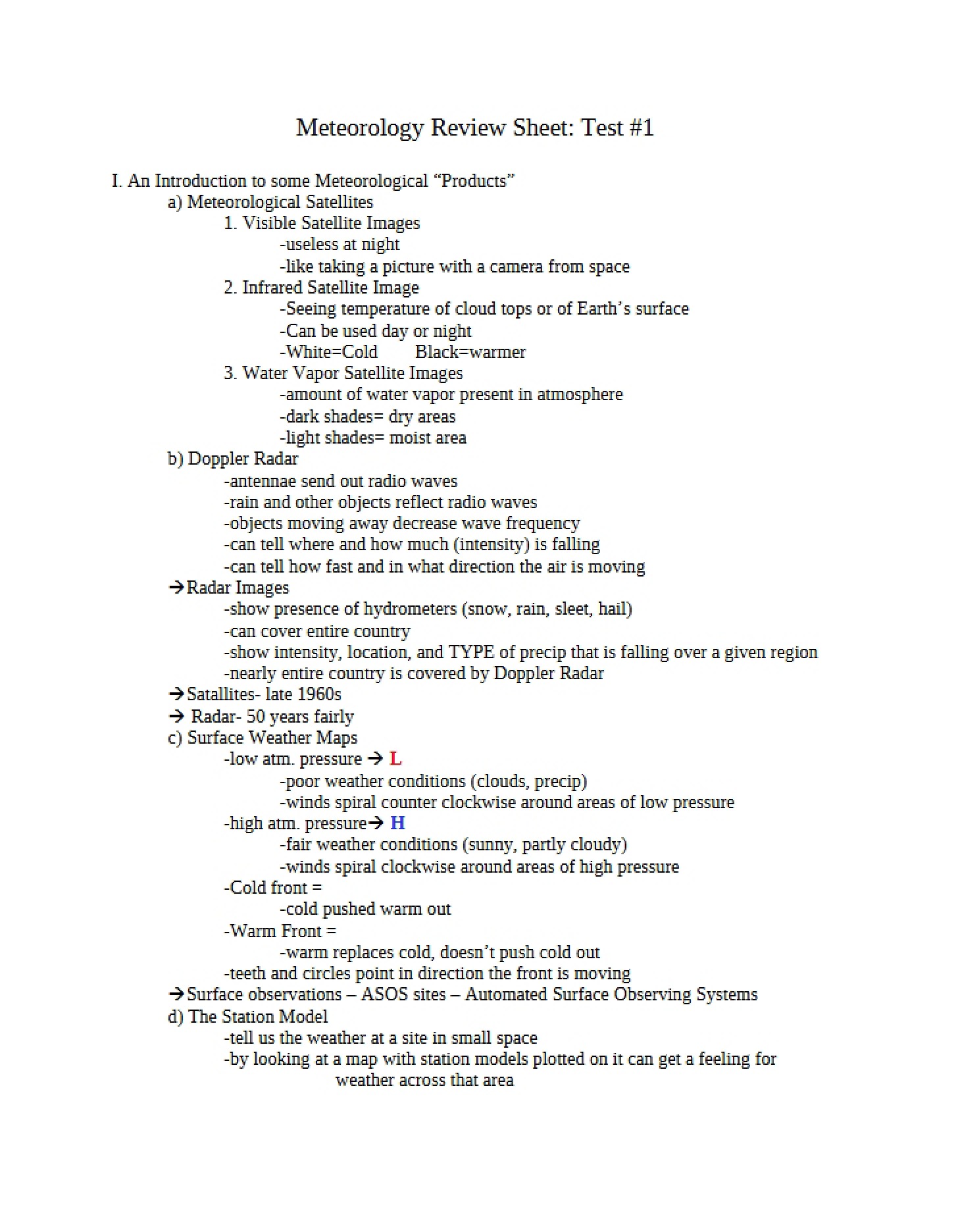
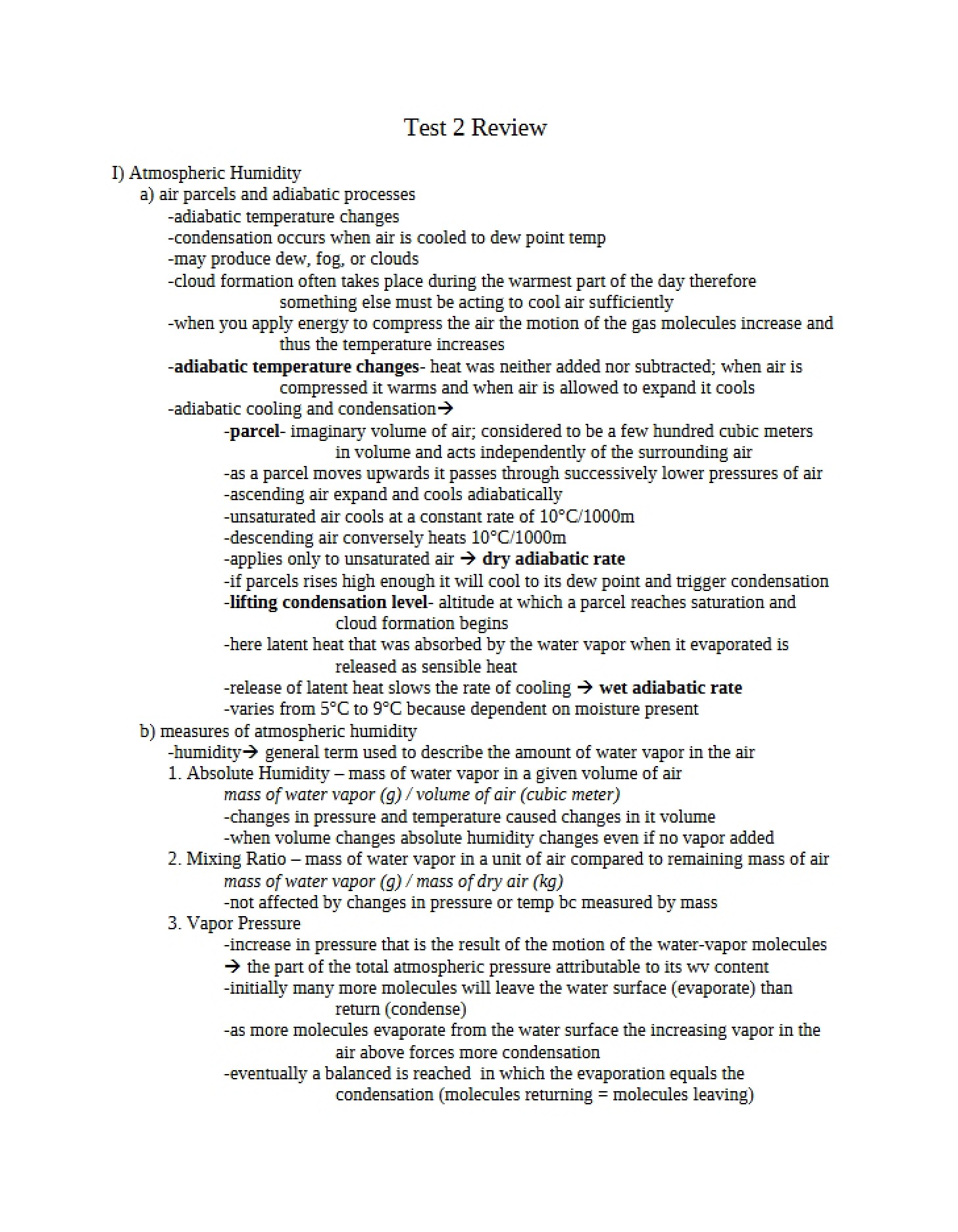
What This Document Is
This study guide provides a comprehensive overview of air masses and fronts – fundamental concepts in understanding weather patterns. It delves into the characteristics of different air types and how they interact, forming the basis for predicting atmospheric conditions. This resource is designed for students seeking a deeper understanding of the forces that shape our weather.
Why This Document Matters
This guide is particularly beneficial for students enrolled in introductory and intermediate meteorology courses. It’s ideal for supplementing classroom learning, preparing for assessments, or simply building a stronger foundation in atmospheric science. Anyone interested in understanding the ‘why’ behind weather events will find this a valuable resource. It’s most helpful when studying atmospheric dynamics and weather systems.
Topics Covered
* The definition and characteristics of air masses
* Source regions and their influence on air mass properties
* Classification of air masses based on latitude and surface type
* Modification processes affecting air mass characteristics
* The impact of air masses on regional weather conditions
* Seasonal variations in dominant air masses over specific regions
* How air masses interact to create different weather phenomena
What This Document Provides
* Detailed explanations of key terminology related to air masses and fronts.
* A structured framework for categorizing and understanding different air mass types.
* Insights into how air masses evolve as they move and interact with their environment.
* Connections between air mass characteristics and observed weather patterns.
* A foundation for understanding more complex meteorological concepts.