What This Document Is
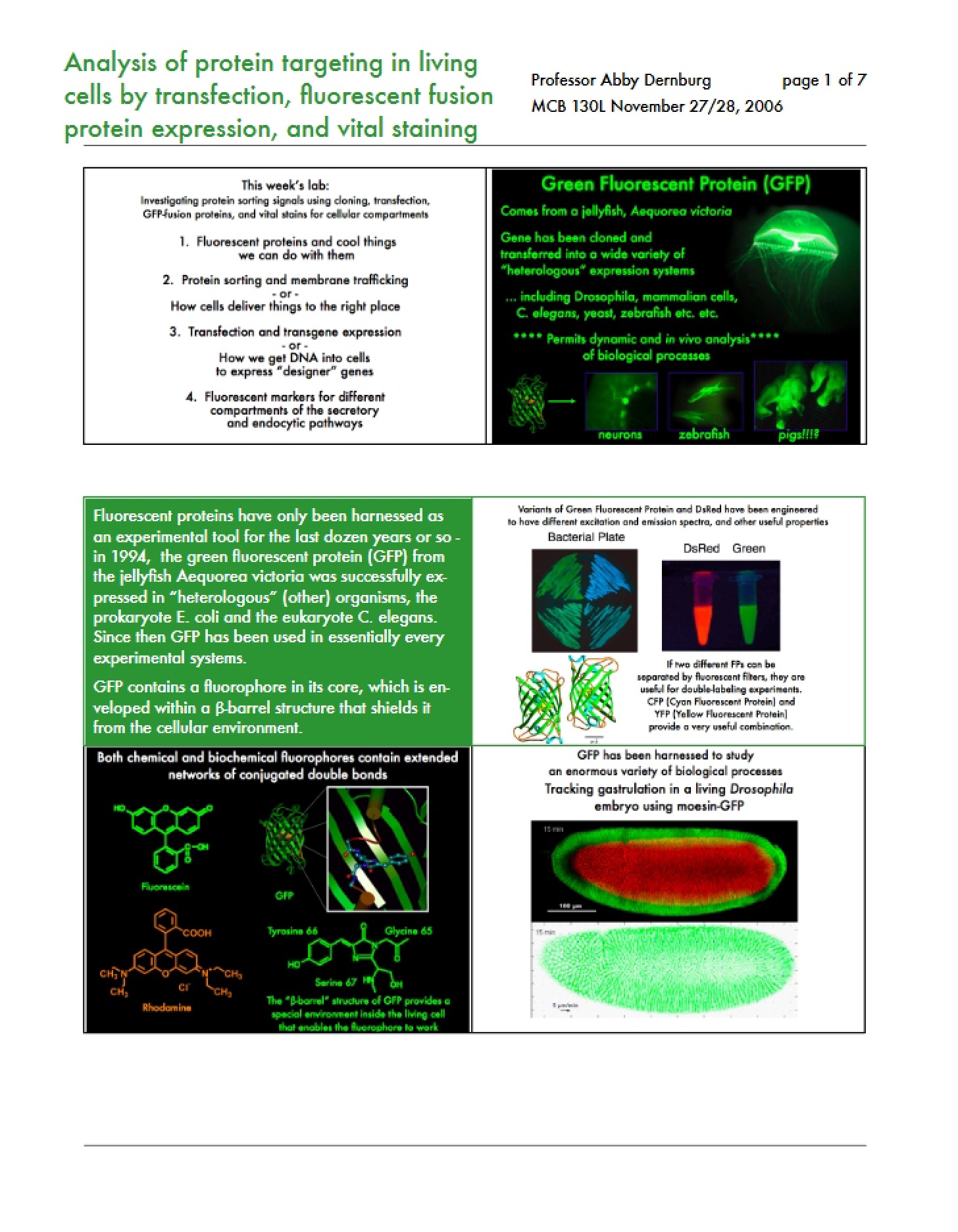
This is a detailed laboratory guide outlining a common technique in cell biology research: investigating protein localization within mammalian cells. It focuses on the construction and use of fusion proteins – specifically, proteins combined with Green Fluorescent Protein (GFP) – to visually track their movement and placement inside living cells. The guide prepares students for a hands-on laboratory experience involving DNA manipulation, cell transfection, and fluorescence microscopy.
Why This Document Matters
This resource is essential for students enrolled in advanced cell and systems biology courses, particularly those with a focus on molecular biology and cellular imaging. It’s most valuable when preparing for a lab session centered around protein targeting and visualization, or when seeking a deeper understanding of how researchers determine the function of proteins by observing their location within the cell. Understanding these techniques is foundational for anyone pursuing research in related fields.
Topics Covered
* Principles of transgene construction and DNA transfection
* The use of fluorescent fusion proteins for protein localization studies
* Methods for introducing foreign DNA into mammalian cells
* Techniques for visualizing cellular components using fluorescent vital stains
* Experimental applications of transgenes in cell biology research
* The relationship between protein structure, function, and cellular location
What This Document Provides
* A comprehensive overview of the experimental purpose and underlying scientific rationale.
* Detailed background information on the importance of studying protein localization.
* An exploration of various experimental goals achievable through transgene introduction.
* Contextual information regarding the use of specific cell lines in this type of research.
* An introduction to the principles of fluorescence microscopy and vital staining techniques.