What This Document Is
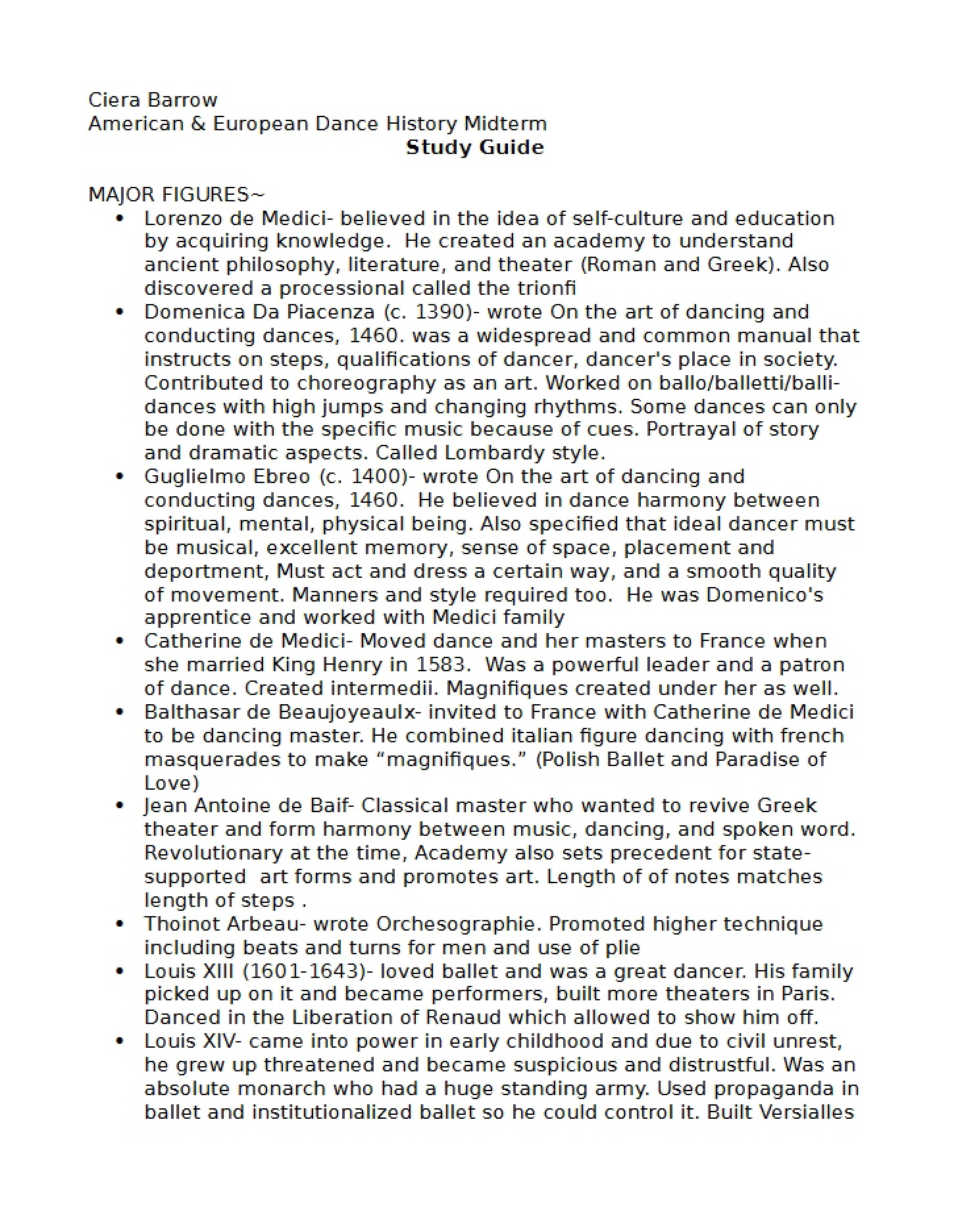
This is a comprehensive study guide designed to support students enrolled in a university-level American & European Dance History course. It focuses on key figures, influential patrons, and pivotal moments in the development of dance from the Renaissance through the Baroque period. The guide synthesizes information crucial for understanding the historical trajectory of dance as an art form and its relationship to broader social and political contexts. It’s intended to be a focused resource for exam preparation and deeper comprehension of course material.
Why This Document Matters
Students in DANC 281 – American & European Dance History will find this guide particularly valuable when preparing for assessments, reviewing complex historical connections, and solidifying their understanding of the evolution of dance technique and aesthetics. It’s most useful *after* engaging with lectures and assigned readings, serving as a tool to organize and reinforce learning. Anyone seeking a structured overview of early dance history, including the influences of courtly life and the emergence of professional dance institutions, will benefit from this resource.
Common Limitations or Challenges
This study guide is a focused resource and does not substitute for active participation in class, thorough reading of assigned texts, or independent research. It provides a framework for understanding key concepts but does not offer exhaustive detail on every historical event or individual. It also doesn’t include analyses of specific choreographic works or musical scores – those are explored separately within the course. It is designed to *complement* your learning, not replace it.
What This Document Provides
* Overviews of influential figures who shaped the landscape of early dance, including patrons and choreographers.
* Contextual information regarding the social and political climates that impacted dance development.
* Key terminology and concepts related to dance history during the specified periods.
* Connections between dance and other art forms, such as theater, music, and literature.
* Insights into the evolving role of dance within courtly society and the emergence of professional dance training.