What This Document Is
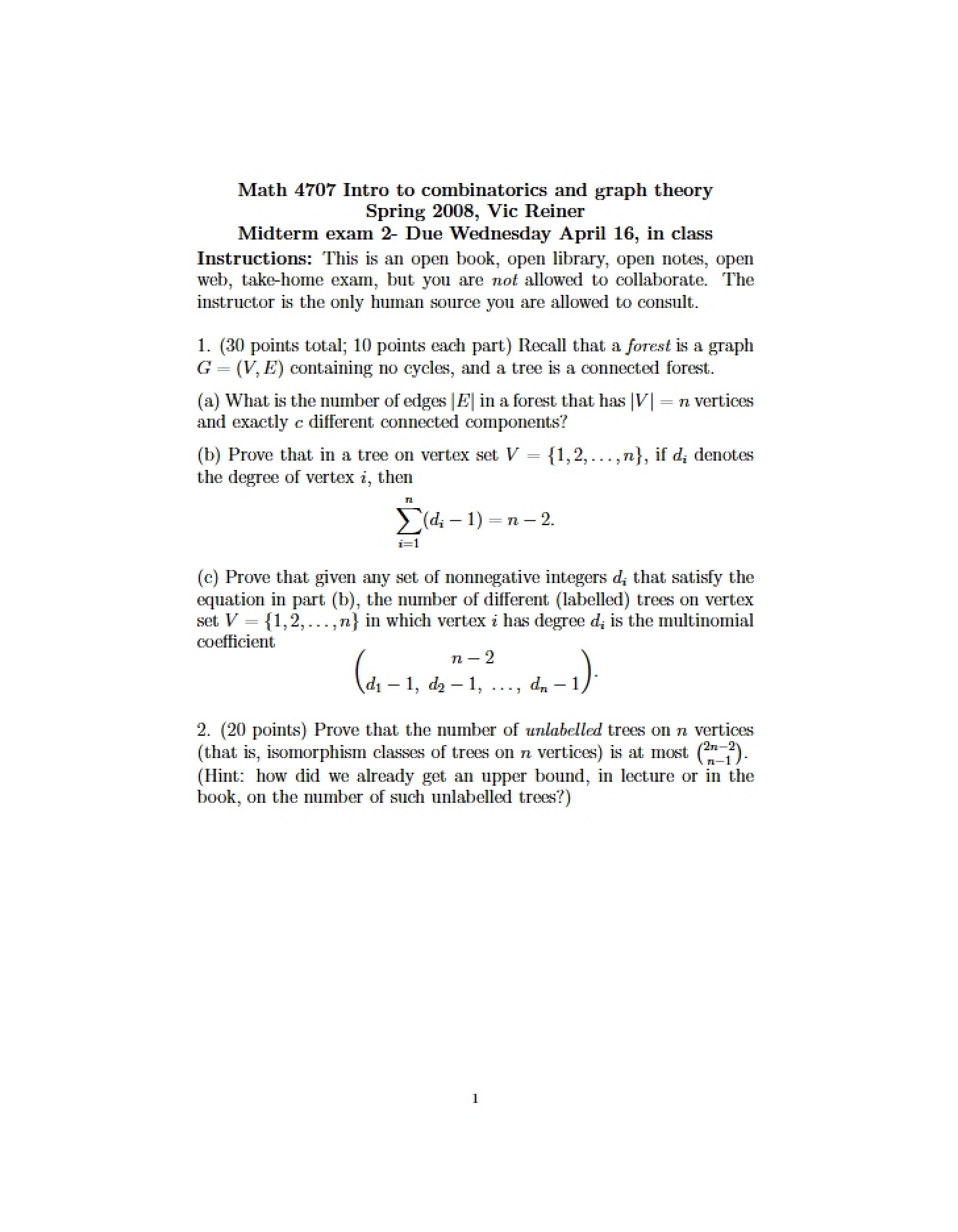
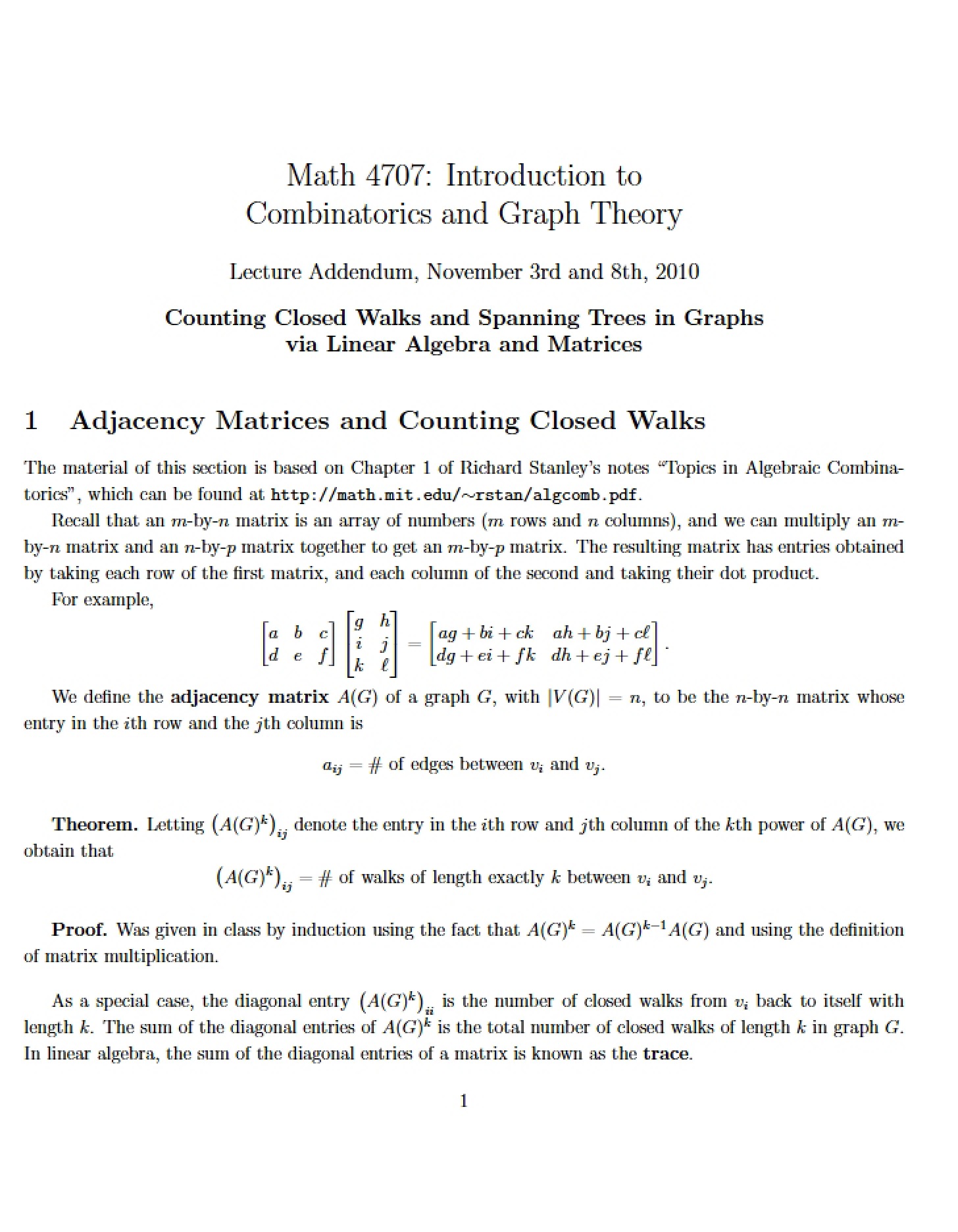
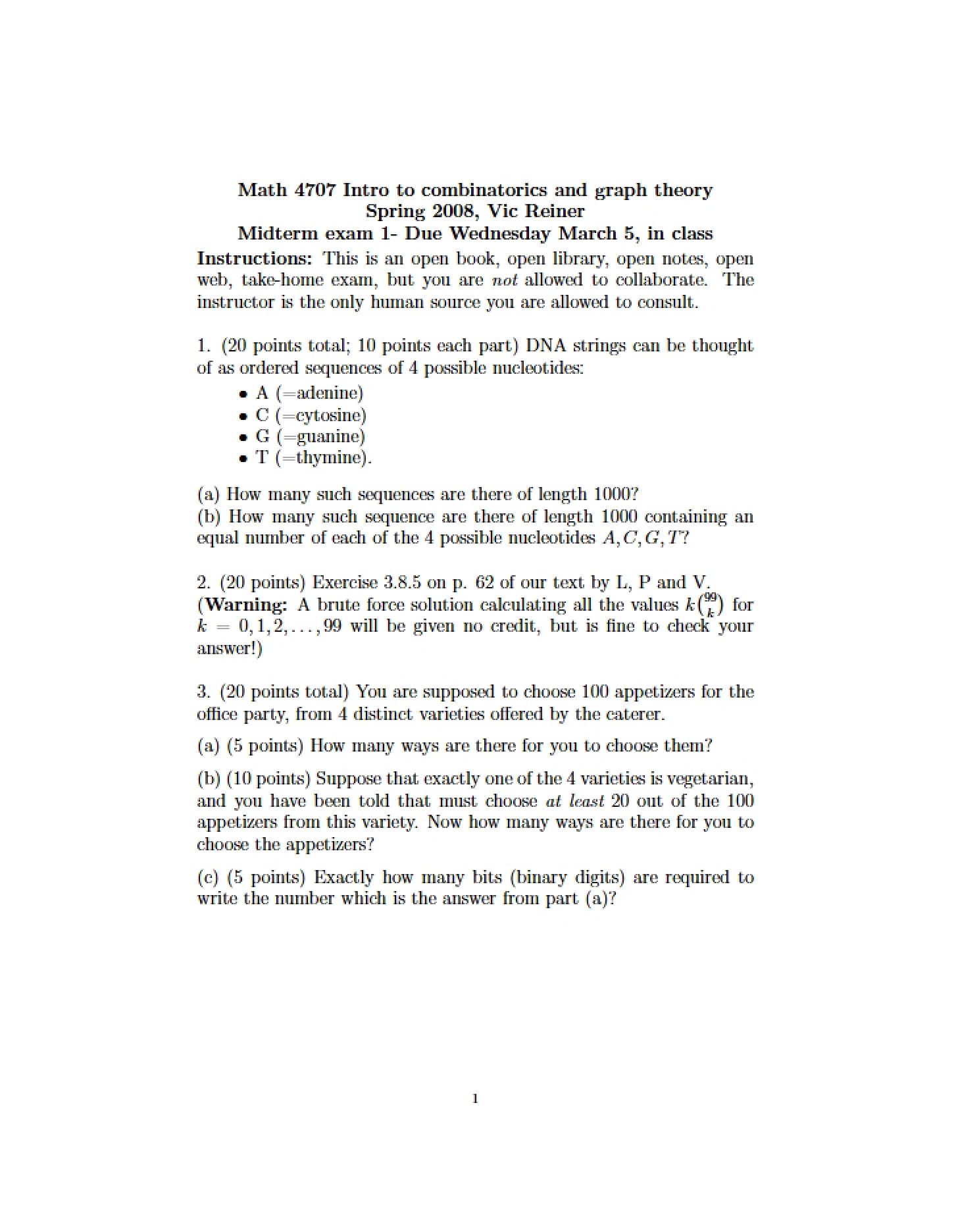
This document is a practice exam for MATH 4707, Introduction to Combinatorics and Graph Theory, offered at the University of Minnesota Twin Cities. It’s designed to assess your understanding of core concepts covered throughout the course, simulating the format and difficulty level of a final examination. The exam emphasizes problem-solving skills and the application of theoretical knowledge to novel scenarios.
Why This Document Matters
This resource is invaluable for students preparing for a comprehensive evaluation in combinatorics and graph theory. It’s particularly useful for self-assessment, identifying areas needing further review, and building confidence before a high-stakes exam. Students who actively work through problems of this type will be better equipped to handle the demands of the course and related mathematical fields. It’s best utilized after completing coursework and seeking clarification on any lingering questions from lectures or office hours.
Common Limitations or Challenges
This document presents a single exam instance. While representative of the course material, it doesn’t encompass *every* possible topic or problem type. It’s crucial to remember that working through this exam doesn’t guarantee success; a thorough understanding of all course concepts is still essential. Furthermore, detailed step-by-step solutions are not included – this is designed to encourage independent problem-solving.
What This Document Provides
* A set of challenging problems covering topics such as rearrangements and permutations.
* Exploration of generating functions and their application to tree enumeration.
* Problems relating to geometric structures and their combinatorial properties (e.g., soccer ball construction).
* Questions focused on graph theory concepts, including line graphs and their properties.
* Exercises involving acyclic orientations and chromatic polynomials.
* Problems requiring proofs and justifications of mathematical statements.
* A realistic exam format with assigned point values for each question.