What This Document Is
This material delves into the fascinating world of abstract algebra, specifically focusing on the concept of ‘Group Action on a Set’. It’s a focused exploration within a Modern Algebra 1 course (MATH 541) at the university level, building upon foundational algebraic structures like groups and subgroups. The content investigates how groups can *operate* on sets, altering elements within those sets according to specific rules dictated by the group’s structure. It’s a core topic for understanding symmetries and transformations in more advanced mathematical contexts.
Why This Document Matters
This resource is invaluable for students enrolled in an introductory modern algebra course. It’s particularly helpful when grappling with the abstract nature of group actions and their implications. Students preparing for exams, working through problem sets, or seeking a deeper understanding of algebraic structures will find this a useful study aid. It’s designed to solidify comprehension of key theorems and relationships related to group actions, centralizers, and automorphisms. Those pursuing further study in areas like cryptography, coding theory, or physics will also benefit from a strong grasp of these concepts.
Common Limitations or Challenges
This material presents a theoretical treatment of group actions. It does *not* offer a substitute for attending lectures, participating in class discussions, or completing assigned homework. It also doesn’t provide step-by-step solutions to problems; rather, it lays the groundwork for understanding the underlying principles. While proofs are referenced, the complete derivations and detailed calculations are reserved for those with full access. It assumes a prior understanding of basic group theory terminology and concepts.
What This Document Provides
* Exploration of group actions defined by conjugation.
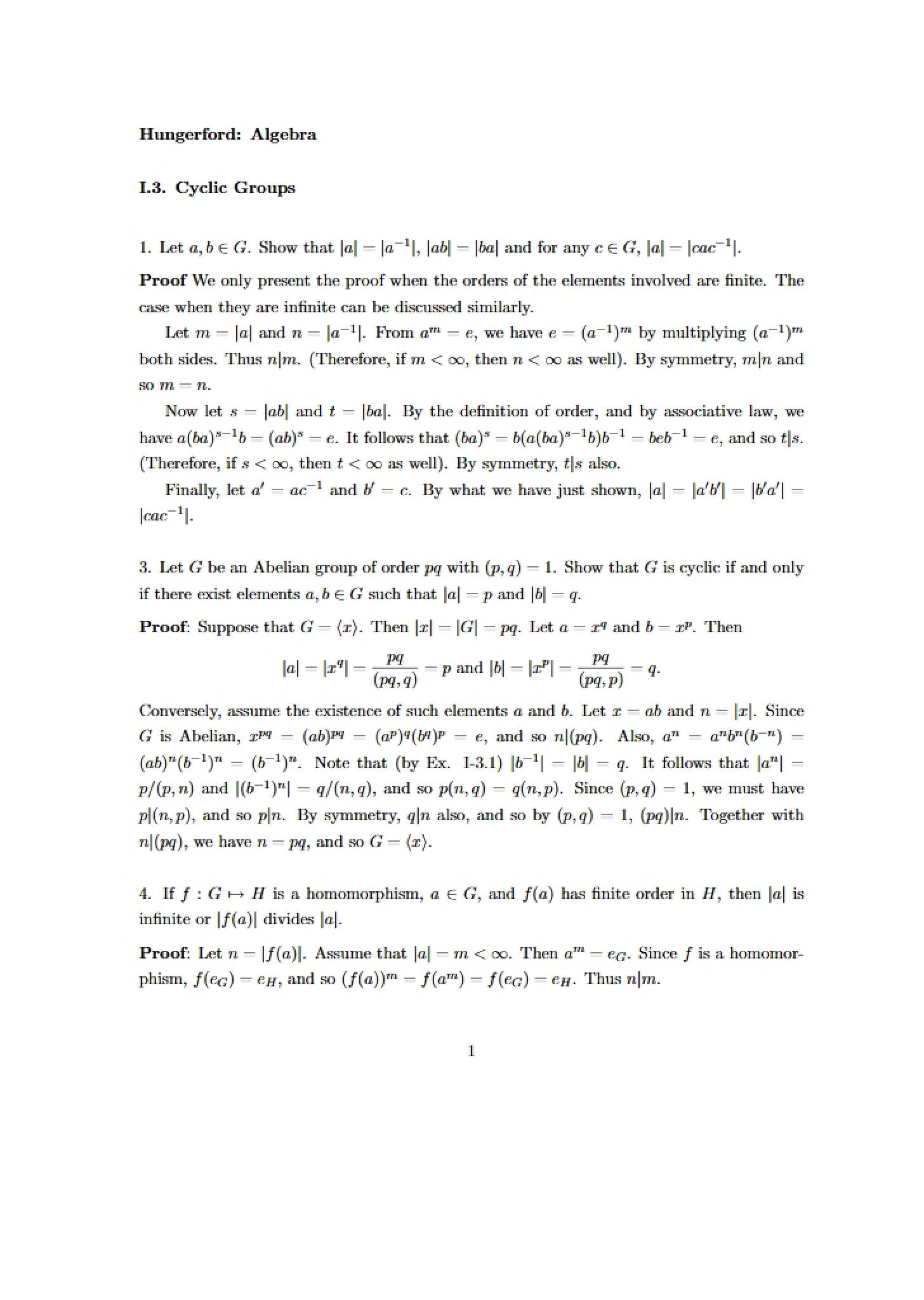
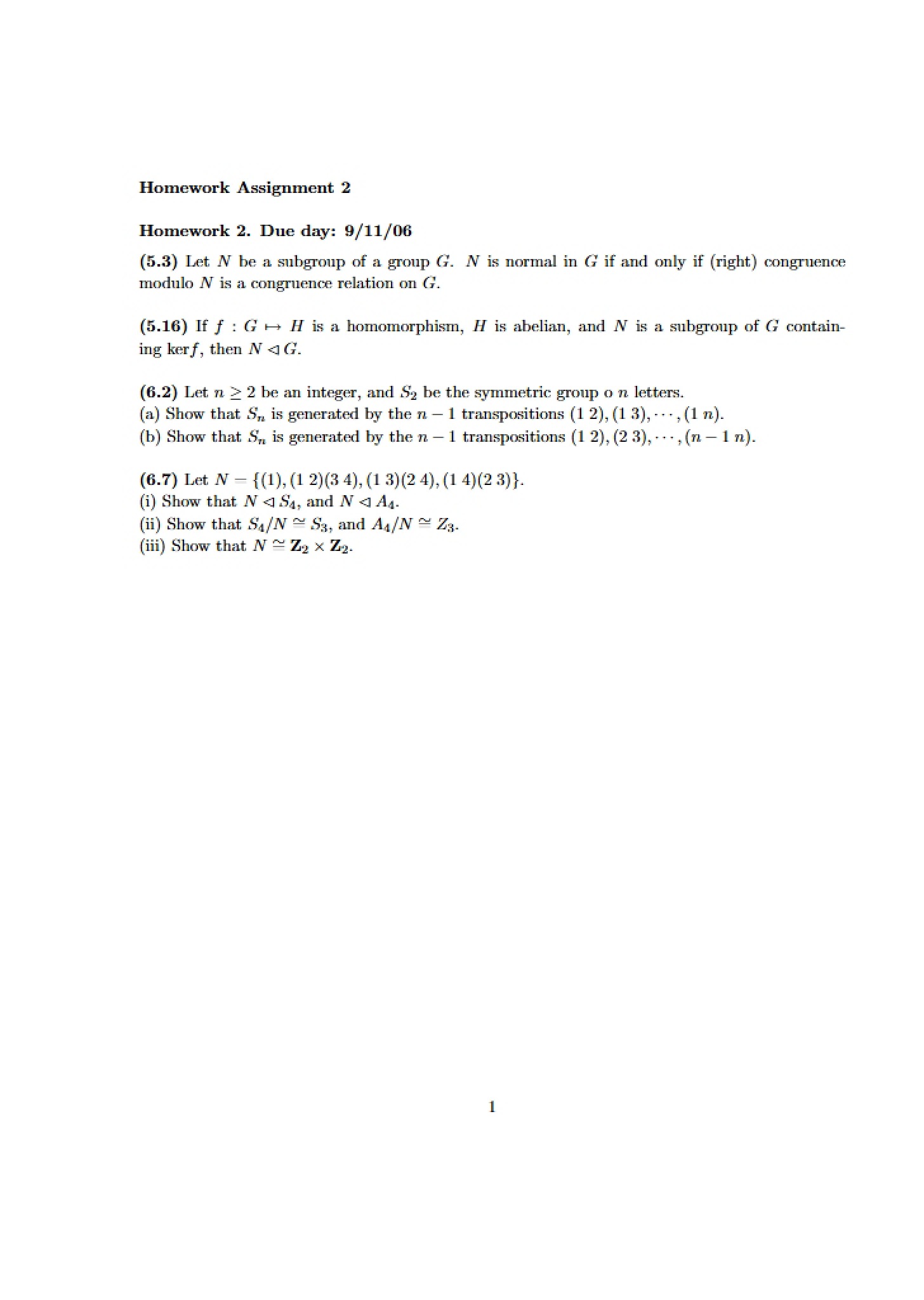
* Investigation into the relationship between a group, its normal subgroup, and the Automorphism group of a set.
* Discussion of homomorphisms derived from group actions.
* Analysis of centralizers and their role in understanding group structure.
* Examination of inner automorphisms and their connection to group actions.
* Consideration of conditions under which a group is abelian based on the properties of its factor groups.
* Exploration of the concept of a normal subgroup and its relation to conjugate elements.