What This Document Is
This is a comprehensive guide designed to support students in an Electronic Techniques for Engineering course, specifically focusing on the practical application of circuit analysis techniques. It serves as a laboratory companion, bridging theoretical concepts with hands-on experimentation. The guide details procedures and considerations for building and analyzing electrical circuits, preparing students for successful lab work and a deeper understanding of core electrical engineering principles.
Why This Document Matters
This resource is invaluable for students enrolled in an equivalent circuits and network analysis module. It’s particularly helpful when you’re actively engaged in laboratory exercises and need a reference for best practices, safety precautions, and a structured approach to experimentation. It’s also beneficial for reinforcing theoretical understanding by connecting it to real-world circuit behavior. Access to the full guide will ensure you are well-prepared to confidently tackle lab assignments and solidify your grasp of fundamental concepts.
Topics Covered
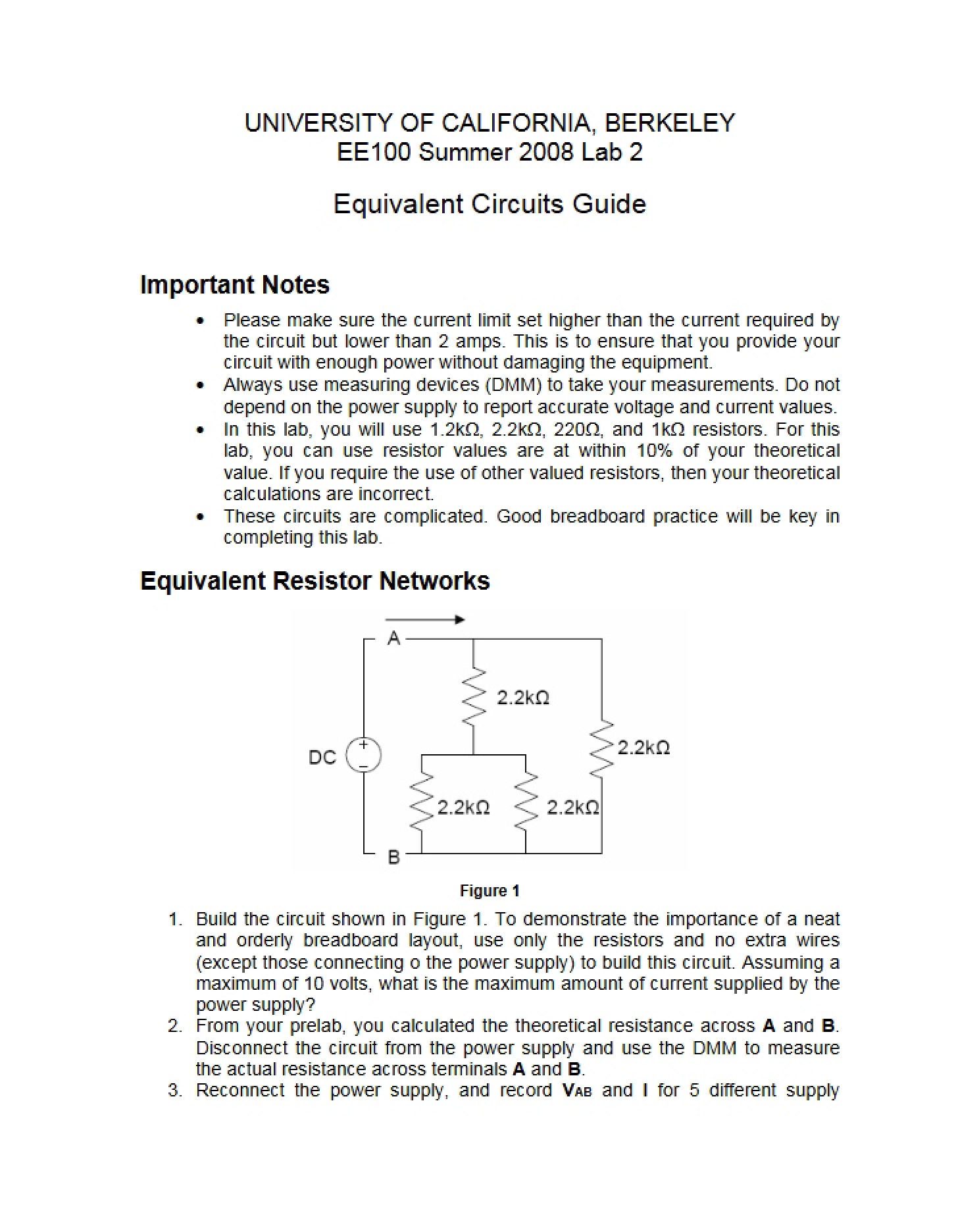
* Equivalent Resistor Networks and Analysis
* DC Circuit Analysis and Measurement
* Thévenin’s and Norton’s Equivalent Circuit Theorems
* Voltage and Current Source Characterization
* Practical Breadboarding Techniques
* Measurement Techniques using Digital Multimeters (DMMs)
* Graphical Analysis of Circuit Behavior (IV Curves)
* Power Supply Usage and Safety
What This Document Provides
* Detailed guidance on building specific circuits for analysis.
* Important safety notes and best practices for working with electrical equipment.
* A structured approach to experimental procedures, including measurement techniques.
* Preparation for analyzing and interpreting circuit behavior through observation and calculation.
* A framework for understanding the relationship between theoretical calculations and practical measurements.
* Considerations for selecting appropriate component values and understanding tolerance.