What This Document Is
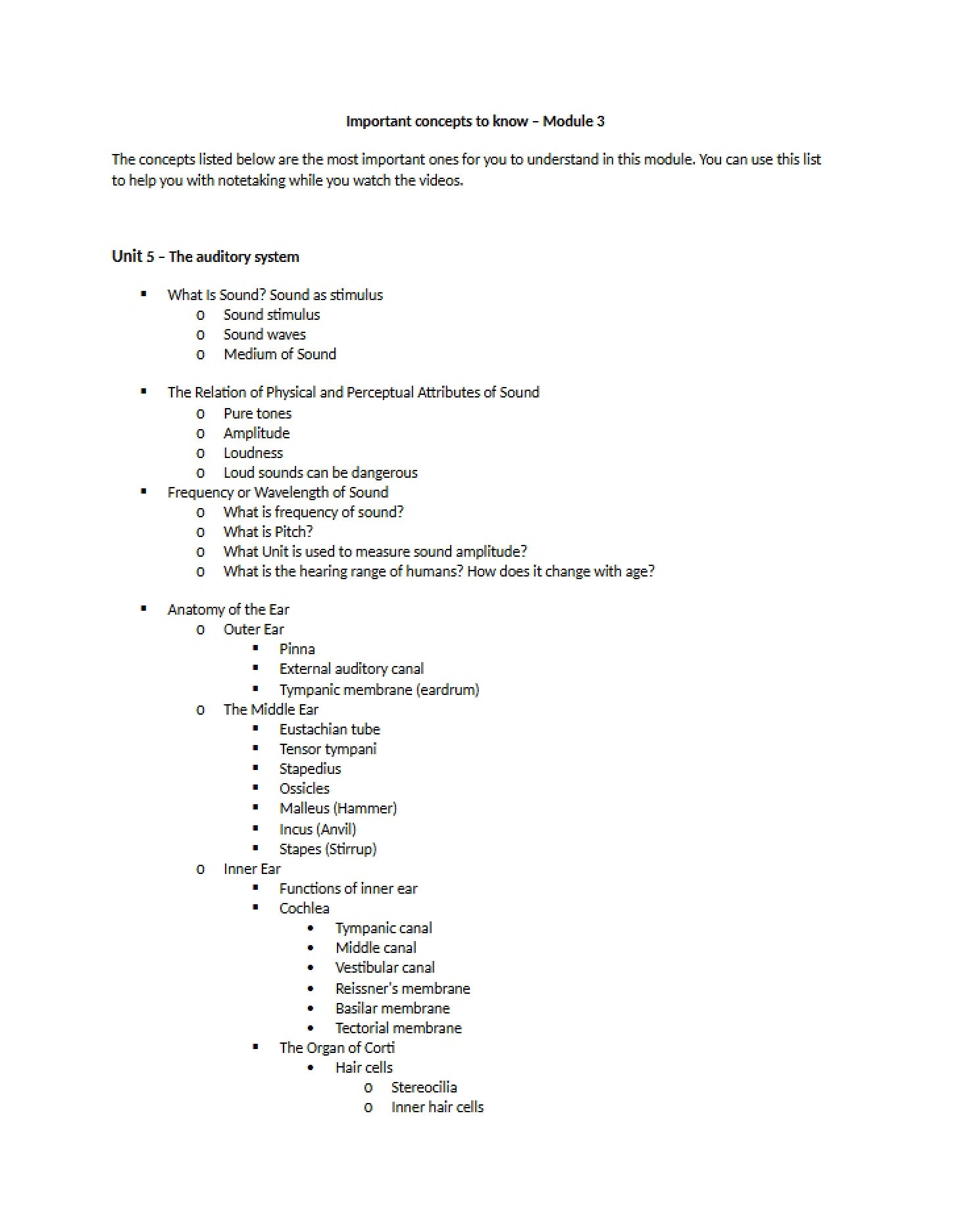
This guide provides a focused overview of core concepts within Module 2 of Perception & Sensory Processes (PSYC 230) at the University of Illinois at Urbana-Champaign. It’s designed to be a companion to the module’s video lectures, offering a structured framework for understanding the complexities of touch, pain, and the chemical senses – smell and taste. This isn’t a replacement for course materials, but a tool to enhance your learning and focus your study efforts.
Why This Document Matters
Students enrolled in PSYC 230 will find this guide particularly helpful when preparing for quizzes, exams, and class discussions related to somatosensation and chemosensation. It’s ideal for use *while* engaging with the module’s video content, allowing you to proactively identify key terms and relationships. Those who benefit most will be students aiming for a deeper understanding of how the body receives and interprets information about the environment through these crucial sensory systems. It’s a valuable resource for anyone wanting to solidify their grasp of these foundational perceptual processes.
Common Limitations or Challenges
This guide does *not* contain the full explanations, detailed experimental findings, or illustrative examples presented in the course lectures. It’s a roadmap, not the territory itself. It won’t provide complete answers to complex questions, nor will it substitute for active engagement with the primary course content. It also doesn’t include any practice questions or assessments. Access to the full guide is required to unlock the complete details and nuances of these topics.
What This Document Provides
* A categorized list of essential concepts related to the sense of touch, including different types of receptors and their functions.
* An outline of key areas within pain perception, covering various pain types and underlying mechanisms.
* An overview of the pathways involved in processing pain signals within the brain.
* A summary of topics related to the olfactory system, including anatomy, physiology, and perception.
* A breakdown of the anatomy and processes involved in taste perception, including the identification of basic tastes.
* Key terminology related to disorders and phenomena affecting touch and the chemical senses.