What This Document Is
This guide provides an overview of Business Intelligence (BI) systems, exploring their components, typical applications, and core processes. It examines how organizations leverage data to gain insights and improve decision-making. The document focuses on the broader concepts of BI, data warehousing, and data analysis techniques without delving into specific software implementations or coding practices.
Why This Document Matters
This document is valuable for students in Computer Information Systems (COB 204) at James Madison University seeking a foundational understanding of BI. It’s particularly useful when beginning to explore how information systems support strategic business functions. Understanding these concepts is crucial for anyone involved in data analysis, business strategy, or IT management. It sets the stage for more in-depth study of specific BI tools and techniques.
Common Limitations or Challenges
This guide is a high-level overview and does not provide hands-on training with BI software. It doesn’t cover advanced statistical modeling, detailed database design, or the intricacies of data security. Users will still need to learn specific tools (like SQL Server, SAS, or SPSS) and develop practical data analysis skills beyond the concepts presented here.
What This Document Provides
This document includes:
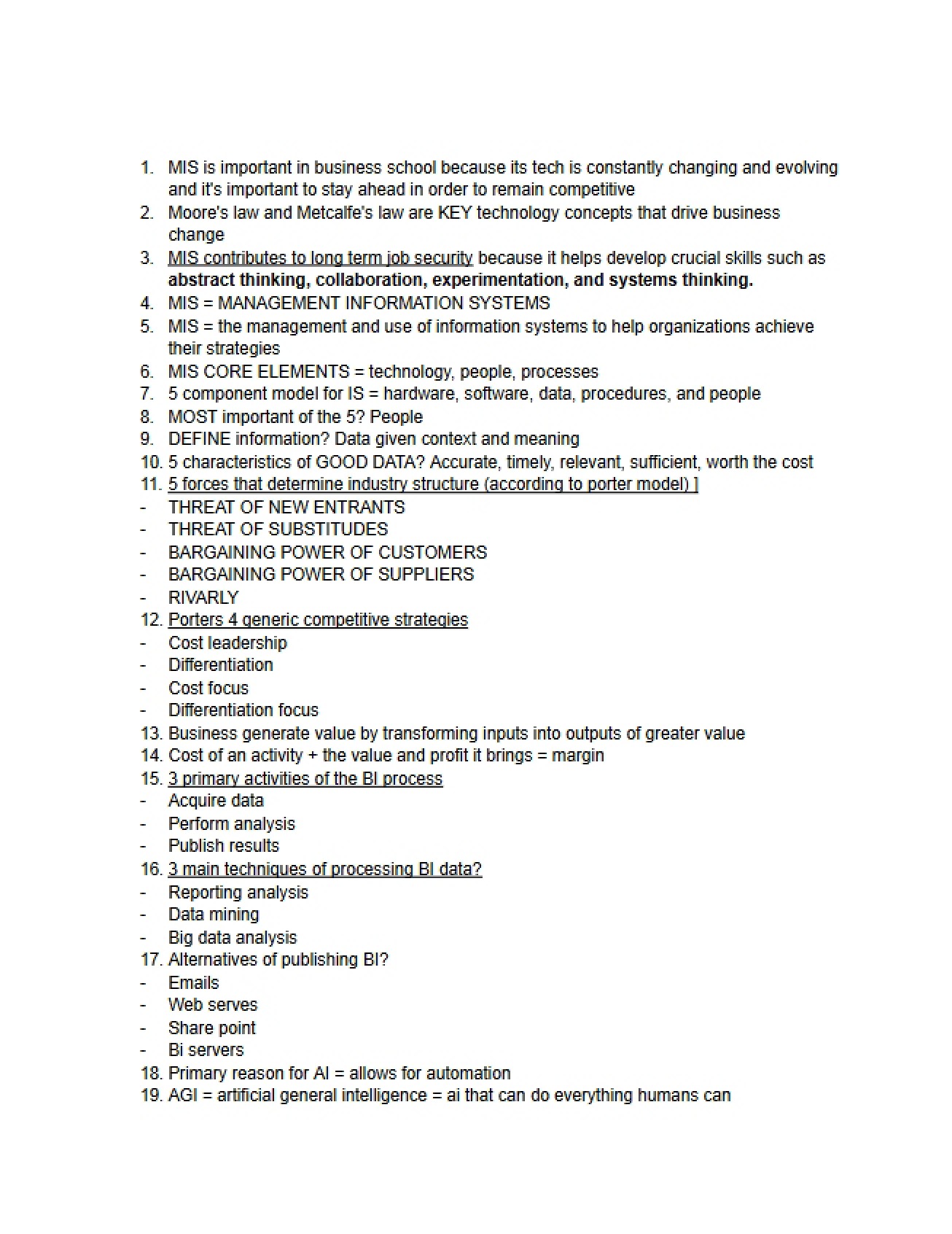
* An explanation of the five standard components of a BI system (hardware, software, data, procedures, and people).
* Real-world examples of BI applications, including purchasing pattern analysis, entertainment recommendations, and just-in-time medical reporting.
* A breakdown of the three primary activities in the BI process: data sourcing, analysis, and feedback.
* An overview of data warehousing concepts, including data acquisition, cleansing, organization, and cataloging.
* A discussion of the differences between data warehouses and data marts.
* Examples of the types of consumer data organizations might purchase for BI purposes.
* Identification of common data quality issues ("dirty data") that impact BI analysis.
This preview does *not* include detailed instructions on building a data warehouse, specific code examples, or in-depth case studies. It does not provide a comprehensive list of all available BI tools or a comparative analysis of different software packages.