What This Document Is
This guide provides a focused overview of key concepts in General Chemistry: ionization energies, Hund’s Rule, and quantum numbers. It’s designed to establish a foundational understanding of these principles as they relate to atomic structure and electron configuration. The document presents equations and relationships related to energy levels and electron behavior within atoms.
Why This Document Matters
This resource is valuable for students in introductory chemistry courses (like Boston University’s CH 101) who are building a core understanding of how electrons are arranged within atoms. These concepts are essential for predicting chemical reactivity, understanding periodic trends, and interpreting spectroscopic data. It serves as a quick reference and conceptual bridge between lecture material and problem-solving. It’s particularly useful when studying atomic theory and the behavior of electrons.
Common Limitations or Challenges
This document is a concentrated overview and does *not* provide exhaustive explanations of all related topics. It doesn’t include detailed derivations of the equations presented, nor does it offer extensive practice problems with solutions. It’s intended to supplement, not replace, textbook readings, lectures, and problem sets. A strong foundation in basic physics and algebra is assumed.
What This Document Provides
The full document includes:
* Equations for calculating ionization energies and kinetic energies of electrons.
* An explanation of Hund’s Rule and its impact on electron configuration.
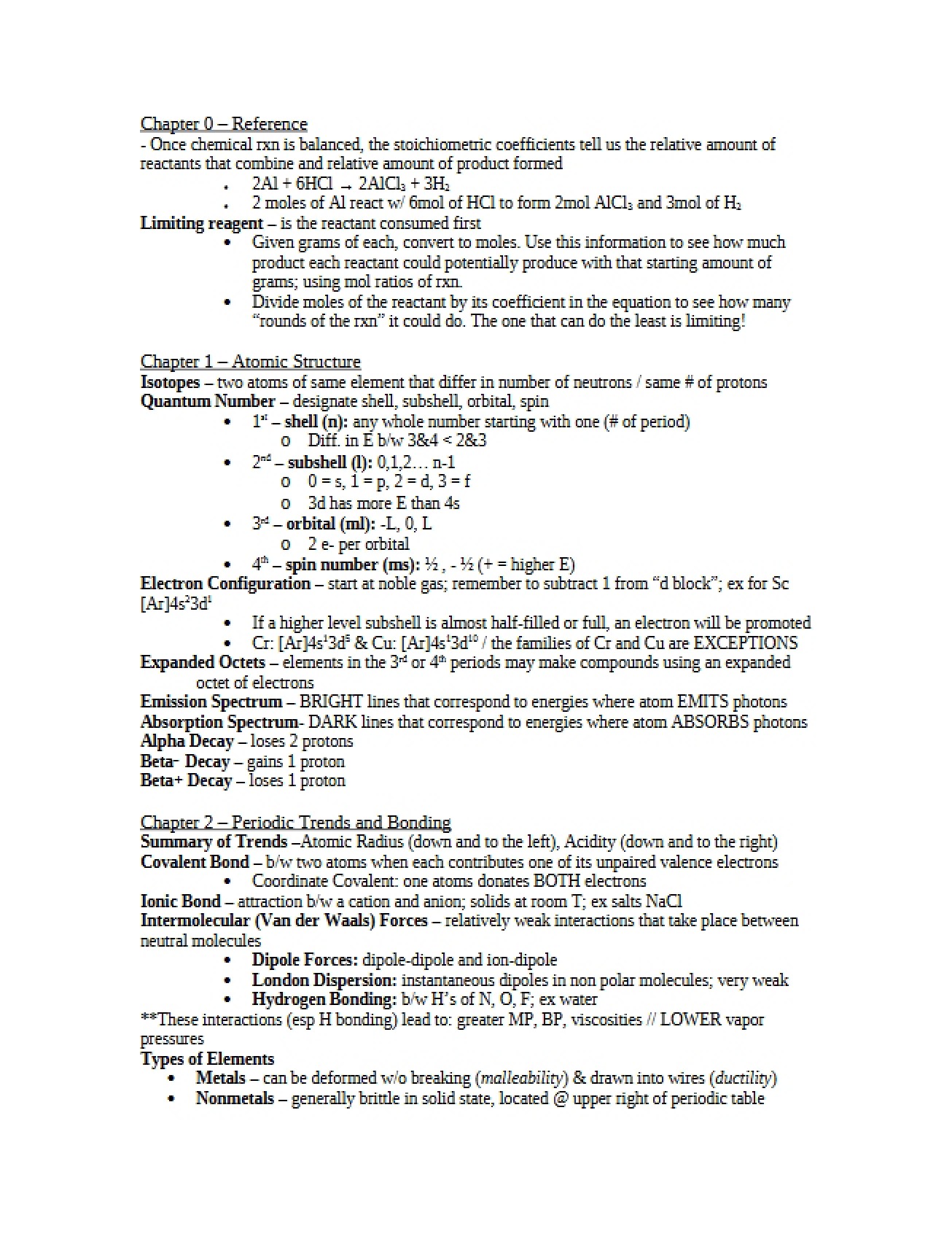
* A review of the four quantum numbers (n, l, ml, ms) and their significance.
* Illustrative examples relating to atomic orbitals and energy levels.
* A brief discussion of atomic size and its relationship to quantum numbers.
* A sample question relating to quantum number possibilities.
This preview *does not* include detailed solutions to practice problems, in-depth explanations of the mathematical derivations, or a comprehensive treatment of all applications of these concepts. It is a high-level overview to help you determine if the full document will meet your study needs.