What This Document Is
This instructional material, HC Session 12, is part of the EE 230 Optical Fiber Communication course at the University of California, Santa Cruz. It delves into the critical aspects of optical receiver design and performance analysis. This session focuses on the challenges and considerations involved in accurately detecting optical signals and mitigating the various noise sources that can degrade signal quality. It builds upon foundational knowledge of optical communication systems and moves towards a more detailed understanding of receiver functionalities.
Why This Document Matters
This material is essential for students pursuing a career in optical communication engineering, photonics, or related fields. It’s particularly valuable when you’re studying the practical limitations of optical systems and learning how to optimize receiver performance for reliable data transmission. Engineers and researchers working on designing, implementing, or troubleshooting optical fiber networks will also find this a useful resource for understanding the trade-offs involved in different receiver configurations. Accessing the full content will provide a deeper understanding needed for successful coursework and professional application.
Topics Covered
* Noise sources in optical detection systems (bulk, thermal, surface leakage, shot noise)
* Receiver front-end comparisons (Bipolar, FET, Transimpedance, Comparator circuits)
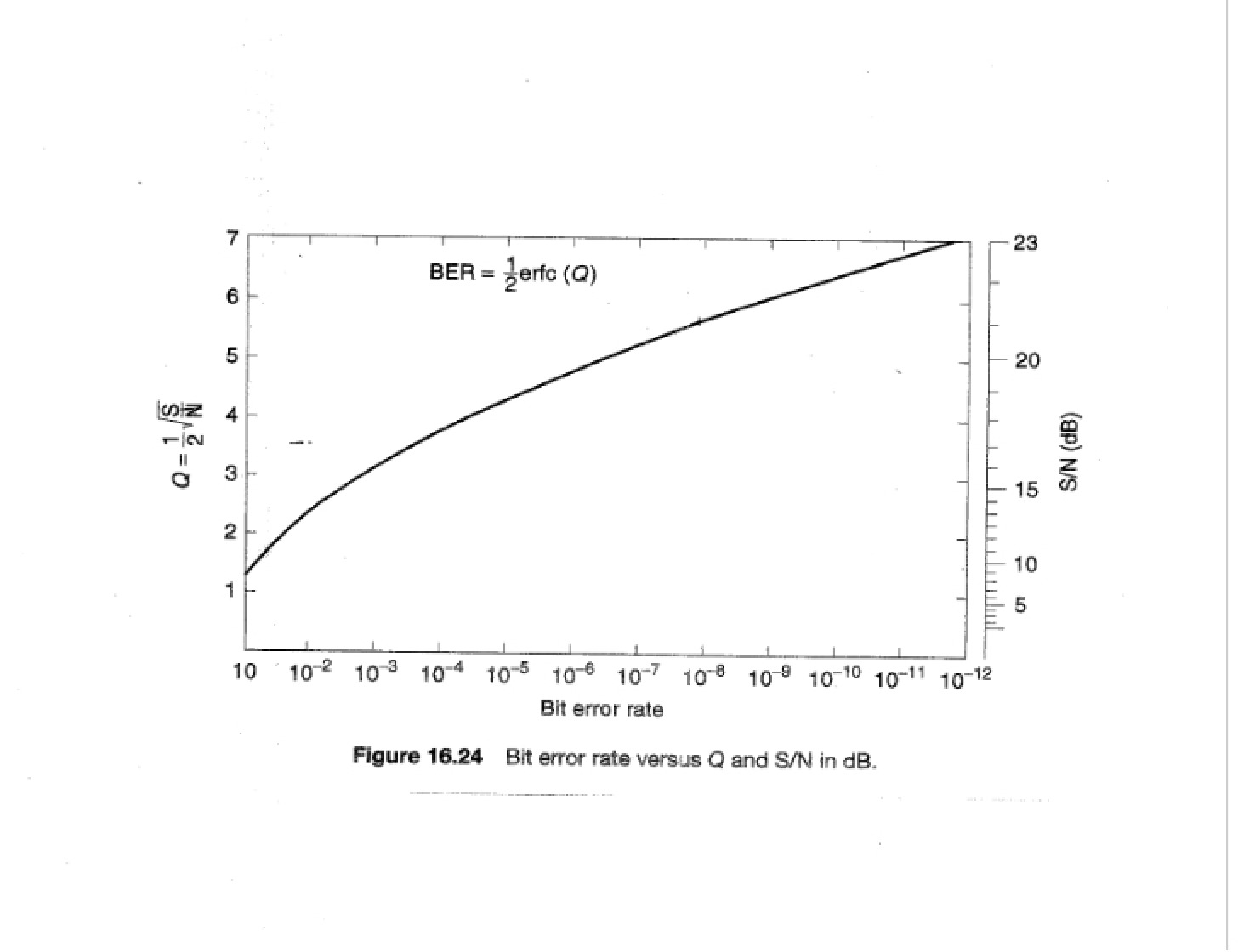
* Impact of signal fluctuations and decision thresholds on error rates
* Performance metrics related to signal quality (extinction ratio, intensity noise, timing jitter)
* Analysis of power penalties associated with various impairments
* Eye pattern analysis for assessing system performance
What This Document Provides
* Illustrative figures depicting noise sources and signal behavior in optical receivers.
* Comparative tables outlining the characteristics of different receiver front-end circuits.
* Graphical representations demonstrating the relationship between key parameters (like extinction ratio and timing jitter) and system performance (power penalty).
* Visualizations of eye patterns to illustrate the effects of transmission impairments.
* A focused exploration of factors influencing the accuracy and reliability of optical signal detection.