What This Document Is
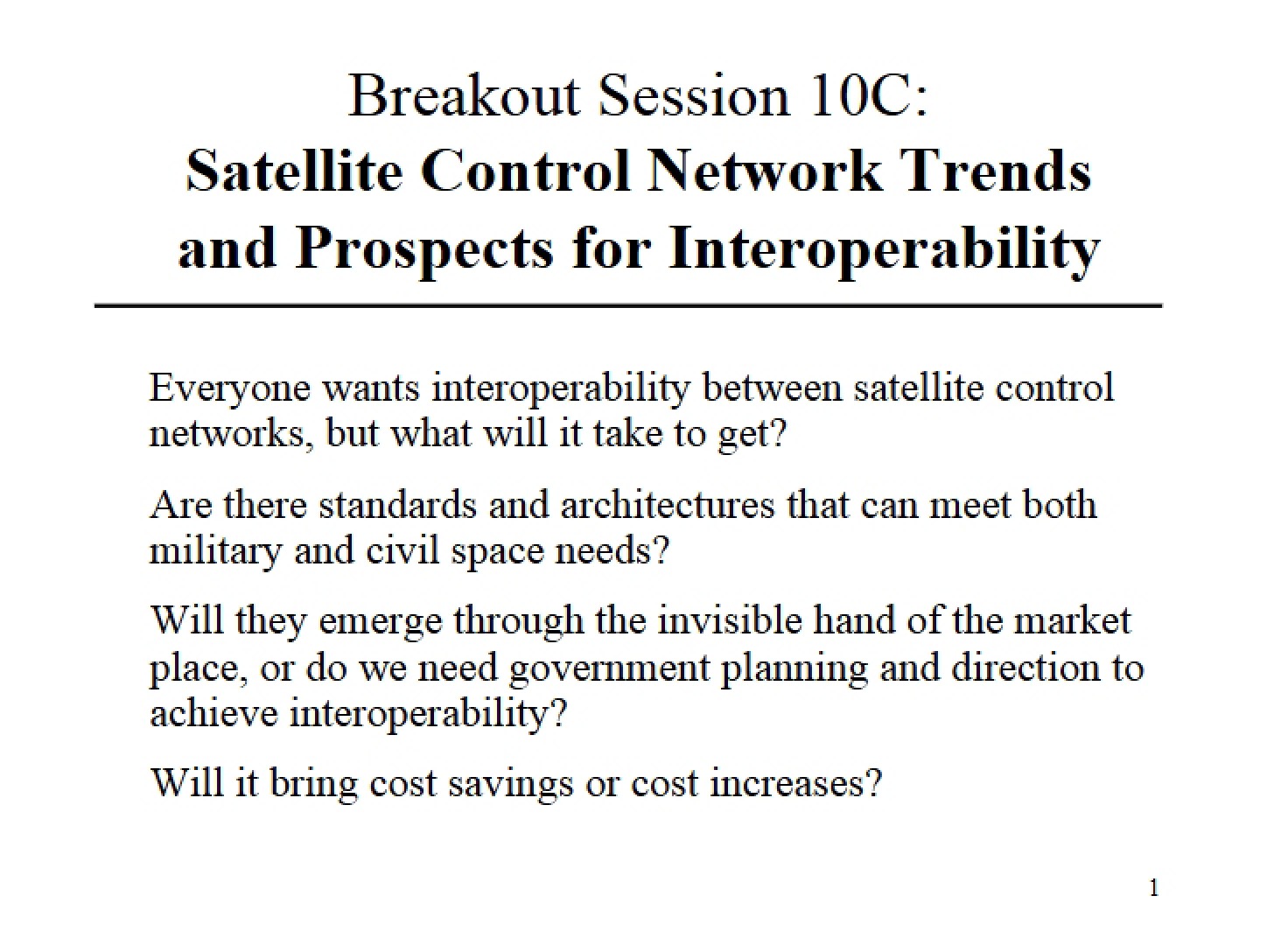
This material represents a session breakout report from GSAW 2002 at the University of Southern California, focusing on architectural considerations for complex ground systems used in satellite control. Specifically, it details discussions surrounding the design and implementation of ground control systems capable of managing *multiple* satellite missions simultaneously – a “multi-mission” approach. The report originates from The Aerospace Corporation and captures insights from a working group comprised of satellite operators, ground system vendors, and component suppliers. It’s a record of collaborative problem-solving and strategic thinking within the space systems engineering field.
Why This Document Matters
This report is valuable for students and professionals involved in the design, development, and operation of satellite ground systems. It’s particularly relevant for those specializing in systems engineering, aerospace engineering, or computer science with a focus on space applications. Individuals researching the evolution of ground system architectures, or those facing challenges in managing diverse satellite constellations, will find the core concepts explored here highly insightful. It provides a historical perspective on the trade-offs and best practices considered during a pivotal time in the industry.
Common Limitations or Challenges
This document is a *record of a session* and does not offer a comprehensive, step-by-step guide to building multi-mission ground systems. It doesn’t include detailed code examples, specific hardware configurations, or exhaustive testing procedures. The material reflects the state of knowledge and technology as of 2002, and while the fundamental principles remain relevant, some specific technologies mentioned may have evolved. It’s a high-level overview of key considerations, not a practical implementation manual.
What This Document Provides
* An overview of the motivations for adopting a multi-mission ground system approach.
* Key elements identified as crucial for supporting multi-mission capabilities.
* Discussion points regarding system upgradeability and long-term maintenance.
* Considerations for decoupling system components to enhance flexibility.
* Insights into the role of standards in achieving interoperability.
* Analysis of the benefits and drawbacks of distributed architectures and COTS components.
* A record of participant perspectives from leading organizations in the space industry.