What This Document Is
This document is an answer key providing detailed solutions to a homework assignment for MATH 3200: Elementary to Intermediate Statistics and Data Analysis, offered at Washington University in St. Louis. It focuses on applying statistical concepts and techniques covered in lectures and readings, specifically relating to probability, conditional probability, and the use of statistical software (R) for calculations. The assignment builds upon foundational statistical principles and introduces practical problem-solving skills.
Why This Document Matters
This resource is invaluable for students enrolled in MATH 3200 who are seeking to verify their understanding of the homework problems. It’s particularly helpful after independently attempting the assignment, allowing for a detailed comparison of approaches and identification of areas needing further review. Students preparing for quizzes or exams covering similar material will also find it beneficial to study the solution methodologies presented. It’s designed to reinforce learning by demonstrating how to translate theoretical concepts into concrete problem-solving steps.
Common Limitations or Challenges
This answer key provides completed solutions, but it does *not* offer step-by-step explanations of the reasoning behind each answer. It assumes a foundational understanding of the course material and focuses on presenting the final results. It will not substitute for actively engaging with the problems yourself or attending office hours to clarify conceptual difficulties. Furthermore, it only covers the specific problems included in Homework 3 and does not encompass the entirety of the course content.
What This Document Provides
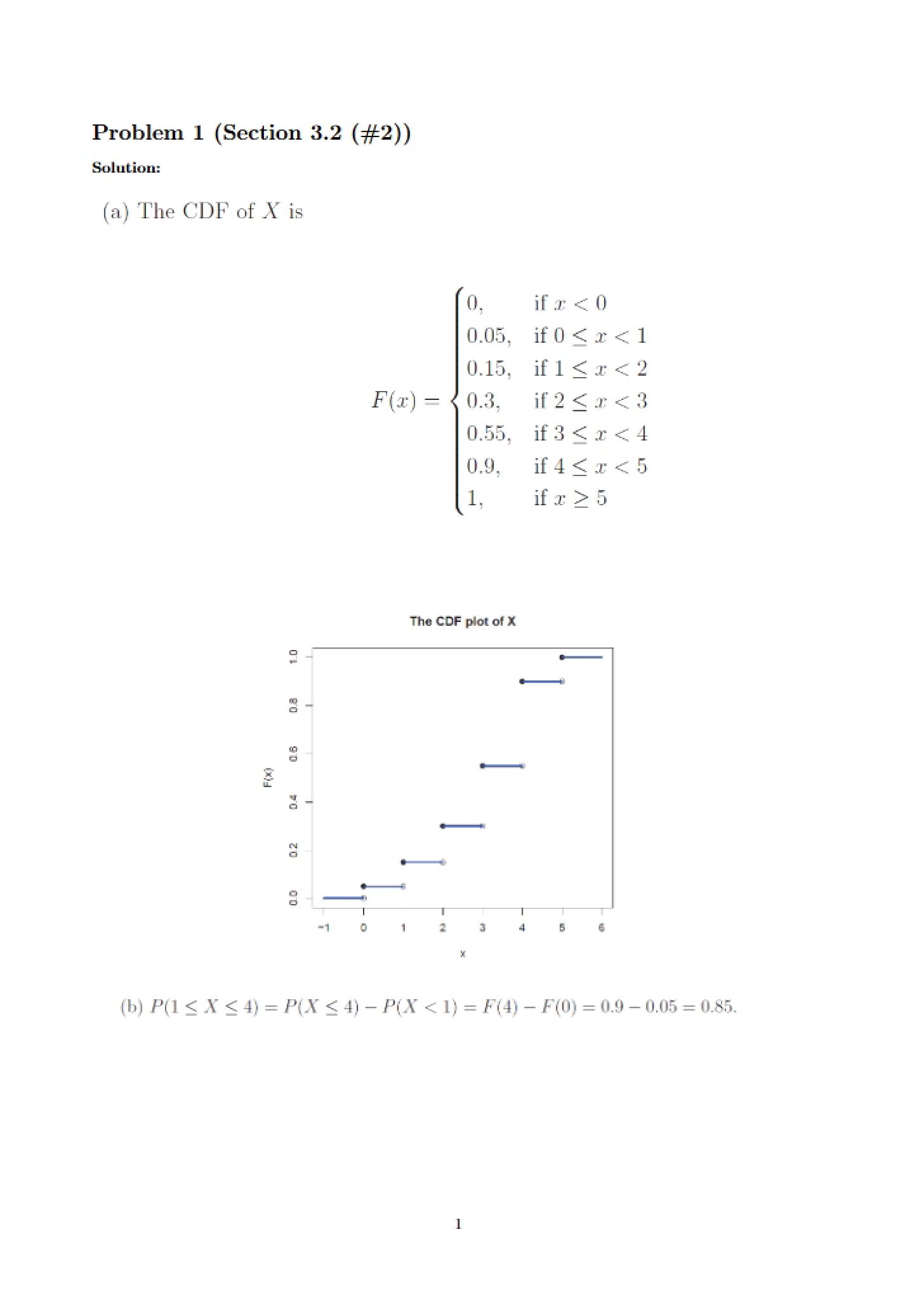
* Detailed solutions to problems involving probability mass functions and calculations.
* Applications of conditional probability principles to real-world scenarios.
* Examples of using statistical software (R) to solve probability-related problems.
* Solutions demonstrating the application of probability axioms.
* Worked examples involving tree diagrams for probability calculations.
* Solutions to problems involving Bayesian probability and event discovery scenarios.