What This Document Is
This is a detailed exploration of hypersensitivity reactions, a core concept within the field of Molecular Immunology. Specifically, it delves into the various types of hypersensitivity, providing a foundational understanding of their underlying mechanisms and classifications. The material is geared towards upper-level undergraduate and graduate students studying immunology, cell biology, or related life sciences.
Why This Document Matters
Students enrolled in rigorous immunology courses, or those preparing for related professional exams, will find this resource particularly valuable. It’s ideal for supplementing lectures, clarifying complex pathways, and building a strong conceptual framework for understanding immune system malfunctions. Understanding hypersensitivity is crucial for grasping the basis of allergic diseases, autoimmune disorders, and transplant rejection – all vital areas within biomedical research and clinical practice. This material will help you build a solid foundation for more advanced study.
Topics Covered
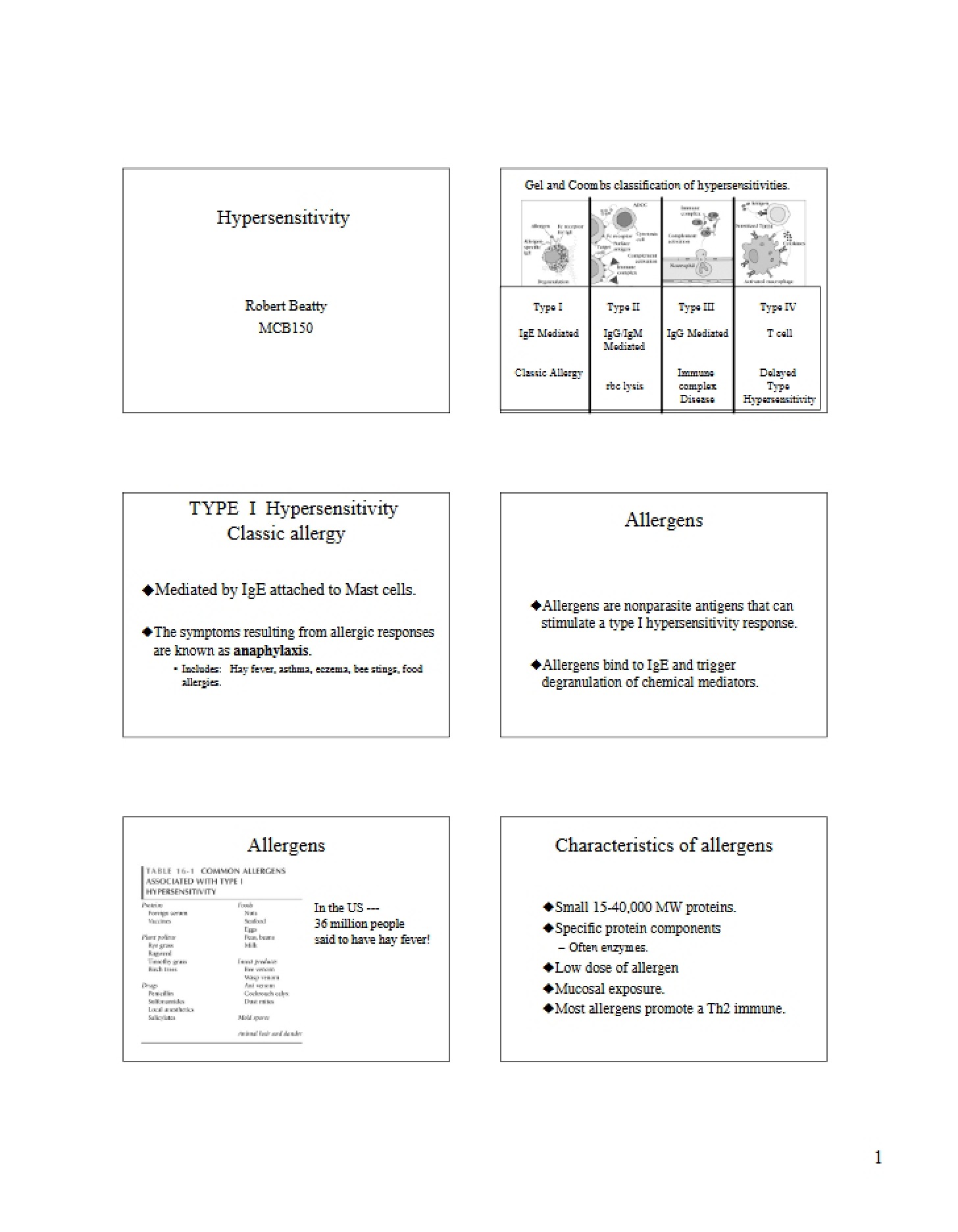
* The Gel and Coombs classification of hypersensitivity reactions
* Type I Hypersensitivity: Mechanisms, mediators, and common allergens
* The role of IgE and mast cells in allergic responses
* Genetic predispositions to atopy and hypersensitivity
* The sensitization phase of allergic reactions and the importance of Th2 cells
* FcεRI receptor signaling and its role in mast cell degranulation
* Detailed examination of specific allergens and their mechanisms of action
* The effector stage of hypersensitivity reactions
What This Document Provides
* Visual representations illustrating the different types of hypersensitivity reactions.
* Detailed descriptions of the molecular players involved in each hypersensitivity type.
* Tables listing common allergens associated with Type I hypersensitivity.
* An exploration of the genetic factors influencing susceptibility to allergic responses.
* Insights into the mechanisms driving IgE isotype switching and its significance in allergic sensitization.
* A focused look at the structure and function of key receptors involved in hypersensitivity.